Plugging the Gap: Tackling Urban Environmental Challenges With Adaptation and Resilience Investment 

Houses washed away by floods, power lines and road surfaces buckling under extreme heat, and drought threatening food supplies and pressuring water resources. These natural disasters are becoming all too common. And they are taking a massive economic toll.

In 2024 alone, the world experienced more than 150 extreme weather events, causing an estimated USD320 billion in global economic losses – 40% higher than the decade-long annual average.

As the impact of climate change and environmental degradation increases, it is clear that investing in adaptation and resilience (A&R) – concrete steps such as enhancing grid resilience through advanced modelling and simulation, retrofitting existing buildings with efficient energy technologies or installing stormwater pump stations – becomes just as important as measures to mitigate global temperature rises.

Crucially, A&R investment is more than just about blunting the immediate impact of climate change while taking advantage of the potential for attractive return.

Companies that can meet the growing demand for climate change adaptation with the right business model and economics have a real chance to offer attractive investment opportunities.

Inflection point

Until now, adaptation has not been a magnet for investment.

The sector attracted just over USD30 billion in new capital in 2024, falling well short of hundreds of billions of dollars experts estimate are needed to mitigate the financial impact from climate change in the coming decades.

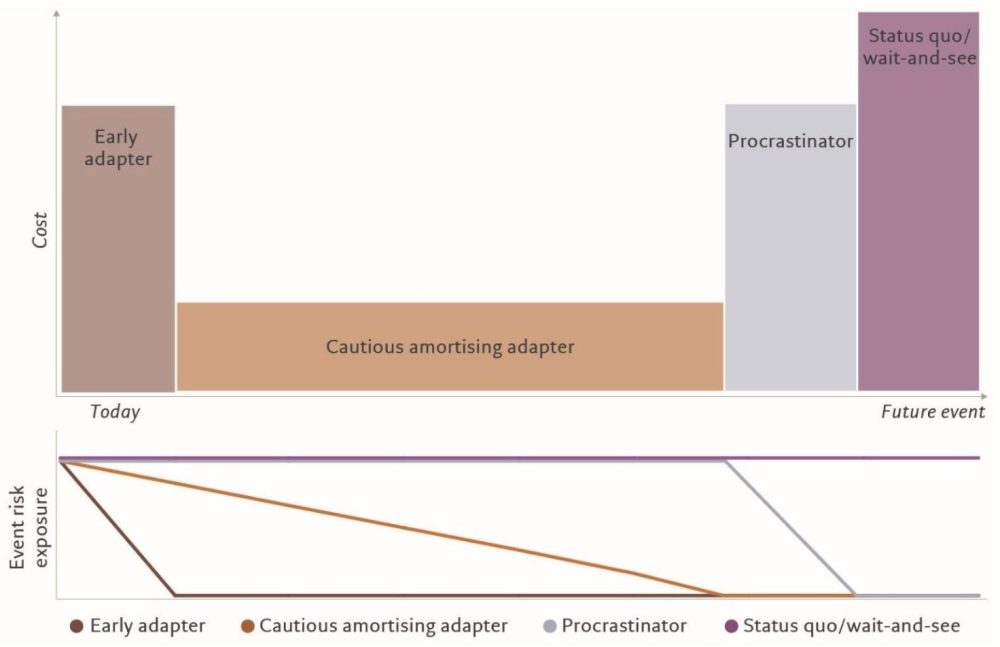
The lack of corporate commitment may be down to a potential dilemma or trade-off – the earlier you are, the more uncertainty there is. Corporates do not want to overspend on things they do not know and they tend to wait. But the longer you wait, the greater your exposure becomes to future risks.

Figure 1 – Adapter’s dilemma

Sample management approaches to climate adaptation
Source: JP Morgan, Building Resilience Through Climate Adaptation, 2025

Encouragingly, this gap is beginning to close.

According to a report by London Stock Exchange Group, 34% of large and medium-sized listed companies in the FTSE All World Index are already referring to adaptation measures in their annual disclosures.

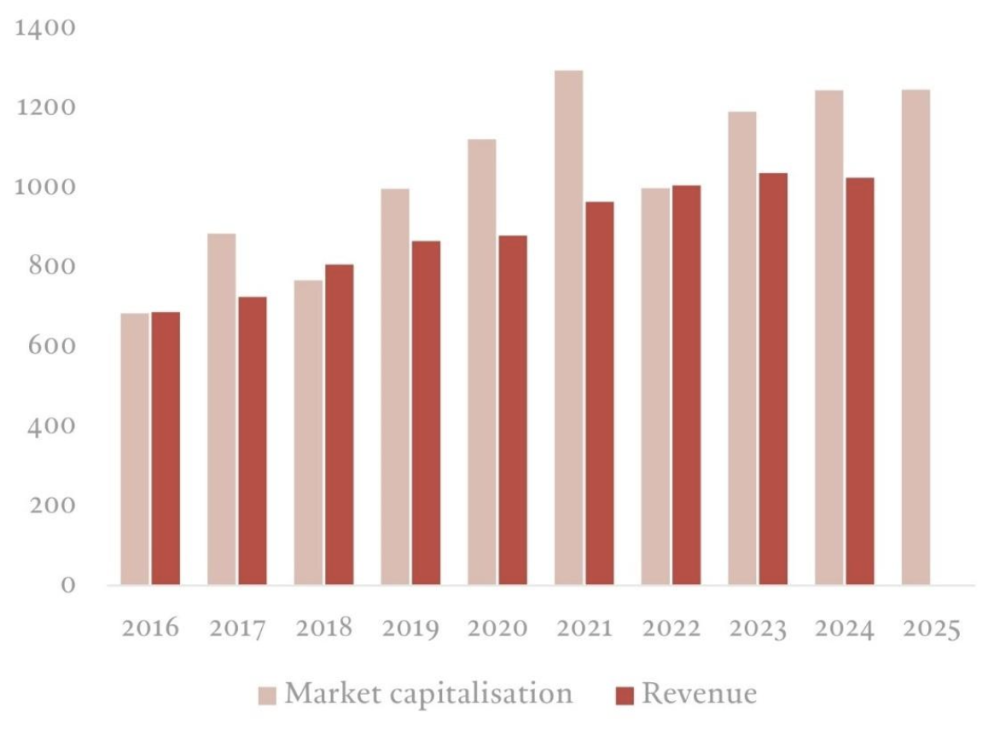
Corporate adaptation finance flows are growing at a four-year Compound Annual Growth Rate (CAGR) of 21% with companies who have embraced adaptation solutions generating over USD 1 trillion in green revenue last year.

Fig. 2 Adaptation and resilience growth and sectors

Market cap and revenue growth of adaptation and resilience industry (USD billion)
Source: LSEG, data as of 12.05.2025 

A conservative estimate from climate consultancy Tailwind assumes that if each of the 10,000 publicly listed companies spends just USD 50 million on climate resilience investments, the latent demand from corporations should be at least USD 500 billion annually. [1]

Technology companies are among the leading industries investing in A&R strategies. That is because extreme heat, drought and flood risks threaten their operations. 

Those building and operating data centres in arid regions like Arizona will need to consider investing in efficient cooling technologies, large solar panels, smart water management and recycling systems, as well as adopting sustainable and green building designs.  

These measures should not only mitigate drought and heat risks and ensure round-the-clock operations during extreme weather but also reduce emissions. By conserving energy and water, they will ease strain on local grids and water systems, on top of cutting utility bills. 

A study by the World Resources Institute (WRI) found that every USD 1 invested in A&R generates more than USD 10 in benefits over 10 years. This translates to potential returns of over USD 1.4 trillion, with average annual returns of 27%. Part of this will accrue directly to investors. 

Crucially, these benefits go beyond financial gains. The report also explained that A&R projects typically yield a “triple dividend,” providing an environmental and social return in addition to a financial one. 

The WRI study found that financial and non-financial gains from A&R projects are often equal in magnitude, yet only 8% of investment appraisals translate every benefit, financial and non-financial, into a single dollar figure. This suggests that societal rates of return are substantially underestimated in economic assessments of most adaptation investments. 

A&R investing therefore stands out as a powerful way to protect assets, unlock new sources of growth and capture attractive return potential while helping build a more climate-resilient economy for the decades ahead.


Sources

  1. Tailwind, Taxonomy for Climate Adaptation and Resilience Activities, 2024

RIA Disclaimer

The views and opinions expressed in this article are solely those of the authors and do not necessarily reflect the view or position of the Responsible Investment Association (RIA). The RIA does not endorse, recommend, or guarantee any of the claims made by the authors. This article is intended as general information and not investment advice. We recommend consulting with a qualified advisor or investment professional prior to making any investment or investment-related decision.
Weighing Canada’s LNG ‘Trilemma’

When the first ship set sail from the LNG Canada terminal on June 30, 2025, it marked a new era for Canada. This was the moment when we joined a handful of nations as exporters of Liquefied Natural Gas (LNG), a fuel source that has rapidly gained prominence in the new world energy order.

Canada’s entry onto the LNG stage raises some important questions:

  • How critical are LNG exports to helping Canada fulfil its energy leadership ambitions?
  • Is Canadian LNG the key to energy resilience and security for nations who have had their traditional natural gas supplies disrupted?
  • And especially important for responsible investors, can LNG become a ‘bridge fuel’ to renewables and a facilitator of long-term decarbonization of the world’s energy system?

The role of LNG in the future global energy mix

Rising interest in LNG is tied to steadily rising global demand for energy. Demand drivers include economic growth and industrialization in developing markets, the global shift to electrification of transport and heating, and the need to support the power demands of AI-driven data centres. The root driver, however, is population growth. Global population is expected to reach nearly 10 billion people by 2050, with a good chunk of that in the expanding urban centres of Asia and Latin America. LNG has a crucial role to play in responding to this demand. But to fully understand that role, LNG must be considered through the lens of what has been coined the energy ‘trilemma’: the three different and often opposing factors of affordability, security and sustainability.

LNG’s uneven sustainability advantage

Let’s begin with the most important consideration for the RIA’s audience: sustainability. Of all fossil fuels, natural gas is the cleanest burning, emitting about 45% less CO2 than coal. If reducing carbon emissions is the core goal, gas is an attractive option for coal replacement. In fact, in select regions where gas has replaced coal, system wide emissions have been reduced significantly.

Could expanded use of LNG help reduce carbon emissions globally? The Fraser Institute contends that if Canada were to double its current natural gas production and export the additional supply to Asia as LNG deployed as a direct and equivalent replacement of coal, global GHG emissions could be reduced by up to 630 million tonnes annually, a reduction equivalent to 89% of Canada’s total GHG emissions. With several countries set to significantly expand their LNG export capacity, the potential for GHG reductions is substantial. But it is potential only.

Answering the LNG bridge fuel question: it’s not so simple

Viewing LNG solely through a sustainability lens ignores the fact that the world doesn’t just need more LNG, it needs more energy from all sources. That’s just one challenge to the ‘bridge fuel’ thesis. A second is estimating just how long that bridge needs to be: too long would increase dependency on natural gas and LNG, potentially reducing investment in renewable energy sources. Additionally, natural gas and LNG are not equal: processing LNG adds considerable emissions beyond those occurring in the traditional natural gas supply chain. Furthermore, methane leakage (methane is both the primary constituent of natural gas and the second most significant greenhouse gas, with a potential impact on global warming that is 28 times greater than that of carbon dioxide over a 100-year period) is especially pronounced with LNG. Produced through a series of separate systems, LNG presents multiple opportunities for methane leaks. Although these risks can be managed, they cannot be eliminated.

Is LNG secure and affordable?

Which brings us to considerations of energy security and affordability. Europe is considered a strong market for LNG, despite the EU’s longstanding climate commitments. Yet it is security considerations that now dominate the energy agenda, as they increasingly do across all regions in our disrupted world. The two factors are complementary. Expanded renewable energy reduces the need for natural gas, reinforcing Europe’s principle to avoid dependence on energy it doesn’t have – the very definition of energy security. [1]

The far more promising market is Asia, where LNG consumption is predicted to double by 2050, driven by economic growth and limited access to pipeline-delivered natural gas. But applying the LNG trilemma in Asian markets is complex. China is both the world’s biggest coal user and the world leader in renewable energy. And in other markets, such as India, shifting away from coal may not even be a practical option. Many countries in Asia are also opportunistic buyers of energy based on price, which diminishes the importance of sustainability factors in energy buying decisions. [2]

The potential impact of a rapidly expanding global LNG supply

Against this backdrop, the global LNG industry is expanding rapidly, with plans to add almost five times as much new liquefaction capacity from 2025 through 2028 compared to the previous four-year period. This rapid expansion presents an obvious saturation risk, with the IEA projecting a supply overhang that could “depress international gas prices and set the stage for fierce competition between suppliers”. It is unclear whether demand will be enough to close that gap, especially with anticipated advancements (and cost reductions) in renewable technologies and battery storage.

The cold reality of Canada’s LNG ambitions

So, what does this mean for Canada? It took a long and contentious 15 years to take the inaugural LNG Canada facility from licensing and permitting to shipping the first tanker-load of LNG. Over the same period, the U.S. alone constructed LNG export facilities totaling eight times the exporting capacity of LNG Canada. Canada may have geographical advantages, may produce its LNG with a lower carbon footprint, and LNG may (if methane is managed properly) produce emissions significantly lower than thermal coal, but buyers will weigh affordability, security and sustainability factors unevenly and dynamically.

To win in LNG, Canada will need demand for all types of energy to continue to spike (especially in Asian markets where Canada holds a geographic advantage for shipping LNG) and be able to accelerate building LNG infrastructure to meet this need. Given LNG’s history in Canada, the latter is far from certain. Additionally, unaddressed here in detail, but an essential consideration is the consent and participation of Indigenous peoples in Canada’s LNG plans. Responsible investors must also consider the implications of a potential time-mismatch: when LNG assets built with a 30- to 50-year lifespan intersect with the anticipated rapid integration of renewables, stranded assets become a significant risk.

In short, LNG is no slam dunk. But, after the lengthy delays that brought Canada late to the LNG party, the first ship, laden with a promise far weightier than its cargo, has finally sailed. Canada is now officially in the LNG game.


References

  1. Interview with Luke Sussams – Jefferies
  2. Interview with Baltej Sidhu – National Bank

Disclosure

The content of this article (including facts, views, opinions, recommendations, descriptions of or references to, products or securities) is not to be used or construed as investment advice, as an offer to sell or the solicitation of an offer to buy, or an endorsement, recommendation or sponsorship of any entity or security cited. Although we endeavour to ensure its accuracy and completeness, we assume no responsibility for any reliance upon it. This article may contain forward-looking information which reflect our or third party current expectations or forecasts of future events. Forward-looking information is inherently subject to, among other things, risks, uncertainties and assumptions that could cause actual results to differ materially from those expressed herein. These risks, uncertainties and assumptions include, without limitation, general economic, political and market factors, interest and foreign exchange rates, the volatility of equity and capital markets, business competition, technological change, changes in government regulations, changes in tax laws, unexpected judicial or regulatory proceedings and catastrophic events. Please consider these and other factors carefully and not place undue reliance on forward-looking information. There should be no expectation that such information will in all circumstances be updated, supplemented or revised whether as a result of new information, changing circumstances, future events or otherwise.

RIA Disclaimer

The views and opinions expressed in this article are solely those of the authors and do not necessarily reflect the view or position of the Responsible Investment Association (RIA). The RIA does not endorse, recommend, or guarantee any of the claims made by the authors. This article is intended as general information and not investment advice. We recommend consulting with a qualified advisor or investment professional prior to making any investment or investment-related decision.
Investing in the Evolving Energy Transition

The global energy transition is entering a new phase. Falling clean-technology costs, rising electricity demand and advances in electrification are reshaping where and how the transition is taking place. And while policy support and climate commitments remain important, the primary drivers of decarbonisation are shifting toward economics and technology.

Two dynamics are particularly important. First, emerging markets have become the growth engine of the energy transition – largely because clean technologies are now often the lowest-cost option for new power generation and industrial development. In advanced economies, a sharp acceleration in electricity demand, largely due to AI, is creating renewed urgency to add more power sources, upgrade the grid and use energy more efficiently in everything from semiconductor workflows to data-centre cooling.

Together, these trends are redefining the opportunity set for investors across the energy transition value chain.

Fundamentals versus sentiment

In recent years, investor sentiment toward clean-technology sectors has been depressed. Higher interest rates and uncertainty over government support weighed on company valuations. However, weakening sentiment has not been matched by a deterioration in fundamentals. Many high-quality companies enabling decarbonisation have continued to deliver strong earnings growth.

The gap between earnings performance and share-price performance has created a notable disconnect, particularly among companies with durable competitive advantages and exposure to structural growth trends.

More recently, clean-tech markets have begun to recover. While some of this rebound reflects a technical recovery from oversold levels, we think there is a strong case that select companies in the decarbonisation universe are on track for durable growth.

This is partly because the market for their products and services is expanding rapidly: the International Energy Agency (IEA) projects that global clean-technology markets could more than triple in value by 2035, reaching over US$2 trillion annually, supported by continued cost declines and rising demand for electricity and efficiency solutions.

Emerging markets as the new growth engine

Emerging markets are increasingly at the centre of the energy transition. Unlike earlier phases which were largely driven by climate policy, clean-tech adoption in many developing economies is being led by cost competitiveness. Solar, wind, batteries and electric vehicles have reached – and in many cases surpassed – cost parity with fossil-fuel alternatives. This is broadening the decarbonisation investment opportunity set across the developing world.

China plays a critical role in this shift. Its scale and manufacturing efficiency have driven down global clean-technology costs. It is estimated to cost at least 40% more to manufacture solar panels, wind turbines and batteries in the US and Europe than in China, and up to 25% more in India. Consequently, Chinese exports of clean technologies are enabling countries across Asia, Latin America and Africa to electrify and industrialize more affordably.

Nearly half of China’s clean technology exports now go to emerging markets, to countries such as India, Brazil and Thailand. According to the IEA, China’s clean-technology exports could exceed US$340 billion annually by 2035.

Rising power demand in developed markets

At the same time, developed markets are experiencing a structural shift in electricity demand. After decades of relatively flat consumption, power usage in the US and Europe is surging. Key drivers include artificial intelligence, data centres, electrified heating and cooling, electric vehicles and some degree of industrial reshoring. In the US, electricity consumption is expected to grow by approximately 38% over the next two decades, compared with just 9% growth over the previous 20 years.

This surge has elevated the importance of utilities, grid operators and efficiency specialists. Access to reliable, affordable power has become a critical constraint for data centre developers and industrial users, with major technology companies increasingly citing electricity availability as a bottleneck to expansion.

Utilities that can deliver low-cost renewable generation, invest in grid modernisation and manage rising demand are therefore well positioned for growth, as are companies that provide efficiency solutions for computing and industrial processes.

Technology, electrification and efficiency

Technological progress is also broadening decarbonisation markets. Today, more than 75% of final energy demand is considered technically electrifiable. This creates significant opportunities across industrial electrification, power semiconductors and energy-management technologies.

Efficiency is an equally important lever. As electricity demand rises, reducing energy intensity becomes critical to limiting emissions growth and infrastructure strain. Technologies that enable smarter energy use – from power-efficient data-centre hardware to advanced industrial automation – will play a central role in this next phase of the transition.

Beyond energy systems, innovation is also emerging in sectors such as agriculture. Food systems account for roughly 30% of global greenhouse-gas emissions, and precision-agriculture technologies offer pathways to improve productivity while reducing environmental impact.

Implications for investors

For investors, this “transition of the transition” – from policy-driven to economics-driven adoption, and from developed-market leadership to emerging-market acceleration – underscores the important of focusing on fundamentals rather than short-term sentiment. As decarbonization becomes more closely linked to cost efficiency and technological progress rather than policy, the next phase of the energy transition may prove broader, faster and more resilient than markets currently assume.


RIA Disclaimer

The views and opinions expressed in this article are solely those of the authors and do not necessarily reflect the view or position of the Responsible Investment Association (RIA). The RIA does not endorse, recommend, or guarantee any of the claims made by the authors. This article is intended as general information and not investment advice. We recommend consulting with a qualified advisor or investment professional prior to making any investment or investment-related decision.

From Local Projects to Portfolio Strength: Investing in Resilience for Long-Term Returns

Climate resilience can’t wait. It’s a smart, essential investment.

Climate risk is no longer a distant threat; it’s a present reality with tangible financial, social and environmental consequences. It cannot simply be “insured away,” as insurers are repricing coverage or withdrawing due to escalating costs, unreliability of traditional risk models and increased financial instability. That’s leaving asset owners – from homeowners to municipalities to pension funds – to bear the full weight of climate volatility. The undeniable message is this:

Climate resilience is not an option. It’s imperative to preserving an investment’s long-term value.

When insurance providers price out climate-related risk, asset holders must move a layer deeper. We must actively protect assets from climate change impacts rather than relying solely on insurance payouts. This means building resilience into portfolios and projects by designing and upgrading physical assets to withstand our changing environmental realities. The evidence for this approach is compelling.

Consider the billions in losses from recent Canadian disasters. The 2021 floods in British Columbia washed out highways and rail lines, the 2023 Nova Scotia floods damaged critical infrastructure and record-setting wildfires in Alberta and Quebec destroyed communities and disrupted supply chains. In 2024 alone, the Insurance Bureau of Canada found there to be $8.5 billion in insured losses due to extreme weather events. Those losses represent destroyed homes, disrupted businesses, damaged infrastructure, and communities struggling to recover. The economic and social costs of inaction are simply too high.

These are not isolated events, but rather, frequent and recurrent ones that will not abate in the future. Their recurrence signals the urgent need for a market shift that prioritizes investment capital for resilience-focused projects. For institutional investors, this presents a significant new opportunity: the resilience market.

The rise of the resilience market.

Investing in climate adaptation – from resilient infrastructure to nature-based solutions – can deliver long-term stability and value to communities, local and national economies, as well as investors. The resilience market focuses on projects that reduce emissions and actively strengthen communities against the impacts of climate change.

Much of this work begins at the local-level, where a robust resilience investment strategy includes investments in energy systems, transportation networks, community facilities and other local infrastructure. Strengthening the resilience of these critical assets plays a central role in protecting residents, sustaining local economies and ensuring long-term stability.

The challenge of this approach often lies in aggregating, standardizing and de-risking projects, as individual municipal projects are frequently too small or complex for traditional institutional investment. This is where blended finance provides an essential bridge.

The power of blended finance.

Combining public and private capital can be a highly effective approach in activating long-term solutions. Blended finance structures can be underpinned by decades of public-sector expertise in municipal finance, using catalytic public funds to perform three essential functions:

  • Developing an attractive risk-return profile for private partners
  • Standardizing investment structures and creating scale
  • De-risking early-stage projects, especially in new fields such as resilience

By strategically combining public and private capital, blended finance structures can address all three challenges to unlock projects that might otherwise not attract institutional capital. Public funds can be used to absorb the initial risk, making projects more attractive to private investors, while private capital can then be deployed at a scale that public funds alone cannot match.

New models for investing in resilience.

In practice, this means engaging in public-private co-investment and adaptation strategies that make assets stronger. A world of opportunity opens when you co-invest alongside Canadian municipalities and structure funds that unlock risk-adjusted investment opportunities. By structuring funds to reduce downside risk, private capital can be brought in to scale up and accelerate projects that traditionally face a high hurdle rate.

When municipalities seek to upgrade critical infrastructure to enhance and sustain community resilience, a blended finance model could see the municipality provide a portion of the funding, with a private institutional investor providing the rest. The public funding could be structured to guarantee a minimum return or cover a certain percentage of losses, thereby making the project much more appealing to a private investor.

Another model involves a fund that invests specifically in community resilience projects across the country leveraging a combination of public and private capital, with the public contribution focused on addressing the unique risks of these projects. This would enable investment in a portfolio of projects – from seawalls in coastal communities to urban greening projects in cities – reducing the risk for private finance partners while achieving a durable, positive impact.

Case Study: The Better Homes Ottawa Loan Program, which offers financing for home energy retrofits that are repaid over time through property tax bills (a model known as Property Assessed Clean Energy, or PACE), was successfully scaled through a blended finance partnership. After its launch in 2021, the City of Ottawa partnered with Vancity Community Investment Bank (VCIB) in an innovative private-sector funding model that allowed the City of Ottawa to expand the program. The partnership with VCIB included an initial $3.9M credit facility that helped launch the first phase of the program and a second tranche of $30M to expand the program to more residents. The private capital injection allowed the popular program to continue expanding, thereby leveraging private-sector interest to fund essential, local climate action.

For investors, these new financial models offer a credible pathway into a market with demonstrated demand and lasting impact; one with real financial returns. By helping communities adapt, investors not only protect their own investments, but also create new, stable revenue streams.

For communities, it delivers the critical capital required to strengthen infrastructure against floods, fires and extreme heat, protecting citizens and local economies. For Canada as a whole, this approach aligns climate adaptation with financial and economic sustainability, ensuring that resilience is built into both our communities and our portfolios.

A call to unlock resilient investing.

Canada’s responsible investment community is at a pivotal moment. Embracing blended finance and fostering new partnerships between public and private sectors is a real possibility. It’s one that would unlock the capital needed to build a more resilient country. This approach would move us beyond risk management to active value creation, building climate resilience into the very foundation of our portfolios, our communities and Canada’s economic future.

As one of Canada’s leading funders and investors in municipal sustainability projects, the Federation of Canadian Municipalities’ Green Municipal Fund (FCM’s GMF) is uniquely positioned to drive this approach. Leveraging its stable endowment and with decades of success in mobilizing capital for local climate action, a strong network of more than 2,100 member municipalities and a track record of over $1.6 billion invested in more than 2,700 sustainability projects since 2000, GMF serves as a trusted bridge between public and private capital.

Creating bankable, impact-driven opportunities, GMF offers investors a credible pathway to scalable, low-risk municipal projects that meet their expectations for stable, long-term returns. Investors can strengthen their portfolios through smart, essential investments in resilience that create enduring value for both investors and communities.

Now is the time to invest in resilience to turn local projects into long term portfolio strength, unlock stable return, and be a partner in shaping a more sustainable prosperous future for everyone.


RIA Disclaimer

The views and opinions expressed in this article are solely those of the authors and do not necessarily reflect the view or position of the Responsible Investment Association (RIA). The RIA does not endorse, recommend, or guarantee any of the claims made by the authors. This article is intended as general information and not investment advice. We recommend consulting with a qualified advisor or investment professional prior to making any investment or investment-related decision.

Governance of AI: A Stewardship Framework

Artificial Intelligence (AI) is rapidly reshaping economies and societies alike, presenting both significant opportunities and efficiencies, as well as profound governance challenges. The onus falls on institutional investors not only to understand these changes, but to craft stewardship frameworks that ensure responsible, sustainable value creation through AI. TD Asset Management Inc. (TDAM) has undertaken a comprehensive analysis of the available literature on AI governance from a stewardship standpoint. Our goal is to distill actionable insights and build a robust framework tailored to our stewardship program, providing clarity for both internal alignment and external engagement.

Governance of AI and Financial Performance

Early and proactive governance at the board level has emerged as a key differentiator for companies integrating AI. Some research reveals that organizations which began addressing AI governance early – especially at the highest levels – demonstrate outperformance against major benchmarks. The drivers of this success are multifold:

  • Dedicated Technology Oversight: The integration of science, technology and innovation committees within the board structure enables targeted oversight of AI strategy and risk. These committees act as conduits for expertise, keeping boards closely attuned to technological trends and their implications for the business.
  • Strategic and Governance Alignment: Early adopters of robust governance frameworks are better equipped to identify strategic and governance gaps, anticipate the impact of technology on products and services, and remain agile in adapting to market changes.
  • Board Talent Acquisition: Companies prioritizing AI governance attract director talent with sector-specific knowledge and a nuanced understanding of AI’s transformative potential. This in turn fosters enterprise-wide alignment across commercial, talent, privacy/cyber/data security, and operational strategies.
  • Enterprise Alignment: The most successful organizations treat AI not as a siloed function, but as an enterprise-wide imperative, ensuring that innovation aligns with budgetary priorities, operational improvements, talent strategy and data security.

Interestingly, we have observed that successful technology firms—where technology forms the core of their business models—tend to diffuse AI governance responsibilities across multiple committees. This distributed approach reflects the pervasiveness of AI in all aspects of their business. For other sectors, however, focused oversight is perhaps the best practice.

Risk Management

The risks inherent in AI adoption are multifaceted and extend far beyond the headline-grabbing incidents of data breaches or regulatory fines. TDAM’s stewardship perspective emphasizes the following dimensions:

  • Technical Risks: AI systems are inherently complex and opaque, raising challenges such as hallucinations (the generation of false or misleading outputs), algorithmic bias, unreliable performance and unintended consequences, such as technology glitches.
  • Regulatory Risks: The regulatory landscape for AI is rapidly evolving. Companies must remain vigilant about compliance with emerging standards, data privacy laws, labour laws and sector-specific regulations.
  • Organizational Risks: The speed of AI adoption can outpace an organization’s ability to adapt. Without the right governance structures, talent and risk oversight, companies risk strategic misalignment, operational inefficiencies and reputational harm.
  • Systemic Risks: The interconnectedness of AI systems means that failures in one area can rapidly cascade. Systemic risks include market disruptions, widespread misinformation and market volatility introduced by poorly governed AI deployment.
  • Environmental Risks: With the rise of AI, the infrastructure needed to meet the demand has environmental implications, particularly the increase in the number of data centres. These centres consume a substantial amount of energy and require significant amounts of water for cooling. Risks derive from their locations, the stress they put on the surrounding environment, and the methods used to acquire these necessary resources.

Effective risk management demands a forward-looking, cross-disciplinary approach which integrates technical, legal, ethical and operational perspectives within the governance framework.

Systemic Issues and Opportunities

AI’s integration into the financial system and wider economy brings systemic considerations—both risks and opportunities that need to be actively managed:

  • Market Stability: AI-driven trading and decision-making can both stabilize and destabilize markets. Oversight is needed to ensure algorithms act prudently and transparently.
  • Societal Impact: AI can foster inclusion and efficiency but may also exacerbate inequality or automate away entire job categories. Responsible stewardship must account for the broader human capital impacts.
  • Ethics and Trust: Firms that prioritize ethical AI gain stakeholder trust, which can be a durable source of competitive advantage.
  • Innovation: AI opens the door for new business models, data-driven insights and operational excellence—but only if risks are prudently managed and opportunities are seized.

Future-Proofing AI Strategies

TDAM believes that futureproofing is not merely about technology adoption, but about building resilient, adaptable organizations. This entails:

  • Dynamic Governance: Governance frameworks must evolve in lockstep with technological developments. Regular reviews, scenario planning and horizon scanning are essential.
  • Continuous Talent Development: Building in-house expertise and upskilling the workforce safeguards against obsolescence and positions firms to capture AI’s potential.
  • Stakeholder Engagement: Open dialogue with regulators, clients and communities builds trust and allows for shared learning as AI matures.
  • Robust Data Governance: Data is the lifeblood of AI. Organizations must invest in secure, ethical and transparent data management practices to support trustworthy AI systems.

Conclusion

AI governance is not a static exercise but an ongoing journey that requires vigilance, adaptability and stewardship excellence. The rewards for early and robust governance are clear: improved financial performance, strategic clarity and operational resilience. Conversely, the risks of neglect are significant—not only for individual companies, but for the financial system and society.

Our stewardship framework reflects a belief in responsible innovation. We advocate for transparent, ethical, and future-focused AI governance, supporting both creators and users as they navigate this dynamic landscape. Through collaboration, continuous learning, and steadfast attention to risk and opportunity, we aim to safeguard long-term value of our investments.


Disclosure

The information contained herein is for information purposes only. The information has been drawn from sources believed to be reliable. The information does not provide financial, legal, tax or investment advice. Particular investment, tax or trading strategies should be evaluated relative to each individual’s objectives and risk tolerance.

This material is not an offer to any person in any jurisdiction where unlawful or unauthorized. These materials have not been reviewed by and are not registered with any securities or other regulatory authority in jurisdictions where we operate.

Any general discussion or opinions contained within these materials regarding securities or market conditions represent our view or the view of the source cited. Unless otherwise indicated, such view is as of the date noted and is subject to change. Information about the portfolio holdings, asset allocation or diversification is historical and is subject to change.

This document may contain forward-looking statements (“FLS”). FLS reflect current expectations and projections about future events and/or outcomes based on data currently available. Such expectations and projections may be incorrect in the future as events which were not anticipated or considered in their formulation may occur and lead to results that differ materially from those expressed or implied. FLS are not guarantees of future performance and reliance on FLS should be avoided.

RIA Disclaimer

The views and opinions expressed in this article are solely those of the authors and do not necessarily reflect the view or position of the Responsible Investment Association (RIA). The RIA does not endorse, recommend, or guarantee any of the claims made by the authors. This article is intended as general information and not investment advice. We recommend consulting with a qualified advisor or investment professional prior to making any investment or investment-related decision.

Forget the Headlines, 2025 Has Been a Good Year for Climate Action

If you’ve been following the headlines this year, you might think climate action is stalling. Political noise, policy reversals, and targeting of investors and their collaborative climate initiatives, have dominated the narrative.

Yet, beneath the surface, the structural forces driving decarbonisation are stronger than ever. From the United States to China, 2025 has been a year of quiet progress.

For investors, this is not just a story of resilience—it’s a validation of a multi-decade structural growth opportunity.

U.S.: Policy Rollback, but Transition Powers On

Despite President Trump’s rhetoric and anti-climate catchphrases — notably the ‘green new scam’ — his signature One Big Beautiful Bill Act (OBBBA) was better than feared. While the generous electric vehicle credits were scrapped and renewable developer credit timelines were shortened, much of the Biden-era Inflation Reduction Act (IRA) has remained intact.

And thanks to grandfathering rules being left largely intact by Trump, developers like NextEra Energy can continue to take advantage of the Biden-era credits to 2030. [1]

Renewables Dominate New Generation in 2025

Despite the policy rollback, the decarbonization of the U.S. power sector is continuing. In February, as Trump resumed office, the U.S. Energy Information Administration predicted that over 90% of new utility-scale capacity additions would be renewables and battery storage. [2]

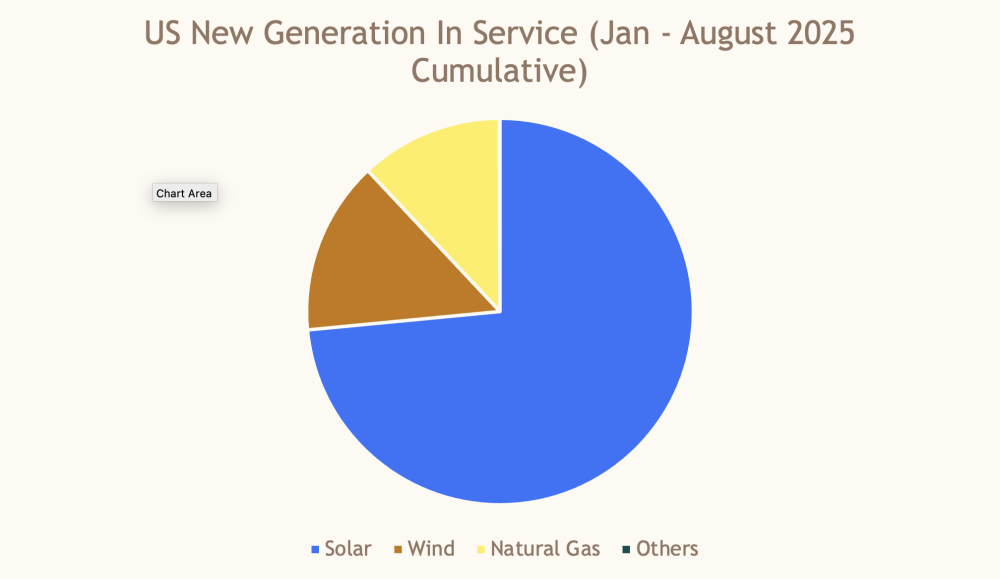
Despite the noise since then, the latest data to August from regulator FERC shows that solar and wind represented 88% of all new capacity additions. [3]

Source: FERC

This is not a blip—it’s a structural shift. Competitive costs and the rapid speed of deployment are driving a clean energy build-out that the latest policy reversal has not stopped.

What about gas and nuclear?

Both gas and nuclear will remain part of the long-term mix, but neither can scale quickly. For gas, while there is certainly more demand, a turbine order made today will not be online until the 2030s.

And while nuclear has seen strong interest, including from AI-linked names like Microsoft, Google, Meta and Amazon who want baseload carbon-free power, so far, we have mainly seen restarts of recently mothballed plants. New small modular reactors (or SMRs) remain a 2030s story.

Demand inflecting for the first time in 20 years

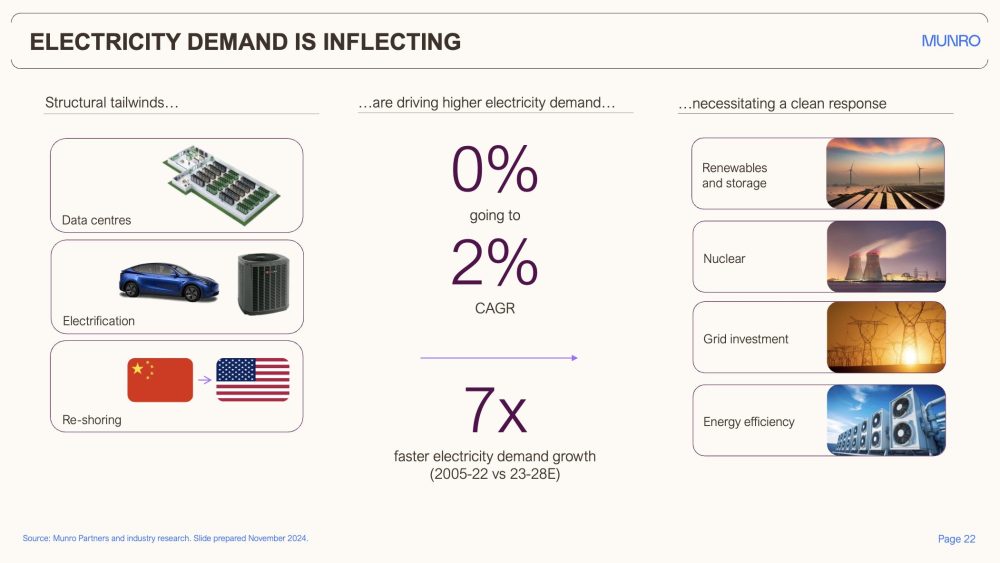
At the same time as supply is greening, demand is inflecting. After decades of flat growth, where new demand for electricity was offset by efficiency gains, today we’re seeing absolute demand rising.

Why?

We’ve observed three structural drivers:

  • Data centres and artificial Intelligence (AI): Data centres are power-hungry. By 2030, the IEA estimates that U.S. data centre demand will more than double to over 400 TWh, up from around 180 TWh in 2024. That’s more than what the whole of Poland consumes annually. [4]
  • Electrification: While electric vehicle adoption will slow due to new U.S. policy, it, together with electric heat pumps replacing gas boilers and industrial electrification, are adding load across sectors.
  • Reshoring from China: The Administration is incentivising industries to come back to the U.S., which bring with them energy-intensive processes.

In fact, we surmise that the U.S.’s strategic desire to lead in AI and to reshore from China explains why Trump’s policy rollback for renewables was more benign than anticipated. The Administration realises the U.S. needs all the electricity it can get.

The result: U.S. electricity demand is projected to grow much faster now than the last 2 decades. This presents a structural tailwind for utilities, grid and renewables developers, and service providers.

Source: Munro Partners and industry research. Information prepared November 2024.

So, who benefits?

There are many ways to invest in the ongoing structural greening of the U.S. grid and the recent inflection in demand. Quanta Services, a holding in our Global Climate Leaders strategy, is a prime example.

Quanta specialises in developing grid infrastructure and renewables projects. With nearly US$40bn in backlog and long relationships with major developers, the company is well positioned to capture increasing spending on the grid and renewables.

The Global Context: 195 minus One Doesn’t Equal Zero

Paris Agreement: U.S. exits, no one follows

In early 2025, President Trump again pulled the U.S. out of the 2015 Paris Agreement on climate change, but the global response was telling: like last time, no one followed. The other 194 signatories remain committed.

Today, even without the U.S., countries representing around three quarters of global GDP and emissions are committed to net zero.[5] In many cases, they are accelerating their efforts.

China’s 2035 Pledge: the same as fully decarbonizing Canada two times over

China remains the world’s largest emitter with an estimated 29% contribution to global emissions in 2024, according to the European Commission. [6]

With our newsfeeds centred around what was happening in the U.S., it was easy to miss China’s first absolute emissions reduction target announced in September: 7–10% below peak levels by 2035.

Critics argue this is modest, but scale matters: cutting 2024 emissions by 10% in China is equivalent to fully decarbonising Canada not once, but twice! [7]

Alongside this, China aims to raise non-fossil energy consumption to 30% and expand wind and solar capacity to 3,600 GW by 2035. Again, to get a sense of the scale, that’s more than three times the entire electricity generation capacity of the U.S. (at 2023 recorded levels). [8]

Again, this presents an enormous opportunity for the companies that will make this happen, and for their investors.

Energy Storage: The Backbone of China’s Greening Grid

China’s renewable ambitions hinge not just on solar and wind but on energy storage solutions (or ESS). China needs ESS because much of the solar it has already installed is curtailed (essentially wasted) because supply exceeds demand.

To illustrate, in the first half of this year, 33% of the solar generated in the western Chinese region of Tibet was curtailed. If they had more ESS, they could store this excess supply during daylight hours and use it in the evening peak.

To address this, China recently announced ambitious ESS policies aiming to grow capacity by nearly 30% p.a. to 180GW by 2027, requiring investment of US$35b: a huge revenue opportunity for developers and battery makers. [9]

So, who benefits?

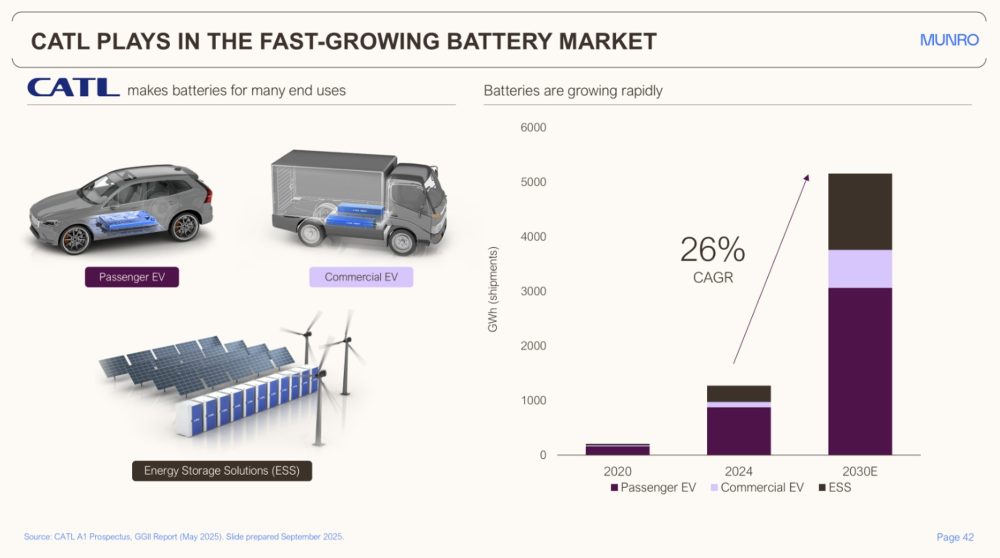
Contemporary Amperex Technology Limited (CATL), another Global Climate Leaders strategy holding, is riding this wave. A Chinese national champion, CATL holds the largest global market share — over a third — in batteries today. They now predict that the growth in batteries for ESS will outpace electric vehicles to the end of the decade.

Source: CATL a1 Prospectus, GGII Report (May 2025). Charts prepared September 2025.

Beyond the Noise

2025 has been a year of contradictions. The headlines scream rollback, but the reality on the ground whispers resilience and inflection.

In the U.S., the reality is that even today renewables are being deployed much more than fossil fuels. The dearth of cheap, fast-to-deploy and available alternatives, and the inflection in electricity demand, provide ongoing support.

Outside the U.S., we see decarbonization ambition is increasing. China’s aim to take two Canadas-worth of emissions out of its system by 2035 presents investors an opportunity to invest in – and benefit from – a generational transformation.

For those willing to look beyond the headlines, 2025 is not a setback for climate investing — it’s validation of a robust multi-decade structural growth opportunity.

Sources:

[1] NextEra Q3 2025 results presentation

[2] https://www.eia.gov/todayinenergy/detail.php?id=64586

[3] https://cms.ferc.gov/media/energy-infrastructure-update-august-2025

[4] Per Ember data https://ember-energy.org/data/yearly-electricity-data/

[5] https://zerotracker.net/

[6] https://edgar.jrc.ec.europa.eu/report_2025

[7] In 2024, Canada’s emissions were 768 mtCO2e, and 10% of China’s emissions was 1,554 mtCO2e https://edgar.jrc.ec.europa.eu/report_2025

[8] In 2023, the U.S. had 1,189 GW of generation capacity: https://www.eia.gov/energyexplained/electricity/electricity-in-the-us-generation-capacity-and-sales.php#:~:text=At%20the%20end%20of%202023,electricity%2Dgeneration%20capacity%20in%202023.

[9] UBS


RIA Disclaimer

The views and opinions expressed in this article are solely those of the authors and do not necessarily reflect the view or position of the Responsible Investment Association (RIA). The RIA does not endorse, recommend, or guarantee any of the claims made by the authors. This article is intended as general information and not investment advice. We recommend consulting with a qualified advisor or investment professional prior to making any investment or investment-related decision.

Aligning Capital with Global Progress: Investing with the UN’s Sustainable Development Goals

The Sustainable Development Goals (SDGs) were adopted in 2015 by UN member states as a shared global framework to address the world’s most pressing challenges. The 17 interconnected goals cover a broad range of issues, such as poverty eradication (SDG 1), climate action (SDG 7), quality education (SDG 4) and gender equality (SDG 5).[1] These goals aim to promote inclusive economic growth, environmental protection and social equity, forming the foundation of the UN’s 2030 Agenda for Sustainable Development.

While originally developed to guide national governments and policy agendas, the SDGs have increasingly gained traction in the private sector.[2] Businesses and investors are integrating SDG considerations into strategies, disclosures and capital allocation decisions. For investors, the SDGs provide a structured framework to understand global priorities and align long-term financial objectives accordingly.

SDG Investing Is Gaining Momentum

Since 2015, both sovereign and corporate issuers have increasingly turned to SDG-linked bonds to finance sustainability objectives.[3] Governments such as Indonesia, Mexico and Chile have issued SDG bonds tied to national priorities across education, health and climate resilience – with clear use-of-proceeds aligned to specific SDGs. On the corporate side, issuers are adopting SDG-aligned frameworks to raise capital for projects which contribute to goals such as affordable clean energy, and sustainable cities and communities, promoting transparency and enabling investors to assess measurable outcomes.

Issuance of SDG-linked bonds has expanded significantly over the past decade, with corporate issuances growing from a few dozen to over 2,200 in 2024; government issuances followed a similar trajectory, to over 650.[4] This rise in issuance reflects growing investor appetite for sustainability-linked investments.

Why Investors Are Turning to the SDG Framework

The SDGs have become a widely used framework in sustainable investing. According to the 2024 Assessment Report by the UN’s Principles for Responsible Investment, over 50% of reporting asset owners and asset managers use the SDGs to measure sustainability outcomes across their portfolios.[5] This growing adoption reflects the framework’s practicality, transparency and alignment with both voluntary and emerging regulatory standards.

One of the key benefits of the SDG framework is its clarity. While Environmental, Social and Governance (ESG) investing has gained traction in recent years, the landscape of ESG data and disclosure standards remains fragmented. Investors face a range of definitions, methodologies and data sources that can vary by markets and providers. In contrast, the SDGs offer a globally accepted framework built around 17 goals, 169 underlying targets and over 200 indicators to measure progress. The SDGs are also embedded in many major international disclosure and reporting frameworks, such as the Global Reporting Initiative, the EU’s Sustainable Finance Disclosure Regulation and the International Sustainability Standards Board. This standard approach offered by the SDG framework helps reduce ambiguity, improving the quality and comparability of disclosures.

Importantly, the SDGs offer broad coverage, addressing priorities across the full ESG spectrum. For example, SDG 8 (Decent Work and Economic Growth) encourages labour rights protection and safe working environments, while SDG 16 (Peace, Justice and Strong Institutions) emphasizes reducing corruption and bribery. As a result, the SDGs provide a comprehensive lens through which investors can align capital with long-term, real-world impact across sustainability themes, potentially contributing to greater thematic and sector diversification within portfolios.

How investors Can Approach the SDG Investment Opportunity

The SDG framework has demonstrated its effectiveness in driving measurable progress on global priorities, with 17% of assessable targets already achieved or on track – including SDG 9.c (Access to Information and Communication Technologies and the Internet) and SDG 7.b (Investing in Energy Infrastructure).[6] However, broad implementation challenges remain. According to The Sustainable Development Goals Report 2024, 48% of assessable targets still show moderate or severe deviation, and 17% have fallen below the 2015 baseline levels.[7] These reflect the urgent need to realign with the 2030 agenda and underscore the value of the SDG framework as a tool to help identify where financial capital is required.

According to the UN Conference on Trade and Development, achieving the SDGs will require about USD $5-$7 trillion a year until 2030,[8] including investments in infrastructure, clean energy, water and sanitation, and agriculture. Significant funding gaps are estimated to range between USD $2.5 trillion to USD $4 trillion per year.[9] This unmet capital demand creates an opportunity for investors to contribute to global progress while potentially capturing sustainable long-term returns.

The SDG framework can help investors identify opportunity-rich sectors where sustainability themes intersect with long-term financial growth possibilities. Sectors such as healthcare, clean energy, education and infrastructure are directly aligned with the goals. These sectors are expected to experience structural expansion driven by demographic shifts, policy support and technology adoption.

Leveraging the SDGs also gives investors the possibility to spot untapped opportunities in various markets. Tools such as the SDG Investor Map[10] provide country-level insights on commercially viable investment themes, backed by actionable metrics. Several institutional investors have launched blended finance vehicles targeting SDG-aligned opportunities in emerging markets, aiming to mobilize private capital towards underserved regions[11].

Conclusion

The SDG framework provides investors with both a directional compass and an actionable toolkit. By incorporating SDG indicators into investment analysis, sector targeting and regional allocation, investors can potentially move from ESG objectives to measurable outcomes. As disclosure standards evolve and sustainable investment expands, investors who adopt SDG-aligned thinking today may be better positioned to capture long-term growth opportunities, mitigate ESG risks and contribute to global developments.

Sources:

[1] https://sdgs.un.org/goals

[2] https://sdg.iisd.org/commentary/guest-articles/businesses-are-committing-to-the-sdgs-but-what-about-their-impact/

[3] https://unctad.org/publication/financing-sustainable-development-report-2024

[4] Bloomberg Finance L.P.

[5] UN PRI, Global responsible investment trends: inside PRI reporting data https://www.unpri.org/download?ac=23004&adredir=1#page=13

[6] UN, The Sustainable Development Goals Report: https://unstats.un.org/sdgs/report/2024/The-Sustainable-Development-Goals-Report-2024.pdf )

[7] UN, The Sustainable Development Goals Report: https://unstats.un.org/sdgs/report/2024/The-Sustainable-Development-Goals-Report-2024.pdf )

[8] https://unctad.org/publication/financing-sustainable-development-report-2024

[9] https://unctad.org/publication/financing-sustainable-development-report-2024

[10] For more details about SDG Investor Map, please refer to United Nations Development Programme website: https://sdgprivatefinance.undp.org/leveraging-capital/sdg-investor-platform

[11] https://www.convergence.finance/blended-finance


Contributor Disclaimer

The information contained herein has been provided by TD Asset Management Inc. and is for information purposes only. The information has been drawn from sources believed to be reliable. The information does not provide financial, legal, tax or investment advice. Particular investment, tax, or trading strategies should be evaluated relative to each individual’s objectives and risk tolerance.

This material is not an offer to any person in any jurisdiction where unlawful or unauthorized. These materials have not been reviewed by and are not registered with any securities or other regulatory authority in jurisdictions where we operate.

Any general discussion or opinions contained within these materials regarding securities or market conditions represent our view or the view of the source cited. Unless otherwise indicated, such view is as of the date noted and is subject to change. Information about the portfolio holdings, asset allocation or diversification is historical and is subject to change.

Bloomberg and Bloomberg.com are trademarks and service marks of Bloomberg Finance L.P., a Delaware limited partnership, or its subsidiaries. All rights reserved.

This document may contain forward-looking statements (“FLS”). FLS reflect current expectations and projections about future events and/or outcomes based on data currently available. Such expectations and projections may be incorrect in the future as events which were not anticipated or considered in their formulation may occur and lead to results that differ materially from those expressed or implied. FLS are not guarantees of future performance and reliance on FLS should be avoided.

The content of this publication has not been approved by the United Nations and does not reflect the views of the United Nations or its officials or Member States.

TD Asset Management Inc. is a wholly-owned subsidiary of The Toronto-Dominion Bank.

RIA Disclaimer

The views and opinions expressed in this article are solely those of the authors and do not necessarily reflect the view or position of the Responsible Investment Association (RIA). The RIA does not endorse, recommend, or guarantee any of the claims made by the authors. This article is intended as general information and not investment advice. We recommend consulting with a qualified advisor or investment professional prior to making any investment or investment-related decision.

The Energy Transition Is On – Just Not How We Expected

“The future is already here – it’s just not evenly distributed.” Science fiction writer William Gibson’s prescient comment from the 1990s resonates in today’s increasingly polarized conversation about the energy transition.

While headlines declare setbacks and political headwinds, the data tells a different story: the transition has not reversed, it is just taking a different path to the one we expected. Global energy investment is set to reach a record US$3.3 trillion in 2025, with clean energy technologies attracting US$2.2 trillion, twice the US$1.1 trillion flowing to fossil fuels. But the transition we thought we might have – largely policy-driven, with developed markets leading the way because they could afford to implement change first – has been turned on its head.

Original Roadmap

The original roadmap envisioned Europe and the US hitting net zero by 2050 while emerging markets followed later, with China targeting 2060 and India 2070. This made sense because developed markets had experienced decades of flat or declining energy demand and had almost universally supportive policy.

The developed world’s energy transition was modelled as a transformative one. Where previous transitions had been additive, with new forms of energy layered onto existing forms to meet new demand (biomass supplemented with coal then oil), this one would require the existing energy forms to be replaced. Hence the need for significant policy measures to effect the required change. Emerging markets, on the other hand, were expected to make a gradual additive transition to meet new energy demand, without the supportive policy.

A Different Transition

All this has changed. With surging total energy demand – particularly due to the exploding volume of data processing – and diminished policy momentum in developed markets, they are transitioning more slowly than expected, and in an additive way. The opportunities for decarbonization solution providers remain abundant: more total energy demand means more potential demand for decarbonization technologies. But these technologies are now seen in the developed world as part of an all-of-the-above energy solution.

Meanwhile, emerging markets are surprising dramatically to the upside, driven not by policy but by the simple economics of (mostly Chinese-manufactured) clean technology that has become the cheapest option available. In some sectors in emerging markets, such as electric vehicles in China, we are seeing a transformative energy transition. Most new cars, and now 10% of all cars, as well as the vast majority of two-wheelers sold in China, are electric.

Acceleration

We expect both trends to accelerate. Developed-market energy demand growth has to date been mostly a phenomenon in the US, where data centres are on course to account for almost half the growth in electricity demand between now and 2030. By the start of the next decade, the US is set to use more electricity to process data than to manufacture all energy-intensive goods combined. Alongside artificial intelligence, the increased energy demand additionally reflects industrial reshoring and diminishing returns from decades of efficiency improvements.

There are now also early indications of higher electricity demand in Europe, whose creaking electrical infrastructure will require investment and drive demand for decarbonization solutions. Fossil fuels simply cannot meet the new energy needs efficiently or economically, even with favourable policy. So, the market for decarbonization is still growing, creating opportunities for investors, and the imperative to advocate for policy that encourages it is more pressing than ever.

Second Transformation

The second transformation, the change in the trajectory of the energy transition in emerging markets, is even more significant for global emissions. China’s exports of solar, wind and electric vehicles to the Global South now account for 47% of total exports – nearly matching its developed country exports for the first time. The scale is staggering. Pakistan alone imported 19 GW of solar modules in 2024, equivalent to nearly half its grid-connected capacity. This represents the solution to what has long been the biggest challenge in climate policy: how to transition emerging markets, which constitute the majority of future emissions growth. Chinese solar panels are lighting rural Zimbabwean communities, while affordable Chinese electric vehicles are transforming city streets from Mexico to Thailand. Within China itself, clean energy contributed a record US$1.6 trillion to the economy in 2023, becoming one of the country’s primary economic drivers.

Perhaps because we are not experiencing the energy transition we expected, the valuations of companies that are positively exposed to decarbonization often do not reflect the structural growth supporting them – even though the ones we hold in our decarbonization-focused investment portfolio continue to grow at almost double the rate of the market as a whole. And for investors looking to do good as well as generate a financial return, we also see more opportunity for impact in a world where energy growth is accelerating, and decarbonization is no longer only, or even primarily, a developed world phenomenon.

As futurologist Roy Amara observed, “We tend to overestimate the effect of a technology in the short run and underestimate the effect in the long run.” The energy transition may have exemplified Amara’s Law: early hype gave way to disillusionment, but now the long-term transformative effects of the energy transition are becoming undeniable.

Sources:

IEA World Energy Investment 2025, https://www.iea.org/reports/world-energy-investment-2025

IEA Energy and AI Report 2025, https://www.iea.org/reports/energy-and-ai

Centre for Research on Energy and Clean Air analysis, various reports 2024-2025


RIA Disclaimer

The views and opinions expressed in this article are solely those of the authors and do not necessarily reflect the view or position of the Responsible Investment Association (RIA). The RIA does not endorse, recommend, or guarantee any of the claims made by the authors. This article is intended as general information and not investment advice. We recommend consulting with a qualified advisor or investment professional prior to making any investment or investment-related decision.

Canadian Investors Show Keen Appetite for Responsible Investment, But Knowledge and Trust Gaps Persist

The 2025 RIA Investor Opinion Survey paints a nuanced picture of Canadian retail investors’ attitudes toward responsible investment (RI). While interest in RI remains strong and is even growing among certain groups, significant challenges around awareness, advisor engagement and concerns about greenwashing continue to temper enthusiasm.

According to the survey, two-thirds of Canadian investors express interest in responsible investing, with younger investors and women showing the highest levels of interest. Interestingly, the survey also notes a rising interest among those aged 55 and older, suggesting that RI is becoming a priority across generations. Despite this widespread interest, knowledge about responsible investment remains limited. About two-thirds of respondents admit to knowing little or nothing about RI, and nearly one in five have never even heard of the concept.

The influence of global events is also shaping investor behavior. Over a third of respondents say they are more likely to choose responsible investments now than they were a year ago. However, this increased interest has not yet translated into higher ownership, as RI holdings have slightly decreased since late 2023. This disconnect points to barriers beyond mere interest, including a critical gap in communication between investors and their financial advisors.

RI Service Gap

Source: 2025 RIA Investor Opinion Survey

While a striking 76% of investors want their advisors or financial institutions to ask them specific questions about RI, only 28% report ever being asked such questions. Even when these conversations do occur, just 35% describe them as meaningful. This lack of engagement suggests missed opportunities for advisors to connect with clients and guide them toward investment choices that reflect their ethical priorities.

Greenwashing, the practice of marketing investments as more sustainable than they truly are, is once again a primary concern for investors. Despite the Canadian Securities Administrators (CSA) updated guidance on disclosures related to ESG considerations in March 2024, more than half of respondents now cite greenwashing as a deterrent to responsible investing, up from 46% previously. This increasing skepticism underscores the need for greater transparency and accountability in the RI space.

Artificial intelligence (AI) is another emerging area of interest and concern. Most investors are unfamiliar with how AI is applied in investment decision-making, with 64% reporting low or no familiarity. Yet, a majority believe it is important for companies in their portfolios, as well as their financial advisors and institutions, to adopt responsible AI frameworks and principles.

Ultimately, the survey reveals that Canadian retail investors value responsible investment not only for its potential to generate returns but also for its role in risk reduction and alignment with personal values. Nearly all respondents emphasized the importance of considering investment opportunities that incorporate RI in portfolios, and that financial advisors remain a trusted source of information for these decisions.

The 2025 RIA Investor Opinion Survey makes it clear that while interest in responsible investing is high and expanding, there is a pressing need for better education, more proactive advisor engagement, and stronger safeguards against greenwashing. Addressing these challenges will be key to turning investor interest into meaningful action and fostering a more sustainable investment landscape in Canada.

Responsible Investment Research Initiative

This report was produced as part of the Responsible Investment (RI) Research Initiative. A program of the RIA, the Initiative delivers objective, data-driven insights that give clarity on where the Canadian marketplace stands. The initiative is grounded in three marquee reports, published annually, providing a 360-degree view of responsible investment in Canada:

The Investor Opinion Survey (Learn more) brings the voice of everyday Canadians into the conversation. It tells us what retail investors think, what they value and where responsible investment fits into their financial goals.

The Advisor RI Insights Study (Coming October 2025) explores how Canadian financial advisors approach responsible investing, including what they’re hearing from clients, what they’re recommending and where the barriers still lie.

The Canadian RI Trends Report (Coming November 2025) tracks the practices of institutional investors, from pension plans to fund managers, and helps us understand how responsible investment is evolving across Canada’s capital markets.

These reports speak to different segments of our ecosystem, but together they tell a powerful story of where we are, what we’re facing, and where we can go next. This initiative is about giving our members, and the broader investment community, the insights needed to set strategy, communicate with stakeholders, and measure progress.

The RI Research Initiative is generously supported by partners Addenda Capital, Desjardins, Mackenzie Investments, National Bank Investments, RBC Global Asset Management, and TD Asset Management. Learn more at www.ri-research-initiative.ca.

The Role of Critical Minerals in the Energy Transition

Critical minerals have emerged as an important input in the global energy transition. Minerals like copper, lithium, cobalt, nickel and rare earth elements play an indispensable role in manufacturing electric vehicles (EVs), renewable energy systems and advanced electronics. As global demand intensifies, concerns around sustainability and supply chain security introduce both risks and opportunities for commodity investors.

Rising Demand for Critical Minerals

Over the past decade, prices for these minerals have generally risen, with lithium and cobalt seeing increases of 53% and 70%, respectively. With accelerating electrification and clean tech deployment, demand is expected to surge further by 2030.

Figure 1: Growing Industrial Applications of Critical Minerals

Sources: International Energy Agency (IAE), European Commission, Cobalt Institute, Bloomberg Finance L.P, TDAM Research. As of March 2025.

An EV requires roughly 440 pounds of critical minerals, compared to just 66 pounds in a gas-powered car. Demand is also rising from data-driven sectors like AI and cloud computing, which intensify rare earth usage. Governments and corporations are racing to secure diversified supplies, but doing so remains difficult amid refining bottlenecks and geopolitical tensions.

Challenges in the Supply Chain

Despite strong demand tailwinds, several factors threaten the stable supply of critical minerals: geopolitical disruptions, environmental concerns, extreme weather events and social issues.

China dominates a significant portion of the global critical mineral supply chain, refining over 70% of the world’s cobalt and producing nearly 60% of its lithium. Many Western nations are attempting to diversify their supply chains to reduce reliance on China, but progress has been slow, posing persistent geopolitical risks.

These risks are compounded by environmental concerns worldwide. Nickel mining in Indonesia has caused widespread deforestation and water pollution. Similarly, lithium extraction in South America’s so-called Lithium Triangle requires large amounts of water, raising sustainability concerns.

Extreme weather events like floods and droughts also are increasingly disrupting mining operations. In Australia, severe flooding has halted transport and delayed project timelines. In Chile, prolonged droughts in water-scarce regions are increasing pressure on lithium extraction and raising operational sustainability concerns.

Mining operations have also triggered ethical concerns in several regions. In countries like the Democratic Republic of Congo, there are widespread reports of child labor in illegal mining sites, particularly for lithium and cobalt. Meanwhile, violent clashes with Indigenous communities in Brazil and Australia have brought mining projects to a halt or led to legal action. In Canada, protests over Ontario’s “Ring of Fire” project – which includes minerals such as chromite, copper, zinc, gold, diamond, nickel and platinum group elements – have underscored the critical importance of inclusive consultation with First Nations communities. Without this, companies risk losing their social license to operate.

All these challenges have important market and investment implications.

Price Volatility

Supply shocks and rapid demand swings have made critical mineral markets highly volatile. For example, lithium prices skyrocketed in 2022 due to shortages and investor speculation, only for them to tank in 2023 amid fears of oversupply and cooling EV demand. This volatility complicates budgeting, hedging and long-term planning for industries dependent on mineral-intensive technologies.

Corporate and Government Investments

In response to supply insecurity, companies are pursuing upstream acquisitions to lock in critical inputs. A notable example is Rio Tinto’s recent $10 billion acquisition of Arcadium, a lithium refining company, which signaled the growing trend of vertical integration in the mining sector. On the policy side, governments are stepping in with incentives. The 2022 U.S. Inflation Reduction Act included generous tax credits for domestic extraction and battery production, a goal supported by the current administration, while the European Union’s 2024 Critical Raw Materials Act pushes for diversified, localized mineral supply.

Strategic Responses to Supply Risks

To reduce reliance on volatile supply chains, firms are exploring the use of alternative materials. One scalable alternative which is gaining traction are sodium-ion batteries. They use sodium, which is more abundant and widely available than lithium. While their energy density is still lower, these batteries could play a significant role in grid storage and low-cost EV markets in the years ahead.

Recycling and Circular Economy

Recycling of critical minerals is emerging as a key strategy for mitigating supply risk and lowering environmental impact. Companies like Nth Cycle are rolling out clean-tech methods to recover critical materials like nickel and cobalt from e-waste and industrial scrap. Their closed-loop systems aim to reduce reliance on mining and to be far less carbon-intensive. Their process can also cut emissions by up to 90% compared to traditional extraction methods.

Policy and Regulation

Governments are increasingly aligning policy with sustainability goals. The 2024 bipartisan U.S. Critical Mineral Consistency Act mandates more transparent sourcing and supports domestic processing through tax credits. In parallel, the European Union is reviewing and expanding its Conflict Minerals Regulation to include minerals such as cobalt and lithium, moving beyond its original focus on tin, tantalum, tungsten and gold. These steps aim to improve ethical sourcing and boost investor confidence in mineral supply chains.

Conclusion

Critical minerals are the backbone of the global clean energy transformation. Despite their importance, the path from mine to market is increasingly complex — shaped by geopolitical risk, environmental externalities and growing social expectations. To meet rising demand while ensuring long-term sustainability, governments and investors must look beyond securing access to critical minerals. They must champion innovation in recycling, fast-track supply diversification and integrate ESG principles into the core of mineral sourcing strategies. Only then can the global race for critical minerals serve as a catalyst — rather than a contradiction — to the energy transition.


Contributor Disclaimer

The information contained herein has been provided by TD Asset Management Inc. and is for information purposes only. The information has been drawn from sources believed to be reliable. [Include the following sentence if graphs or charts are used: Graphs and charts are used for illustrative purposes only and do not reflect future values or future performance of any investment]. The information does not provide financial, legal, tax or investment advice. Particular investment, tax, or trading strategies should be evaluated relative to each individual’s objectives and risk tolerance.

This material is not an offer to any person in any jurisdiction where unlawful or unauthorized. These materials have not been reviewed by and are not registered with any securities or other regulatory authority in jurisdictions where we operate.

Any general discussion or opinions contained within these materials regarding securities or market conditions represent our view or the view of the source cited. Unless otherwise indicated, such view is as of the date noted and is subject to change. Information about the portfolio holdings, asset allocation or diversification is historical and is subject to change.

This document may contain forward-looking statements (“FLS”). FLS reflect current expectations and projections about future events and/or outcomes based on data currently available. Such expectations and projections may be incorrect in the future as events which were not anticipated or considered in their formulation may occur and lead to results that differ materially from those expressed or implied. FLS are not guarantees of future performance and reliance on FLS should be avoided.

TD Asset Management Inc. is a wholly-owned subsidiary of The Toronto-Dominion Bank.

RIA Disclaimer

The views and opinions expressed in this article are solely those of the authors and do not necessarily reflect the view or position of the Responsible Investment Association (RIA). The RIA does not endorse, recommend, or guarantee any of the claims made by the authors. This article is intended as general information and not investment advice. We recommend consulting with a qualified advisor or investment professional prior to making any investment or investment-related decision.