Aligning Capital with Global Progress: Investing with the UN’s Sustainable Development Goals

The Sustainable Development Goals (SDGs) were adopted in 2015 by UN member states as a shared global framework to address the world’s most pressing challenges. The 17 interconnected goals cover a broad range of issues, such as poverty eradication (SDG 1), climate action (SDG 7), quality education (SDG 4) and gender equality (SDG 5).[1] These goals aim to promote inclusive economic growth, environmental protection and social equity, forming the foundation of the UN’s 2030 Agenda for Sustainable Development.

While originally developed to guide national governments and policy agendas, the SDGs have increasingly gained traction in the private sector.[2] Businesses and investors are integrating SDG considerations into strategies, disclosures and capital allocation decisions. For investors, the SDGs provide a structured framework to understand global priorities and align long-term financial objectives accordingly.

SDG Investing Is Gaining Momentum

Since 2015, both sovereign and corporate issuers have increasingly turned to SDG-linked bonds to finance sustainability objectives.[3] Governments such as Indonesia, Mexico and Chile have issued SDG bonds tied to national priorities across education, health and climate resilience – with clear use-of-proceeds aligned to specific SDGs. On the corporate side, issuers are adopting SDG-aligned frameworks to raise capital for projects which contribute to goals such as affordable clean energy, and sustainable cities and communities, promoting transparency and enabling investors to assess measurable outcomes.

Issuance of SDG-linked bonds has expanded significantly over the past decade, with corporate issuances growing from a few dozen to over 2,200 in 2024; government issuances followed a similar trajectory, to over 650.[4] This rise in issuance reflects growing investor appetite for sustainability-linked investments.

Why Investors Are Turning to the SDG Framework

The SDGs have become a widely used framework in sustainable investing. According to the 2024 Assessment Report by the UN’s Principles for Responsible Investment, over 50% of reporting asset owners and asset managers use the SDGs to measure sustainability outcomes across their portfolios.[5] This growing adoption reflects the framework’s practicality, transparency and alignment with both voluntary and emerging regulatory standards.

One of the key benefits of the SDG framework is its clarity. While Environmental, Social and Governance (ESG) investing has gained traction in recent years, the landscape of ESG data and disclosure standards remains fragmented. Investors face a range of definitions, methodologies and data sources that can vary by markets and providers. In contrast, the SDGs offer a globally accepted framework built around 17 goals, 169 underlying targets and over 200 indicators to measure progress. The SDGs are also embedded in many major international disclosure and reporting frameworks, such as the Global Reporting Initiative, the EU’s Sustainable Finance Disclosure Regulation and the International Sustainability Standards Board. This standard approach offered by the SDG framework helps reduce ambiguity, improving the quality and comparability of disclosures.

Importantly, the SDGs offer broad coverage, addressing priorities across the full ESG spectrum. For example, SDG 8 (Decent Work and Economic Growth) encourages labour rights protection and safe working environments, while SDG 16 (Peace, Justice and Strong Institutions) emphasizes reducing corruption and bribery. As a result, the SDGs provide a comprehensive lens through which investors can align capital with long-term, real-world impact across sustainability themes, potentially contributing to greater thematic and sector diversification within portfolios.

How investors Can Approach the SDG Investment Opportunity

The SDG framework has demonstrated its effectiveness in driving measurable progress on global priorities, with 17% of assessable targets already achieved or on track – including SDG 9.c (Access to Information and Communication Technologies and the Internet) and SDG 7.b (Investing in Energy Infrastructure).[6] However, broad implementation challenges remain. According to The Sustainable Development Goals Report 2024, 48% of assessable targets still show moderate or severe deviation, and 17% have fallen below the 2015 baseline levels.[7] These reflect the urgent need to realign with the 2030 agenda and underscore the value of the SDG framework as a tool to help identify where financial capital is required.

According to the UN Conference on Trade and Development, achieving the SDGs will require about USD $5-$7 trillion a year until 2030,[8] including investments in infrastructure, clean energy, water and sanitation, and agriculture. Significant funding gaps are estimated to range between USD $2.5 trillion to USD $4 trillion per year.[9] This unmet capital demand creates an opportunity for investors to contribute to global progress while potentially capturing sustainable long-term returns.

The SDG framework can help investors identify opportunity-rich sectors where sustainability themes intersect with long-term financial growth possibilities. Sectors such as healthcare, clean energy, education and infrastructure are directly aligned with the goals. These sectors are expected to experience structural expansion driven by demographic shifts, policy support and technology adoption.

Leveraging the SDGs also gives investors the possibility to spot untapped opportunities in various markets. Tools such as the SDG Investor Map[10] provide country-level insights on commercially viable investment themes, backed by actionable metrics. Several institutional investors have launched blended finance vehicles targeting SDG-aligned opportunities in emerging markets, aiming to mobilize private capital towards underserved regions[11].

Conclusion

The SDG framework provides investors with both a directional compass and an actionable toolkit. By incorporating SDG indicators into investment analysis, sector targeting and regional allocation, investors can potentially move from ESG objectives to measurable outcomes. As disclosure standards evolve and sustainable investment expands, investors who adopt SDG-aligned thinking today may be better positioned to capture long-term growth opportunities, mitigate ESG risks and contribute to global developments.

Sources:

[1] https://sdgs.un.org/goals

[2] https://sdg.iisd.org/commentary/guest-articles/businesses-are-committing-to-the-sdgs-but-what-about-their-impact/

[3] https://unctad.org/publication/financing-sustainable-development-report-2024

[4] Bloomberg Finance L.P.

[5] UN PRI, Global responsible investment trends: inside PRI reporting data https://www.unpri.org/download?ac=23004&adredir=1#page=13

[6] UN, The Sustainable Development Goals Report: https://unstats.un.org/sdgs/report/2024/The-Sustainable-Development-Goals-Report-2024.pdf )

[7] UN, The Sustainable Development Goals Report: https://unstats.un.org/sdgs/report/2024/The-Sustainable-Development-Goals-Report-2024.pdf )

[8] https://unctad.org/publication/financing-sustainable-development-report-2024

[9] https://unctad.org/publication/financing-sustainable-development-report-2024

[10] For more details about SDG Investor Map, please refer to United Nations Development Programme website: https://sdgprivatefinance.undp.org/leveraging-capital/sdg-investor-platform

[11] https://www.convergence.finance/blended-finance


Contributor Disclaimer

The information contained herein has been provided by TD Asset Management Inc. and is for information purposes only. The information has been drawn from sources believed to be reliable. The information does not provide financial, legal, tax or investment advice. Particular investment, tax, or trading strategies should be evaluated relative to each individual’s objectives and risk tolerance.

This material is not an offer to any person in any jurisdiction where unlawful or unauthorized. These materials have not been reviewed by and are not registered with any securities or other regulatory authority in jurisdictions where we operate.

Any general discussion or opinions contained within these materials regarding securities or market conditions represent our view or the view of the source cited. Unless otherwise indicated, such view is as of the date noted and is subject to change. Information about the portfolio holdings, asset allocation or diversification is historical and is subject to change.

Bloomberg and Bloomberg.com are trademarks and service marks of Bloomberg Finance L.P., a Delaware limited partnership, or its subsidiaries. All rights reserved.

This document may contain forward-looking statements (“FLS”). FLS reflect current expectations and projections about future events and/or outcomes based on data currently available. Such expectations and projections may be incorrect in the future as events which were not anticipated or considered in their formulation may occur and lead to results that differ materially from those expressed or implied. FLS are not guarantees of future performance and reliance on FLS should be avoided.

The content of this publication has not been approved by the United Nations and does not reflect the views of the United Nations or its officials or Member States.

TD Asset Management Inc. is a wholly-owned subsidiary of The Toronto-Dominion Bank.

RIA Disclaimer

The views and opinions expressed in this article are solely those of the authors and do not necessarily reflect the view or position of the Responsible Investment Association (RIA). The RIA does not endorse, recommend, or guarantee any of the claims made by the authors. This article is intended as general information and not investment advice. We recommend consulting with a qualified advisor or investment professional prior to making any investment or investment-related decision.

The Energy Transition Is On – Just Not How We Expected

“The future is already here – it’s just not evenly distributed.” Science fiction writer William Gibson’s prescient comment from the 1990s resonates in today’s increasingly polarized conversation about the energy transition.

While headlines declare setbacks and political headwinds, the data tells a different story: the transition has not reversed, it is just taking a different path to the one we expected. Global energy investment is set to reach a record US$3.3 trillion in 2025, with clean energy technologies attracting US$2.2 trillion, twice the US$1.1 trillion flowing to fossil fuels. But the transition we thought we might have – largely policy-driven, with developed markets leading the way because they could afford to implement change first – has been turned on its head.

Original Roadmap

The original roadmap envisioned Europe and the US hitting net zero by 2050 while emerging markets followed later, with China targeting 2060 and India 2070. This made sense because developed markets had experienced decades of flat or declining energy demand and had almost universally supportive policy.

The developed world’s energy transition was modelled as a transformative one. Where previous transitions had been additive, with new forms of energy layered onto existing forms to meet new demand (biomass supplemented with coal then oil), this one would require the existing energy forms to be replaced. Hence the need for significant policy measures to effect the required change. Emerging markets, on the other hand, were expected to make a gradual additive transition to meet new energy demand, without the supportive policy.

A Different Transition

All this has changed. With surging total energy demand – particularly due to the exploding volume of data processing – and diminished policy momentum in developed markets, they are transitioning more slowly than expected, and in an additive way. The opportunities for decarbonization solution providers remain abundant: more total energy demand means more potential demand for decarbonization technologies. But these technologies are now seen in the developed world as part of an all-of-the-above energy solution.

Meanwhile, emerging markets are surprising dramatically to the upside, driven not by policy but by the simple economics of (mostly Chinese-manufactured) clean technology that has become the cheapest option available. In some sectors in emerging markets, such as electric vehicles in China, we are seeing a transformative energy transition. Most new cars, and now 10% of all cars, as well as the vast majority of two-wheelers sold in China, are electric.

Acceleration

We expect both trends to accelerate. Developed-market energy demand growth has to date been mostly a phenomenon in the US, where data centres are on course to account for almost half the growth in electricity demand between now and 2030. By the start of the next decade, the US is set to use more electricity to process data than to manufacture all energy-intensive goods combined. Alongside artificial intelligence, the increased energy demand additionally reflects industrial reshoring and diminishing returns from decades of efficiency improvements.

There are now also early indications of higher electricity demand in Europe, whose creaking electrical infrastructure will require investment and drive demand for decarbonization solutions. Fossil fuels simply cannot meet the new energy needs efficiently or economically, even with favourable policy. So, the market for decarbonization is still growing, creating opportunities for investors, and the imperative to advocate for policy that encourages it is more pressing than ever.

Second Transformation

The second transformation, the change in the trajectory of the energy transition in emerging markets, is even more significant for global emissions. China’s exports of solar, wind and electric vehicles to the Global South now account for 47% of total exports – nearly matching its developed country exports for the first time. The scale is staggering. Pakistan alone imported 19 GW of solar modules in 2024, equivalent to nearly half its grid-connected capacity. This represents the solution to what has long been the biggest challenge in climate policy: how to transition emerging markets, which constitute the majority of future emissions growth. Chinese solar panels are lighting rural Zimbabwean communities, while affordable Chinese electric vehicles are transforming city streets from Mexico to Thailand. Within China itself, clean energy contributed a record US$1.6 trillion to the economy in 2023, becoming one of the country’s primary economic drivers.

Perhaps because we are not experiencing the energy transition we expected, the valuations of companies that are positively exposed to decarbonization often do not reflect the structural growth supporting them – even though the ones we hold in our decarbonization-focused investment portfolio continue to grow at almost double the rate of the market as a whole. And for investors looking to do good as well as generate a financial return, we also see more opportunity for impact in a world where energy growth is accelerating, and decarbonization is no longer only, or even primarily, a developed world phenomenon.

As futurologist Roy Amara observed, “We tend to overestimate the effect of a technology in the short run and underestimate the effect in the long run.” The energy transition may have exemplified Amara’s Law: early hype gave way to disillusionment, but now the long-term transformative effects of the energy transition are becoming undeniable.

Sources:

IEA World Energy Investment 2025, https://www.iea.org/reports/world-energy-investment-2025

IEA Energy and AI Report 2025, https://www.iea.org/reports/energy-and-ai

Centre for Research on Energy and Clean Air analysis, various reports 2024-2025


RIA Disclaimer

The views and opinions expressed in this article are solely those of the authors and do not necessarily reflect the view or position of the Responsible Investment Association (RIA). The RIA does not endorse, recommend, or guarantee any of the claims made by the authors. This article is intended as general information and not investment advice. We recommend consulting with a qualified advisor or investment professional prior to making any investment or investment-related decision.

Canadian Investors Show Keen Appetite for Responsible Investment, But Knowledge and Trust Gaps Persist

The 2025 RIA Investor Opinion Survey paints a nuanced picture of Canadian retail investors’ attitudes toward responsible investment (RI). While interest in RI remains strong and is even growing among certain groups, significant challenges around awareness, advisor engagement and concerns about greenwashing continue to temper enthusiasm.

According to the survey, two-thirds of Canadian investors express interest in responsible investing, with younger investors and women showing the highest levels of interest. Interestingly, the survey also notes a rising interest among those aged 55 and older, suggesting that RI is becoming a priority across generations. Despite this widespread interest, knowledge about responsible investment remains limited. About two-thirds of respondents admit to knowing little or nothing about RI, and nearly one in five have never even heard of the concept.

The influence of global events is also shaping investor behavior. Over a third of respondents say they are more likely to choose responsible investments now than they were a year ago. However, this increased interest has not yet translated into higher ownership, as RI holdings have slightly decreased since late 2023. This disconnect points to barriers beyond mere interest, including a critical gap in communication between investors and their financial advisors.

RI Service Gap

Source: 2025 RIA Investor Opinion Survey

While a striking 76% of investors want their advisors or financial institutions to ask them specific questions about RI, only 28% report ever being asked such questions. Even when these conversations do occur, just 35% describe them as meaningful. This lack of engagement suggests missed opportunities for advisors to connect with clients and guide them toward investment choices that reflect their ethical priorities.

Greenwashing, the practice of marketing investments as more sustainable than they truly are, is once again a primary concern for investors. Despite the Canadian Securities Administrators (CSA) updated guidance on disclosures related to ESG considerations in March 2024, more than half of respondents now cite greenwashing as a deterrent to responsible investing, up from 46% previously. This increasing skepticism underscores the need for greater transparency and accountability in the RI space.

Artificial intelligence (AI) is another emerging area of interest and concern. Most investors are unfamiliar with how AI is applied in investment decision-making, with 64% reporting low or no familiarity. Yet, a majority believe it is important for companies in their portfolios, as well as their financial advisors and institutions, to adopt responsible AI frameworks and principles.

Ultimately, the survey reveals that Canadian retail investors value responsible investment not only for its potential to generate returns but also for its role in risk reduction and alignment with personal values. Nearly all respondents emphasized the importance of considering investment opportunities that incorporate RI in portfolios, and that financial advisors remain a trusted source of information for these decisions.

The 2025 RIA Investor Opinion Survey makes it clear that while interest in responsible investing is high and expanding, there is a pressing need for better education, more proactive advisor engagement, and stronger safeguards against greenwashing. Addressing these challenges will be key to turning investor interest into meaningful action and fostering a more sustainable investment landscape in Canada.

Responsible Investment Research Initiative

This report was produced as part of the Responsible Investment (RI) Research Initiative. A program of the RIA, the Initiative delivers objective, data-driven insights that give clarity on where the Canadian marketplace stands. The initiative is grounded in three marquee reports, published annually, providing a 360-degree view of responsible investment in Canada:

The Investor Opinion Survey (Learn more) brings the voice of everyday Canadians into the conversation. It tells us what retail investors think, what they value and where responsible investment fits into their financial goals.

The Advisor RI Insights Study (Coming October 2025) explores how Canadian financial advisors approach responsible investing, including what they’re hearing from clients, what they’re recommending and where the barriers still lie.

The Canadian RI Trends Report (Coming November 2025) tracks the practices of institutional investors, from pension plans to fund managers, and helps us understand how responsible investment is evolving across Canada’s capital markets.

These reports speak to different segments of our ecosystem, but together they tell a powerful story of where we are, what we’re facing, and where we can go next. This initiative is about giving our members, and the broader investment community, the insights needed to set strategy, communicate with stakeholders, and measure progress.

The RI Research Initiative is generously supported by partners Addenda Capital, Desjardins, Mackenzie Investments, National Bank Investments, RBC Global Asset Management, and TD Asset Management. Learn more at www.ri-research-initiative.ca.

The Role of Critical Minerals in the Energy Transition

Critical minerals have emerged as an important input in the global energy transition. Minerals like copper, lithium, cobalt, nickel and rare earth elements play an indispensable role in manufacturing electric vehicles (EVs), renewable energy systems and advanced electronics. As global demand intensifies, concerns around sustainability and supply chain security introduce both risks and opportunities for commodity investors.

Rising Demand for Critical Minerals

Over the past decade, prices for these minerals have generally risen, with lithium and cobalt seeing increases of 53% and 70%, respectively. With accelerating electrification and clean tech deployment, demand is expected to surge further by 2030.

Figure 1: Growing Industrial Applications of Critical Minerals

Sources: International Energy Agency (IAE), European Commission, Cobalt Institute, Bloomberg Finance L.P, TDAM Research. As of March 2025.

An EV requires roughly 440 pounds of critical minerals, compared to just 66 pounds in a gas-powered car. Demand is also rising from data-driven sectors like AI and cloud computing, which intensify rare earth usage. Governments and corporations are racing to secure diversified supplies, but doing so remains difficult amid refining bottlenecks and geopolitical tensions.

Challenges in the Supply Chain

Despite strong demand tailwinds, several factors threaten the stable supply of critical minerals: geopolitical disruptions, environmental concerns, extreme weather events and social issues.

China dominates a significant portion of the global critical mineral supply chain, refining over 70% of the world’s cobalt and producing nearly 60% of its lithium. Many Western nations are attempting to diversify their supply chains to reduce reliance on China, but progress has been slow, posing persistent geopolitical risks.

These risks are compounded by environmental concerns worldwide. Nickel mining in Indonesia has caused widespread deforestation and water pollution. Similarly, lithium extraction in South America’s so-called Lithium Triangle requires large amounts of water, raising sustainability concerns.

Extreme weather events like floods and droughts also are increasingly disrupting mining operations. In Australia, severe flooding has halted transport and delayed project timelines. In Chile, prolonged droughts in water-scarce regions are increasing pressure on lithium extraction and raising operational sustainability concerns.

Mining operations have also triggered ethical concerns in several regions. In countries like the Democratic Republic of Congo, there are widespread reports of child labor in illegal mining sites, particularly for lithium and cobalt. Meanwhile, violent clashes with Indigenous communities in Brazil and Australia have brought mining projects to a halt or led to legal action. In Canada, protests over Ontario’s “Ring of Fire” project – which includes minerals such as chromite, copper, zinc, gold, diamond, nickel and platinum group elements – have underscored the critical importance of inclusive consultation with First Nations communities. Without this, companies risk losing their social license to operate.

All these challenges have important market and investment implications.

Price Volatility

Supply shocks and rapid demand swings have made critical mineral markets highly volatile. For example, lithium prices skyrocketed in 2022 due to shortages and investor speculation, only for them to tank in 2023 amid fears of oversupply and cooling EV demand. This volatility complicates budgeting, hedging and long-term planning for industries dependent on mineral-intensive technologies.

Corporate and Government Investments

In response to supply insecurity, companies are pursuing upstream acquisitions to lock in critical inputs. A notable example is Rio Tinto’s recent $10 billion acquisition of Arcadium, a lithium refining company, which signaled the growing trend of vertical integration in the mining sector. On the policy side, governments are stepping in with incentives. The 2022 U.S. Inflation Reduction Act included generous tax credits for domestic extraction and battery production, a goal supported by the current administration, while the European Union’s 2024 Critical Raw Materials Act pushes for diversified, localized mineral supply.

Strategic Responses to Supply Risks

To reduce reliance on volatile supply chains, firms are exploring the use of alternative materials. One scalable alternative which is gaining traction are sodium-ion batteries. They use sodium, which is more abundant and widely available than lithium. While their energy density is still lower, these batteries could play a significant role in grid storage and low-cost EV markets in the years ahead.

Recycling and Circular Economy

Recycling of critical minerals is emerging as a key strategy for mitigating supply risk and lowering environmental impact. Companies like Nth Cycle are rolling out clean-tech methods to recover critical materials like nickel and cobalt from e-waste and industrial scrap. Their closed-loop systems aim to reduce reliance on mining and to be far less carbon-intensive. Their process can also cut emissions by up to 90% compared to traditional extraction methods.

Policy and Regulation

Governments are increasingly aligning policy with sustainability goals. The 2024 bipartisan U.S. Critical Mineral Consistency Act mandates more transparent sourcing and supports domestic processing through tax credits. In parallel, the European Union is reviewing and expanding its Conflict Minerals Regulation to include minerals such as cobalt and lithium, moving beyond its original focus on tin, tantalum, tungsten and gold. These steps aim to improve ethical sourcing and boost investor confidence in mineral supply chains.

Conclusion

Critical minerals are the backbone of the global clean energy transformation. Despite their importance, the path from mine to market is increasingly complex — shaped by geopolitical risk, environmental externalities and growing social expectations. To meet rising demand while ensuring long-term sustainability, governments and investors must look beyond securing access to critical minerals. They must champion innovation in recycling, fast-track supply diversification and integrate ESG principles into the core of mineral sourcing strategies. Only then can the global race for critical minerals serve as a catalyst — rather than a contradiction — to the energy transition.


Contributor Disclaimer

The information contained herein has been provided by TD Asset Management Inc. and is for information purposes only. The information has been drawn from sources believed to be reliable. [Include the following sentence if graphs or charts are used: Graphs and charts are used for illustrative purposes only and do not reflect future values or future performance of any investment]. The information does not provide financial, legal, tax or investment advice. Particular investment, tax, or trading strategies should be evaluated relative to each individual’s objectives and risk tolerance.

This material is not an offer to any person in any jurisdiction where unlawful or unauthorized. These materials have not been reviewed by and are not registered with any securities or other regulatory authority in jurisdictions where we operate.

Any general discussion or opinions contained within these materials regarding securities or market conditions represent our view or the view of the source cited. Unless otherwise indicated, such view is as of the date noted and is subject to change. Information about the portfolio holdings, asset allocation or diversification is historical and is subject to change.

This document may contain forward-looking statements (“FLS”). FLS reflect current expectations and projections about future events and/or outcomes based on data currently available. Such expectations and projections may be incorrect in the future as events which were not anticipated or considered in their formulation may occur and lead to results that differ materially from those expressed or implied. FLS are not guarantees of future performance and reliance on FLS should be avoided.

TD Asset Management Inc. is a wholly-owned subsidiary of The Toronto-Dominion Bank.

RIA Disclaimer

The views and opinions expressed in this article are solely those of the authors and do not necessarily reflect the view or position of the Responsible Investment Association (RIA). The RIA does not endorse, recommend, or guarantee any of the claims made by the authors. This article is intended as general information and not investment advice. We recommend consulting with a qualified advisor or investment professional prior to making any investment or investment-related decision.
The Role of Multi-Family Retrofits in Community Revitalization

Where Sustainability Meets Asset Performance

The Canadian housing market has become increasingly characterized by structural supply shortages and affordability challenges. While new construction is at the forefront of the discussion, there is a compelling case for revitalizing Canada’s existing multi-family dwellings. Compared to building new, retrofits offer a practical and timely solution, breathing new life into long-standing neighbourhoods while reducing environmental impact. There is merit for multi-family property owners to continue exploring the transformative power of large-scale retrofits in addressing the housing crisis, fostering a more sustainable future, and creating value for investors.

Extending the life of older properties

Many of today’s investors are looking for opportunities with purpose. They consider a company’s social and environmental impact before investing, seeking both return performance and sustainable, ethical options that align with their values. Forward-thinking investment funds offer this cohort of investors an investment option that balances these desires.

Investing in older properties and extending their useful life is an efficient and affordable way to create modern spaces with a reduced carbon footprint in desirable communities. The UN’s Global Status Report finds that “the buildings and construction sector contributes significantly to global climate change, accounting for about 21 per cent of global greenhouse gas emissions. In 2022, buildings were responsible for 34 per cent of global energy demand.” Other sources have found that retrofitting an existing building emits 50 to 75 per cent less carbon than constructing the same building new. Unlike new developments, where significant building resources and environmental disruption are required to create supporting infrastructure, shifting the focus to the sustainable retrofitting of existing buildings offers a more eco-conscious approach.

According to data compiled by the Canada Mortgage and Housing Corporation (CMHC), over 80 per cent of Canada’s rental buildings were built before the year 2000. With an aging housing stock, maintaining and upgrading these properties is the quickest path to addressing our nation’s housing crisis. Older buildings can be upgraded relatively quickly to improve energy efficiency and modernize living spaces while utilizing established infrastructure and minimizing external disruption. This strategy increases the long-term value of existing properties and aligns with investor priorities.

A collaborative approach

While there are benefits to transforming aging properties into modern, sustainable homes, bringing these large-scale retrofits to life requires innovation and collaboration between public and private entities. There is an opportunity for property owners to work closely with financial institutions and various levels of government, specifically where programs are offered that incentivize green building projects. Property owners capitalizing on the potential of this solution have been able to showcase how strategic investment in older buildings can deliver robust financial performance for investors, especially when partnering with government and exploring funding options.

Avenue Living has recently proven the benefits of this type of solution by successfully using programs offered by the Canada Infrastructure Bank (CIB) and Bank of Montreal (BMO) to access financing structures supporting energy-efficiency initiatives. These types of financing offerings can help to move ambitious, large-scale retrofitting projects through to completion. By securing favourable lending terms, property owners can implement sustainable renovations while maintaining market-competitive rental prices, without compromising investor returns.

Case Study: The SunRise property in Edmonton, Alberta

The transformation of The SunRise property in Edmonton is a recent example of how a housing provider can revitalize aging housing stock. Formerly known as Capital Tower, this 12-story, 179-unit building constructed in 1970 is situated in a prime location but was being underutilized in the local rental market because it needed extensive renovations. Rather than demolishing and rebuilding, Avenue Living gave the building new life through environmentally sustainable upgrades.

Significant renovations were undertaken with the goal of reducing the building’s carbon footprint while also showcasing the neighbourhood’s cultural heritage with a unique solar panel mural designed by local Indigenous artist Lance Cardinal. The solar panels generate energy used by the common areas of the building while doubling as a striking art installation. At 26 meters high, it is North America’s largest vertical solar panel art array.

Beneath the solar façade, new insulation on the building’s exterior walls improved the efficiency of the interior. Coupled with new triple-glazed windows, these measures help keep residents comfortable year-round and allow the heating and cooling systems to run more efficiently. The inside of the building was also extensively renovated, with in-suite updates to modernize the interior, improve heating, cooling and ventilation, and reduce overall greenhouse gas emissions.

Financing for the improvements at The SunRise was obtained through BMO’s offerings available for energy-efficiency initiatives.

By prioritizing sustainability, affordability, and community engagement, Avenue Living continues to build a portfolio that aligns with the values of today’s investors. This proven model seeks strong financial returns alongside long-term social and environmental benefits. Through strategic partnerships, innovative property revitalization, and a commitment to ESG principles, Avenue Living is paving the way for a more sustainable future — one building at a time.


RIA Disclaimer

The views and opinions expressed in this article are solely those of the authors and do not necessarily reflect the view or position of the Responsible Investment Association (RIA). The RIA does not endorse, recommend, or guarantee any of the claims made by the authors. This article is intended as general information and not investment advice. We recommend consulting with a qualified advisor or investment professional prior to making any investment or investment-related decision.
Impact Investment in Public Equities

Historically, the primary mechanism for impact investment was the provision of finance through private equity investment or debt issuance. This could be explained, at least in part, by the clear link to the additionality of the financing; alignment with the longer-term nature of impact goals; and simpler impact measurement for project-specific financing.

In more recent years, the narrative around impact investing has evolved, leading to a greater appreciation of public equities as an asset class within impact investment. We see two key reasons for this:

Addressing global challenges requires leveraging public equities, as they provide access to the vast capital needed to drive meaningful change. The persistent shortfall in achieving frameworks like the UN’s Sustainable Development Goals (SDGs) exemplifies this urgency.

There have been improvements in the ability to measure the impacts—both positive and negative—of public equity investments. Given the value placed on impact measurement by investors, this development has increased the feasibility of public equities as an impactful asset class.

While impact investment in public equities is still in its infancy, we believe these factors will be foundational in the continued growth of the impact investment market in the future. 

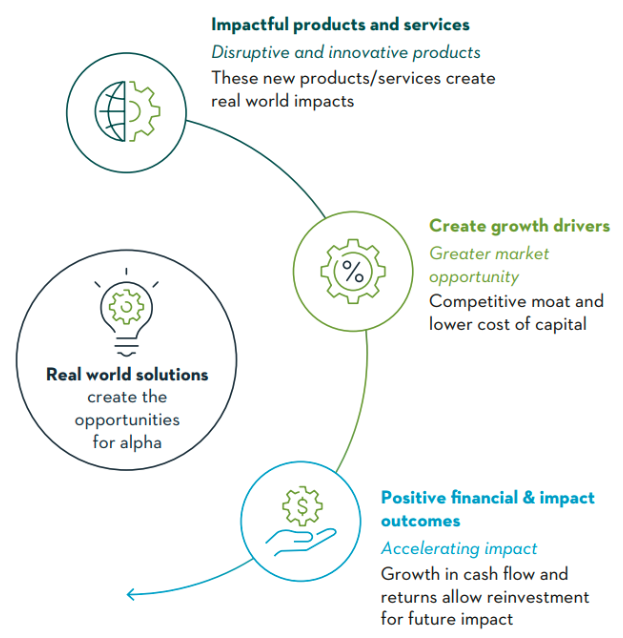
Impact-related assets under management globally are now USD 1.6 trillion, slightly more than one per cent of global AUM. As transparency has improved, public equity and public debt markets have experienced the fastest growth within the impact investing landscape. This rapid growth has not solely been due to a rise in altruistic investment; we, alongside other impact investors, believe that impact and financial performance can be positively interrelated.  

Companies that create impactful and innovative products that address unmet societal needs can access attractive growth opportunities afforded by public markets. Quality companies should attract additional capital, , with profit generation allowing for reinvestment to generate further impact and compound returns for shareholders.

Putting principles into practice

To truly balance the dual objective of positive impact and financial returns, there should be processes in place to establish a credible and authentic impact offering. The Global Impact Investing Network (GIIN) sets out four key characteristics of impact investing that we believe should frame any strategy, process or behaviour.

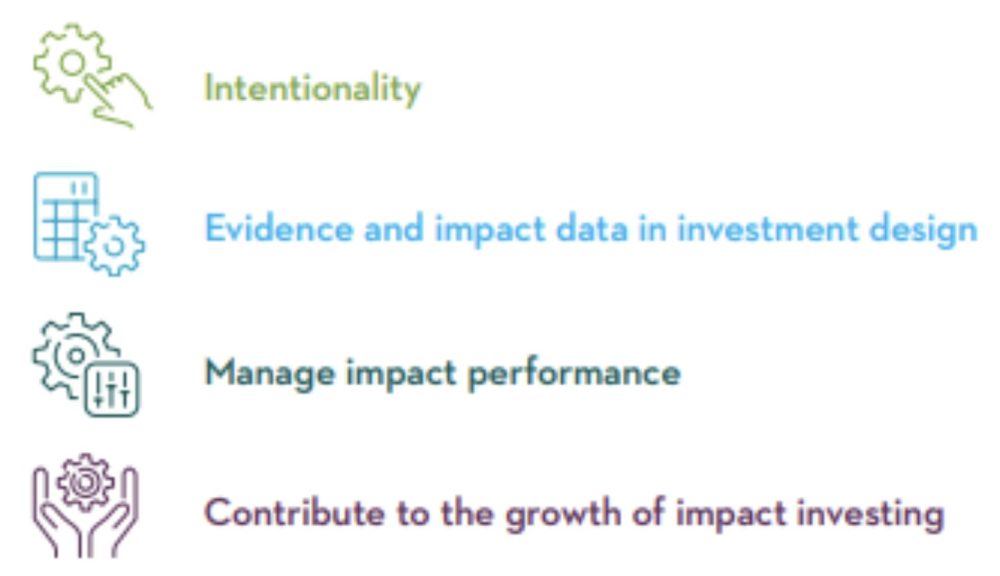
– Intentionality: We know that when investing, numerous biases and behaviours may lead to impact being de-emphasised in favour of chasing performance or reducing tracking error. To guard against this, there should be a clear mandate to invest in companies providing products or services that contribute towards an environmental or social objective, along with a theory of change for each investment. Impact should be a pre-condition for inclusion.

– Evidence and impact data in investment design: While we view intentionality as a precondition, this should be accompanied by analysis that sets out the impact the company is having in the real world. We believe that without a systematic approach to impact, one cannot provide evidence that holdings are relevant to the impact strategy and that they contribute to the impact objective.

– Manage impact performance: Once the presence of impact has been confirmed, its magnitude should be measured, encouraging accountability both for fund managers and the companies themselves creating tangible results to monitor and track. This can also be used to inform an engagement agenda for managers to accelerate the impact, a key additionality mechanism for public equity managers that could involve setting portfolio level or company level KPIs for reporting purposes.

– Contribute to the growth of impact investing: We advocate for an impact market with enough scale to deliver against the expectations of end investors. This could involve driving forward the impact investment market through innovation and best-practice sharing, acting as a long-term partner to investee companies and clients, and being transparent in approach, successes, and shortcomings.

These elements should not be totally new to investors. We regularly conduct detailed research and analysis. Looking through an impact lens is simply a new way of absorbing and processing company information, and we believe a methodical approach is important to avoid the above-mentioned biases.

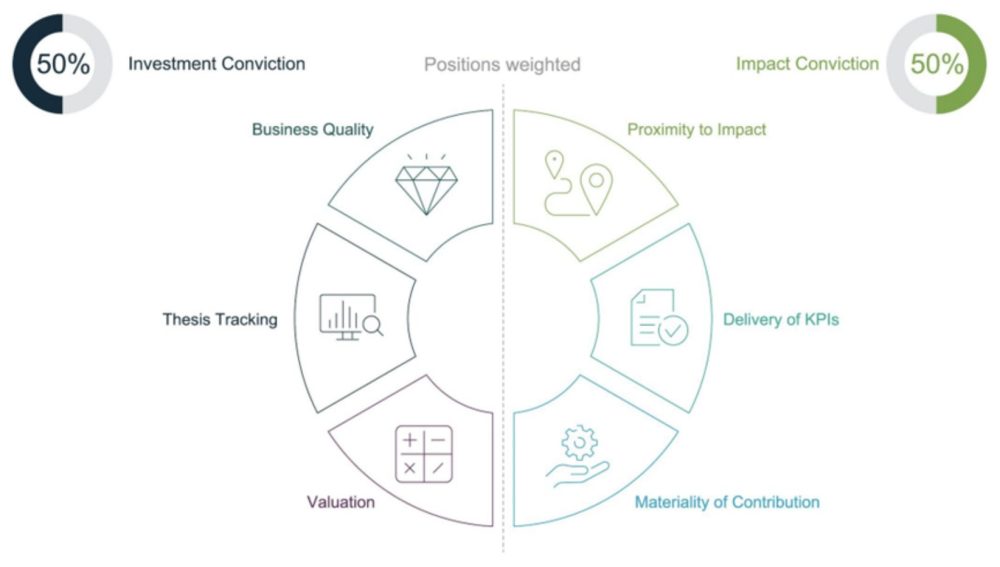
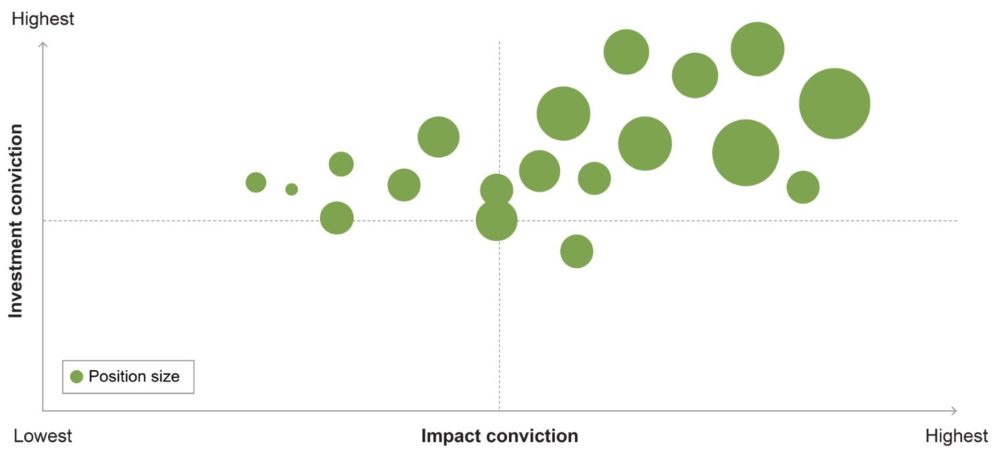
Below, we set out a possible way of integrating impact into portfolio construction decision-making by weighing investment and impact conviction equally when determining position sizes. This ensures that a focus on impact is maintained, while working to maximize returns within the opportunity set of impactful investments.

At the portfolio level, this could be represented by the diagram below:

However investors decide to integrate impact into their analysis and decision making, investing in public equities can provide impact at a scale that can only be achieved in public markets. We recognize that the companies in which we invest are likely to touch millions of lives each day, and we believe that more people are becoming explicitly aware of this, too.

As end investors seek to better understand the real-world impacts of their investments, rather than considering them as simply prices on a screen, we expect to see the impact investing market continue to thrive—and along with it, progress towards overcoming some of the greatest challenges we are facing as a society.


Important Legal Information

This material is intended to be of general interest only and should not be construed as individual investment advice or a recommendation or solicitation to buy, sell or hold any security or to adopt any investment strategy. It does not constitute legal or tax advice.

The views expressed are those of the investment manager and the comments, opinions and analyses are rendered as at publication date and may change without notice. The information provided in this material is not intended as a complete analysis of every material fact regarding any country, region or market.

Commissions, trailing commissions, management fees and expenses all may be associated with mutual fund investments. Please read the prospectus before investing. Mutual funds are not guaranteed, their values change frequently, and past performance may not be repeated.

Franklin Templeton Canada 200
King Street West, Suite 1400,
Toronto, ON M5H 3T4

© 2025 Franklin Templeton. All rights reserved. Franklin Templeton Canada is a business name used by Franklin Templeton Investments Corp.

RIA Disclaimer

The views and opinions expressed in this article are solely those of the authors and do not necessarily reflect the view or position of the Responsible Investment Association (RIA). The RIA does not endorse, recommend, or guarantee any of the claims made by the authors. This article is intended as general information and not investment advice. We recommend consulting with a qualified advisor or investment professional prior to making any investment or investment-related decision.
Navigating Emerging Markets: 15 Years of Investment Insights

Over the past 15 years, Sarona Asset Management has navigated the complexities of investing in emerging markets, continuously refining its approach to balance financial returns with impact. Our experience has provided valuable insights into what works, what doesn’t, and the realities of responsible investing that are often overlooked. This article distils key lessons learned, focusing on actionable takeaways for investors looking to succeed in these dynamic markets.

1. The Challenge of First-Time Fund Managers

One of our core lessons is the difficulty of working with first-time fund managers. While these managers often bring innovative ideas and deep local knowledge, they also present higher execution risks due to limited track records and institutional weaknesses. We mitigate these risks by emphasising rigorous due diligence, governance support, and hands-on engagement. Investors should be prepared to provide strategic guidance and facilitate peer learning to enhance their partners’ capabilities.

2. Avoiding the Pitfalls of Mixed Investment Strategies

A common misstep in emerging market investing is blending multiple investment strategies without precise alignment. We have seen instances where funds attempt to combine venture capital with later-stage private equity or mix impact-driven capital with purely financial mandates, leading to conflicting incentives and suboptimal outcomes. Success in these markets requires strategic discipline—ensuring investment theses are well-defined, execution capabilities match the strategy, and alignment exists between investors and investees.

3. The Critical Role of Currency Risk Management

Currency fluctuations remain one of the most persistent challenges in emerging markets. Over the years, we have observed how poorly managed foreign exchange risks can erode returns, even in high-growth investment opportunities. While hedging instruments exist, they are often expensive or unavailable in frontier economies. Our approach has prioritised businesses with natural hedges—those generating revenues in hard currencies or with strong local supply chains. Investors must factor currency risk into their decision-making and consider structuring investments to mitigate exposure.

4. Realities of Successful Exits

Exiting investments in emerging markets is rarely as straightforward as in developed economies. Liquidity constraints, regulatory barriers, and political instability can all impact exit timing and valuations. Over our 15 years, we have seen the importance of planning exit strategies early – identifying multiple potential buyers, nurturing secondary market interest, and ensuring businesses are built with sustainable, long-term value creation in mind. A well-thought-out exit plan is just as crucial as the initial investment thesis.

5. Investing in Emerging Markets is Not as Risky as Perceived

A common misconception is that investing in emerging markets is inherently tricky and risky. However, these markets can offer strong returns and impactful opportunities with the right local partners, extensive due diligence, and a disciplined approach. Over 15 years, we have developed deep expertise and relationships to navigate these challenges effectively. Our experience has shown that local knowledge and partnerships are crucial in mitigating risks and unlocking value. Rather than seeing emerging markets as overly complex, investors should recognise the opportunities with the right strategy and execution.

6. Turning Setbacks into Opportunities

No investment strategy is without challenges, and emerging markets bring heightened risks, from economic downturns to geopolitical shifts. However, setbacks have often provided some of our most significant learning opportunities. For example, when faced with underperformance in certain portfolio funds, we leveraged these experiences to refine our selection criteria and strengthen portfolio monitoring. The key is resilience—adaptability and willingness to iterate based on real-world outcomes.

7. The Evolution of Impact Measurement

Fifteen years ago, impact measurement was primarily qualitative. Today, investors demand rigorous, data-driven metrics to assess financial and social performance. We have evolved our approach by integrating ESG and impact measurement into our investment decision-making, using frameworks that balance accountability with practicality. The future of responsible investing lies in finding the right balance between measurement complexity and actionable insights.

Looking Ahead

As we look to the next decade, the lessons from our journey will continue to inform our approach. Key priorities include deepening our focus on climate resilience, supporting fund managers with strong financial acumen and social impact, and leveraging technology to enhance investment efficiency. Emerging markets remain among the most promising yet challenging landscapes for investors, and long-term success requires both wisdom and action.


RIA Disclaimer

The views and opinions expressed in this article are solely those of the authors and do not necessarily reflect the view or position of the Responsible Investment Association (RIA). The RIA does not endorse, recommend, or guarantee any of the claims made by the authors. This article is intended as general information and not investment advice. We recommend consulting with a qualified advisor or investment professional prior to making any investment or investment-related decision.
Investor Considerations for Assessing ESG Metrics in Executive Compensation Plans

In recent proxy seasons, one area of continued activity has been the inclusion of environmental, social and governance (ESG) metrics within short- and long-term compensation plans of listed companies globally. Recent statistics based on 2024 disclosures indicate that more than 75% companies within the S&P500 Index constituents incorporate ESG metrics within their executive compensation plans, compared to two-thirds in 2021. On the shareholder proposal front, there has been continued activity related to the filing of shareholder proposals seeking the inclusion of environmental and/or social metrics into compensation plans for shareholder vote.

Executive compensation plays an important role in incentivizing management and influencing behaviour. So, structuring executive compensation plans to align with strategic priorities, including the management of material ESG risks, may be warranted to incentivize performance in these areas, especially when performance is lagging.

To this end, when investors assess whether and what ESG metrics should be included in a portfolio company’s executive compensation plans, a holistic framework approach to analyzing metric inclusion is most appropriate. While not exhaustive, outlined below are certain key relevant factors that investors should consider when assessing ESG metrics in compensation plans. Such factors include whether a metric is relevant and financially material, the company’s performance in relation to the metric, the degree of existing disclosures already made available in a company’s other filing materials, and whether a portfolio company’s plans related to the ESG issues linked with such ESG metrics in compensation arrangements have credibility. This approach should take into account the specific circumstances of the portfolio company to drive appropriate behaviours and outcomes. Overall, investor focus should remain grounded in the philosophy that management incentives should be tied to long-term value creation.

Metric Relevance, Materiality and Company Performance

The ESG metrics which are selected for inclusion in executive compensation plans should be relevant to the specific company’s circumstances or industry, and importantly, they should be financially material. When a company lags in performance vis-à-vis its peers in a particular area, ESG risks, including ESG metrics, in these areas, becomes more appropriate.

Existing Disclosures

Consideration may also be given to whether the company has already made robust disclosures in other publicly disclosed documents (such as information circulars, ESG reports and annual reports). The lack of disclosure from a company elsewhere may mean that including such environmental or social metrics in pay plans would at a minimum indicate that the company will now likely measure relevant metrics on an annual basis to account for performance. Such inclusion may also mean improved disclosures if the company incorporates additional details regarding the measured metrics in the Compensation Discussion and Analysis (CD&A). Measurement at the very least makes issues top of mind for management, which can incentivize behaviour. Disclosures in the CD&A, on the other hand, may mean that investors might have access to more timely and relevant metric data, whereas before such inclusion, updates in this regard may not have been as regular.

Plan Credibility

Assessing whether a specific ESG metric should be included in executive compensation plans starts with examining whether the portfolio company has credible plans to tackle the financially material issue at hand. From a compensation philosophy standpoint, companies should link executive compensation to areas that require management’s focus and attention. If the portfolio company is making good progress against a credible plan, ESG metric inclusion may not be required or appropriate, as investor preference may be for the portfolio company to focus its efforts (and pay plans) on more material and pressing issues, all else being equal. However, even when compensation plans include financially material ESG metrics, such as carbon emission reduction metrics, if the company lacks a well thought-out and credible plan to reduce overall carbon emissions, no degree of metric inclusion will create the conditions necessary to incentivize management, as the plan likely doesn’t contain achievable or appropriate targets.

Concluding Thoughts

It is important for investors to recognize that independent directors are often in the best position to design programs that best incentivize management to create long-term value. This is due to the fact that independent directors acting from within the tent are far more familiar with the unique circumstances of a company than outside observers are. However, while deferring to the board and entrusting it to do what is best for shareholders, investors should take an active role in verifying whether their fiduciaries are properly discharged. As portfolio companies continue to consider ESG performance metrics in their compensation plans, investors must regularly engage with compensation committees on these topics, using the framework approach such as the one outlined above to remain active and responsive stewards of capital.


Contributor Disclaimer

The information contained herein is for information purposes only. The information has been drawn from sources believed to be reliable. Graphs and charts are used for illustrative purposes only and do not reflect future values or future performance of any investment. The information does not provide financial, legal, tax or investment advice. Particular investment, tax or trading strategies should be evaluated relative to each individual’s objectives and risk tolerance.

This material is not an offer to any person in any jurisdiction where unlawful or unauthorized. These materials have not been reviewed by and are not registered with any securities or other regulatory authority in jurisdictions where we operate.

Any general discussion or opinions contained within these materials regarding securities or market conditions represent our view or the view of the source cited. Unless otherwise indicated, such view is as of the date noted and is subject to change. Information about the portfolio holdings, asset allocation or diversification is historical and is subject to change

This document may contain forward-looking statements (“FLS”). FLS reflect current expectations and projections about future events and/or outcomes based on data currently available. Such expectations and projections may be incorrect in the future as events which were not anticipated or considered in their formulation may occur and lead to results that differ materially from those expressed or implied. FLS are not guarantees of future performance and reliance on FLS should be avoided.

TD Asset Management Inc. is a wholly-owned subsidiary of The Toronto-Dominion Bank.

RIA Disclaimer

The views and opinions expressed in this article are solely those of the authors and do not necessarily reflect the view or position of the Responsible Investment Association (RIA). The RIA does not endorse, recommend, or guarantee any of the claims made by the authors. This article is intended as general information and not investment advice. We recommend consulting with a qualified advisor or investment professional prior to making any investment or investment-related decision.
How To Build a Real Net-Zero Portfolio 

Climate change presents a systemic risk to economies, financial markets, and investments. To spur the action required to mitigate its most severe impacts, the owners and managers of trillions of US dollars have committed to net-zero emissions by 2050 or sooner. Yet global emissions continue to rise.

While investors alone cannot bend the trajectory of emissions, the most common approach to net-zero investing – imposing targets to reduce portfolio emissions over time – is clearly not helping:

Portfolio emissions reductions are often achieved by divesting from high-emission assets or regions. This reduces a portfolio’s carbon footprint on paper, but does nothing to actually lower emissions.

Excluding high-emitting assets and regions often means cutting allocations to emerging markets. This limits the availability of capital where it is most needed to effect the energy transition.

Shrinking the investment universe by excluding industries and regions on emissions grounds may result in suboptimal allocations and lower returns.

Our discussions with asset owners indicate a lack of confidence in the traditional approach to constructing net-zero portfolios. A survey we conducted in 2023 revealed that one-third of asset owners are unsure if their approach to transitioning their assets to net zero is actually helping to reduce emissions in the real world.

We believe there are ways to construct portfolios that do not compromise returns, fiduciary responsibilities, or progress towards a low-carbon future. But they require a shift away from approaches built around targets to reduce portfolio emissions over time.

From reducing financed emissions to financing reduced emissions

The starting point for getting net-zero investing on track is redefining what a net-zero investor is. We propose: one who acts to maximise their contribution to real-world emissions reduction and a socially responsible transition, without compromising investor returns or fiduciary responsibilities.

This means not seeking to reduce financed emissions (emissions linked to investment activities), but rather aiming to finance reduced emissions. This is particularly important in the current political climate – with potentially less supportive policy and fewer companies pushing hard for net zero and hence a slower pace of decarbonization – which may make it harder to construct a portfolio of lower carbon assets without substantially restricting the investment universe. At the same time, supporting real-world carbon reduction to help mitigate climate risk has become even more important.

While one size cannot fit all, an effective net-zero investment approach should include the following five components. Each of them plays a different role in supporting net-zero alignment:

1. Dedicated allocations to climate solutions equities and fixed income. These include investments in businesses that enable decarbonization, such as those focused on renewable energy, battery storage, electric-vehicle and energy-efficiency technologies, and green hydrogen. We believe this group of companies can achieve above-market structural growth as the world decarbonizes, potentially adding a differentiated source of returns to a portfolio.

2. Dedicated allocations to transition equities and debt. These investments include financing for companies or issuers in high-emitting sectors with credible transition plans, and companies providing products that enable the transition, like critical minerals. Such companies may often not fit in a typical net-zero portfolio, given their high emissions. But we see significant return and impact potential if they successfully implement their transition strategies.

3. Other equity and fixed income investments. For the bulk of a portfolio, we recommend prioritizing engagement to accelerate the work portfolio companies are doing to decarbonize their operations and value chains, rather than exclusion. Where engagement is not possible or unlikely to be effective, then investors may adopt a ‘positive inclusion’ tilt, directing investment towards companies with credible transition plans or potential.

4. Sovereign fixed income investments. For domestic government bonds and other assets with limited options for adjusting allocations (such as those held for regulatory reasons), the main net-zero tool is advocacy. For international sovereign bonds, there is significant opportunity to allocate towards countries making progress towards net zero – for example, by using the Ninety One Net Zero Sovereign Index to measure alignment. Investors can also allocate directly to climate solutions and transition via sovereign green and sustainability-linked bonds, where available.

5. Private markets and real assets. Investors can have significant influence via private investments. Investing in real assets can also be a way to contribute directly to the construction of low-carbon infrastructure and buildings, or to influence the management of these assets to reduce their carbon impact.

For good measure

A revised net-zero approach requires different metrics to appraise investments and measure progress, beyond simply measuring financed emissions.

– Climate solutions: use ‘carbon avoided’ – emissions avoided by the use of a product with lower emissions than the status quo.

– Transition investments: use ‘carbon reduced’ – the amount by which emissions have been lowered by a company or country.

– All investments: use ‘asset-alignment’ – the proportion of companies with science-based net-zero targets and credible transition plans; and ‘net-zero engagement’ – the proportion of emissions covered by strategic engagements aimed at influencing carbon reduction, ideally measuring engagement outcomes.

A new approach

The global economy is significantly off course to hit net-zero emissions by 2050. Yet the typical approach to building a net-zero portfolio is unlikely to be helping, and may even be hindering.

By focusing allocations on financing real-world emissions reduction and using engagement to encourage net-zero alignment, we think investors can help to shift the economy toward a credible decarbonization pathway, while optimizing returns for clients and beneficiaries.


RIA Disclaimer

The views and opinions expressed in this article are solely those of the authors and do not necessarily reflect the view or position of the Responsible Investment Association (RIA). The RIA does not endorse, recommend, or guarantee any of the claims made by the authors. This article is intended as general information and not investment advice. We recommend consulting with a qualified advisor or investment professional prior to making any investment or investment-related decision.

A Year in Review: A Message from RIA CEO Patricia Fletcher

Dear RIA Members, 

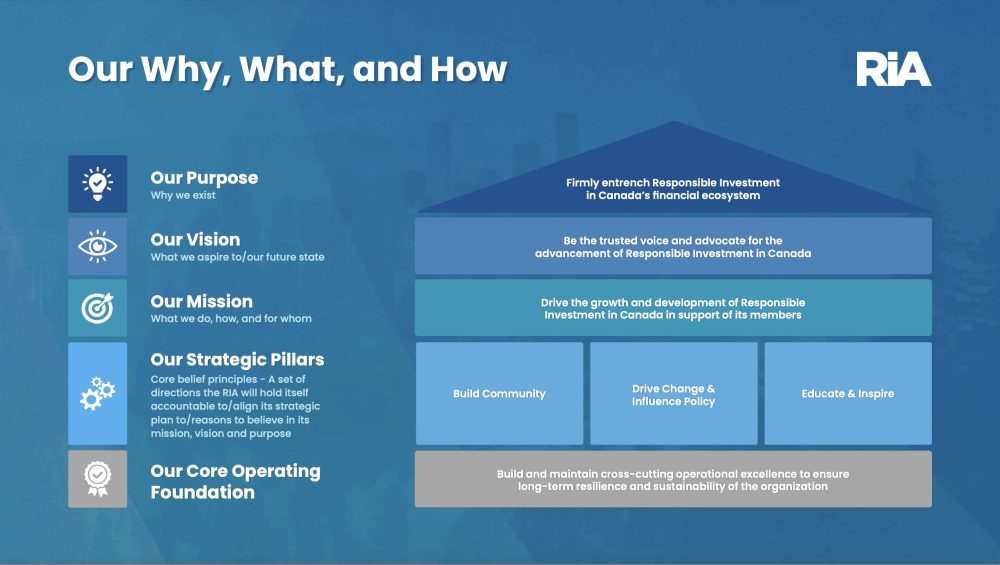
It’s hard to believe that a year has passed since I shared reflections on 2023 and aspirations for 2024. Taking stock of how the last year unfolded, one of our most significant feats was the launch of the RIA’s new strategic plan. Your strategic plan. Every aspect was conceived with members in mind and informed by extensive consultation. It became clear that the RIA’s priorities had to evolve alongside our rapidly changing industry in order to meet your needs, both today and into future. 

The strategic plan is anchored by three pillars that the RIA holds itself accountable to. The first is Build Community, where we act as a hub for members and RI market participants to impactfully collaborate, share, learn and stay abreast of the dynamic industry and environment. The second is to Drive Change and Influence Policy where we aim to be a bridge between investors and regulators and build trust and confidence in RI by advocating for policies and standards. And the third is to Educate and Inspire. Here the intention is to be a trusted source of objective data and insights, tapping into industry sentiments and charting the progress of RI. Foundational to all of this is the delivery of an exceptional member experience.  

Although many initiatives converge across all three pillars, a cornerstone of building community is convening. For the first time since 2017, we received a warm west coast welcome in beautiful British Columbia for the 2024 Vancouver Conference. We learned, connected and drew inspiration from the stellar speaker lineup and from each other. We also enjoyed the vibrancy of the RI community in la belle province at the Colloque de Montréal, which focused on economic reconciliation and responsible investment. Another highlight was hosting our Global Sustainable Investment Alliance (GSIA) colleagues at our Toronto offices this fall in the lead-up to PRI in Person, where the RIA and Climate Engagement Canada (CEC) had an active presence.

Other events took place in hybrid or online formats, including round tables, working groups and 15 webinar sessions addressing timely topics from regulatory developments to retail product knowledge, research launches, and everything in between. We also convened industry councils such as the Policy Stewardship Group, RIA Leadership Council and the new Public Policy and Advocacy Council. Their invaluable insights inform our priority initiatives, including our policy and advocacy agenda.

2024 held no shortage of opportunities to entrench RI in Canada’s financial ecosystem through strategic advocacy. From organizing member audiences with key regulators, delivering in-the-moment briefings on active industry consultations and consequential new legislation, to conducting a member survey and roundtable to inform our submission to the Competition Bureau on Bill C-59 and the new greenwashing provisions. The RIA was at the forefront, ensuring responsible investors had a seat at the table.   

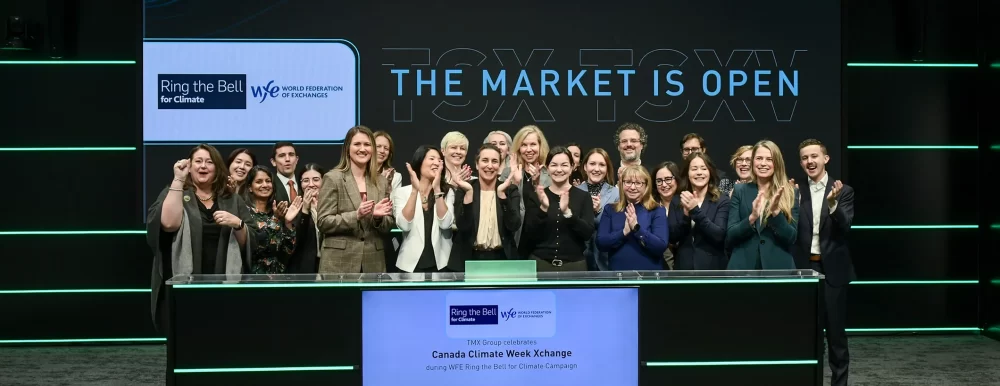
The voice of investors will be particularly critical as part of the recently announced Canada Climate Week Xchange (CCWX), of which the RIA is a founding member alongside the TSX and other notable organizations. Together with our role as partner of the Circular Finance in Canada Working Group and member of the of the Sustainable Finance Forum organizing committee, among other carefully selected partnerships, we continued to increase our impact.  

Speaking of impact, 2024 was a fundamental in setting up tools, processes and optimized capacity that will palpably enhance your member experience into next year. Learners and credential holders will have already noticed some process changes, but we have only scratched the surface. 2025 will bring new digital infrastructure and exciting developments that will be shared in due course. All of this will set us up for a productive and ambitious year.  

2025 will be all about driving member value and I’m incredibly excited about all the initiatives we’ll be delivering. Highlights include the inauguration of our Retail Strategy Advisory Group, the launch of working groups for institutional members, 360-degree research and insights spanning the full spectrum of responsible investment in Canada, our webinar series, the inaugural Canada Climate Week Xchange, and the 2025 RIA Conference on June 3-4 in Toronto. The most rewarding part of my job is connecting with you, our members, and I truly hope to see you there. And be sure to look out for a member survey where you can share direct input on the program and the issues that matter to you the most.  

Thank you for your ongoing commitment to our industry and steadfast support of the RIA. I wish you a happy and healthy start to the new year and look forward to all that we will accomplish together in 2025.  

Sincerely,

Patricia Fletcher
CEO
Responsible Investment Association