The Importance of Knowing Your Clients’ Preferences on Responsible Investing

There is a sentiment in the investment industry that Responsible Investing (RI) has taken a back seat after the frenzy of 2020-2022, when new product launches were dominating the headlines and there was keen interest in ESG funds. The pandemic perhaps triggered an existentialist crisis forcing a re-examining of one’s values, spending and investing. Despite the origins of RI being deeply seated in a long-term view of investments and focusing on key areas such as strong corporate governance and minimizing environmental and social harm, the current discussion is steering toward a political conversation which may be creating a paradox for financial advisors.

To help advisors navigate these conversations we can look at a recent study conducted on the advisor segment that shows there continues to be a clear need for advisors to better understand their clients’ values and objectives with a view on their risk appetite and risk adjusted returns. We argue that adding RI due diligence adds to the strength and trust of the advisor-client relationship and an element of fiduciary responsibility in working toward the best of interests of the client.

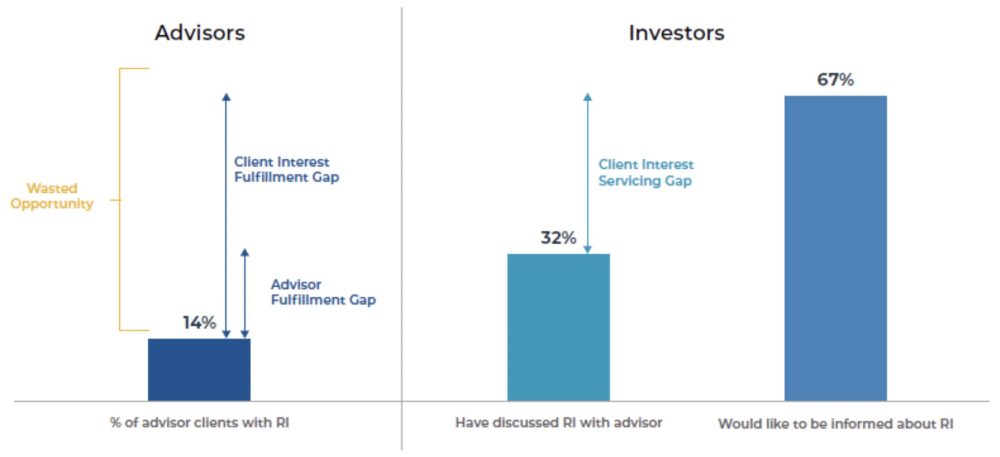
A 2024 RIA Advisor Insights Study found that advisors’ adoption of RI is lagging investors and investment manufacturers with only 14% of advisors offering RI information and funds to their clients, but 90% expecting growth in the coming years. The study also cites three main factors that commonly drive advisors to start offering RI services: client demand (37%), their own interest, research and values (25%), and wholesaler support (19%). On the other hand, the reasons advisors do not offer RI in their practice include concerns around greenwashing (35%), and either lack of expertise or that ‘they have not gotten around to it yet’ (43%). The study outlines that the understanding of RI varies broadly amongst advisors and that wholesalers/manufacturers likely need to step up in maturation of RI practices and adoption. While 32% stated that their dealer list had a wide range of ESG solutions available, 38% cited limited availability and 30% cited no availability, no dealer list and/or do not know about ESG solutions.

Combined with the 2023 RIA investor study, one could find some opportunity cost where 67% of investors say they would like to be informed about RI vs. only 14% of advisors are equipped to address it. Investment Executive published an article in 2024 citing similar insights on advisors and their ability to offer up ESG discussions to their clients.

Client and Advisor Fulfilment Gaps

Source: 2024 Advisor RI Insights Study  

From an investment perspective, on a spectrum of values-based investing to financially material ESG topics, advisors are likely to find where their clients are situated through their due diligence toolkit. Values based investing has existed for multiple decades and the issues or values have changed over time with the socio-economic, political, and cultural changes. The ongoing conflicts in eastern Europe and the middle east coupled with the severe weather impacts being felt in different geographies, are triggering or re-defining investor interests in either avoiding specific types of investments, doubling down on solutions, or purely managing these from a risk management perspective.

On financially material ESG factors, as data and methodologies solidify and taxonomies come into play, asset managers are using ESG metrics and information in the same way they would use any information with the objective of providing risk adjusted returns. Given the impact of community relations, carbon profile, governance profile and overall purpose of a firm, it is increasingly difficult for asset managers to ignore the market impact of ESG factors. On this end of the spectrum, there are nuances on fund profiles and the approach taken by asset managers, that do not come through without a deep understanding of RI. An understanding of how such fund profiles and approaches may be interacting with the investment objectives and preferences of clients, as well as the associated obligations for advisors to understand those objectives and preferences. In this context, it is important for advisors to know their clients’ preferences and be equipped to address them.

Some key questions advisors can ask their clients include:

1. Are there any specific economic activities, themes or issues they feel strongly about?

2. What are the drivers of these preferences – values (religious or family/personal) based, being responsible citizens (do not harm), or the economic argument for looking at ESG related investment risks or opportunities?

3. Do they care about investing in a specific fund which is aligned with their values or are they seeking asset managers whose underlying approach to RI stacks up well against their preferences?

4. Some questions advisors can ask of themselves, and their available solutions include:

5. Which funds are available to match the risk profile of their clients and the specific preferences they may have?

6. Are they familiar with the sustainable/RI approach and progress of the asset managers whose funds they utilize?

7. What tools can they access to understand the ESG characteristics of funds on offer alongside their traditional risk and return characteristics?

8. How can they keep themselves up to speed on the evolving nature of RI? What courses, workshops and educational tools are their dealers or industry associations making available?


Contributor Disclaimer

The information contained herein is for information purposes only. The information has been drawn from sources believed to be reliable. Graphs and charts are used for illustrative purposes only and do not reflect future values or future performance of any investment. The information does not provide financial, legal, tax or investment advice. Particular investment, tax or trading strategies should be evaluated relative to each individual’s objectives and risk tolerance.

This material is not an offer to any person in any jurisdiction where unlawful or unauthorized. These materials have not been reviewed by and are not registered with any securities or other regulatory authority in jurisdictions where we operate.

Any general discussion or opinions contained within these materials regarding securities or market conditions represent our view or the view of the source cited. Unless otherwise indicated, such view is as of the date noted and is subject to change. Information  about the portfolio holdings, asset allocation or diversification is historical and is subject to change.

This document may contain forward-looking statements (“FLS”). FLS reflect current expectations and projections about future events and/or outcomes based on data currently available. Such expectations and projections may be incorrect in the future as events which were not anticipated or considered in their formulation may occur and lead to results that differ materially from those expressed or implied. FLS are not guarantees of future performance and reliance on FLS should be avoided.

TD Asset Management Inc. is a wholly-owned subsidiary of The Toronto-Dominion Bank.

® The TD logo and other TD trademarks are the property of The Toronto-Dominion Bank or its subsidiaries.

RIA Disclaimer

The views and opinions expressed in this article are solely those of the authors and do not necessarily reflect the view or position of the Responsible Investment Association (RIA). The RIA does not endorse, recommend, or guarantee any of the claims made by the authors. This article is intended as general information and not investment advice. We recommend consulting with a qualified advisor or investment professional prior to making any investment or investment-related decision.
Energy End Users May Be the Missing Piece of Your Sustainable Portfolio: Interview with Andrew Simpson  

When people think about investing in the energy transition, they often consider buying into renewable energy companies, carbon capture solutions, equipment manufacturers and other businesses related to reducing greenhouse gas emissions. But there is another way to play what by 2030 will become a US$4.5-trillion-per-year investment opportunity: owning the energy consumers.   

For Andrew Simpson, Senior Vice President, Portfolio Manager and Head of the Mackenzie Betterworld Team, this means owning companies that are making a concerted effort to become more sustainable rather than exclusively purchasing the shares of climate solution product companies.  

“These businesses don’t have to buy solar panels, they don’t have to source renewable energy, but they’ve chosen to, and they’ve integrated sustainability into their business processes,” says Simpson, who runs the Mackenzie Betterworld Global Equity Fund.  

Focusing on the end user – which he points out is not related to the average person buying an electric vehicle or installing LED lights, though that is important for the transition, too – is critical because “you don’t have innovation unless there is a market and support for it,” he explains.  

These companies have the resources to make large purchases and can allocate capital to different solutions. “They’re important to making things happen,” he adds. 

Leveraging large caps

Simpson, who has managed sustainable investment mandates for more than a decade, is always on the hunt for large-cap companies that can effect change. (His portfolios hold some small caps, too.) Companies like Microsoft, Amazon and Costco – names not usually associated with the energy transition – are ideal candidates for his portfolio because they are not only making a positive impact by reducing their own emissions, but they are also proven, often multinational, businesses with strong cash flows and a record of business success.  

“They have the ability to make things happen at scale,” he says. “They have the corporate wherewithal to do an analysis and say, ‘This is the best solution for us.’” 

Microsoft, for instance, has been 100% powered by renewable electricity through direct purchases and renewable energy credits since 2014. It is committed to carbon neutrality by 2030 and an even bolder proposal by 2050: “They actually want to reduce all the carbon they’ve emitted since they became a public company in the 1970s,” Simpson notes. 

To reach these goals, Microsoft has signed 25-year power agreements with renewable producers – binding contracts that make it impossible for the next CEO or board of directors to abruptly change course – for facilities, including its huge data centres. That includes delivering more than 10.5 gigawatts of renewable power capacity to Microsoft facilities in the U.S. and Europe between 2026 and 2030. The company is also spending an estimated US$806 million on two carbon removal contracts.  

As for other end users, in 2023, Amazon, the world’s largest corporate purchaser of renewable energy for 4 years in a row, announced 74 renewable power purchase agreements amounting to 8.8 gigawatts of capacity. While that has certainly helped Amazon’s energy efficiency, it estimates its solar and wind farms have also generated more than US$12 billion in economic activity globally from 2014 to 2022. 

In Canada, grocery giant Loblaw announced that by 2025, all its stores in Alberta will be powered with renewable energy, reducing the company’s carbon emissions by 17%. It is accomplishing that feat by buying solar, wind and hydro-generated power from TC Energy Corp. 

More broadly, over 430 multinationals have joined RE100, a group committed to obtaining 100% of its power from renewable sources by 2050. Together, they consume more than the entire generation capacity of Scandinavia, and they are not yet halfway to their goal of carbon neutrality. In Canada, major banks and grocery chains have made similar pledges.  

As a portfolio manager attuned to environmental, social and governance (ESG) criteria, Simpson places a lot of weight on these actions. “We’re focusing on companies with sustainable business models,” he says. “The behaviour of companies is an important part of our review.”  

Expanding the market 

While the list of end users is growing, more companies must follow Microsoft and Amazon’s lead if the global economy will reach net zero by 2050. Simpson is confident more businesses will make sustainability part of their strategy, especially as consumers increasingly choose to spend money with companies that share their values. That means investors and fund managers like Simpson will have more options for their portfolios.  

“There is still a long way to go on this, but companies have gotten on board,” he says. “There’s an opportunity for them to do more, especially for companies that haven’t yet made that commitment.”  

Because of technological advancements, businesses that may not have been considered end users can now become them. For instance, the waste industry emits a lot of methane, which is one of the worst greenhouse gases, notes Simpson. Now you have waste companies spending money to convert that gas to power, which they can use for their own trucks or sell to other operations.  

“You can have a company in health care or financials or waste contributing because they’re making investments or commitments to source renewable power,” he says. “There are – and will be more – opportunities across every sector.”  

Considering the end user as part of the energy transition opens up a new crop of companies to investors. It also means you can own a large-cap diversified fund and still take ESG into account.  

“A diversified investment strategy is still contributing toward the energy transition,” explains Simpson. “You can still feel good about investing in these types of companies. They’re not creating solar panels, but they’re contributing to the solution.”


Contributor Disclaimer

Commissions, trailing commissions, management fees and expenses all may be associated with mutual fund investments. Please read the prospectus before investing. Mutual funds are not guaranteed, their values change frequently and past performance may not be repeated. The content of this document (including facts, views, opinions, recommendations, descriptions of or references to, products or securities) is not to be used or construed as investment advice, as an offer to sell or the solicitation of an offer to buy, or an endorsement, recommendation or sponsorship of any entity or security cited. Although we endeavour to ensure its accuracy and completeness, we assume no responsibility for any reliance upon it.

RIA Disclaimer

The views and opinions expressed in this article are solely those of the authors and do not necessarily reflect the view or position of the Responsible Investment Association (RIA). The RIA does not endorse, recommend, or guarantee any of the claims made by the authors. This article is intended as general information and not investment advice. We recommend consulting with a qualified advisor or investment professional prior to making any investment or investment-related decision.
Growing Investor Confidence In RI 

The market share of responsible investment (RI) assets under management (AUM) in Canada has grown significantly, according to the latest findings from the 2024 Canadian Responsible Investment Trends Report. 

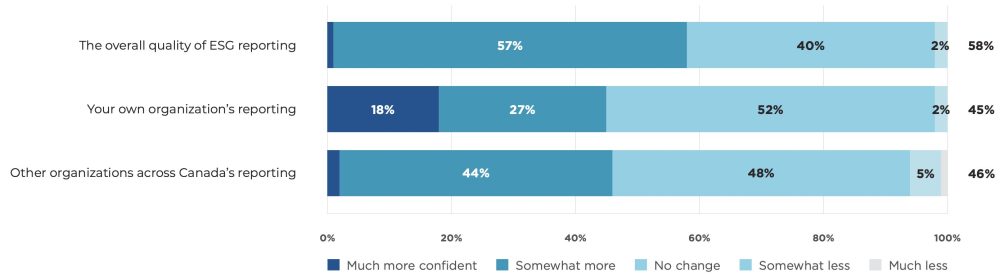
The 2024 Report reveals a pivotal milestone for the industry, with RI now accounting for 71% of total AUM. This growth is accompanied by a marked rise in investor confidence, driven by clearer definitions of RI strategies and improved ESG reporting practices. 

For the second year in a row, close to 60% of respondents say they are more confident in the overall quality of reporting than they were last year. And in each category of ESG reporting that was measured, only 6% of respondents, or fewer, expressed less confidence than last year.  When asked what would further increase their confidence in reporting, respondents noted that more universally accepted frameworks, alongside standardization and auditing of reporting, would be helpful.

Confidence in Reporting of RI AUM and Specific RI Approaches

Source: 2024 Canadian RI Trends Report

“As responsible investing continues to evolve, we cannot become complacent,” says Patricia Fletcher, CEO of the Responsible Investment Association. “Collective action and advocacy are necessary to further advance the adoption of RI and mobilize capital to strengthen Canada’s economic resilience.”

A window of opportunity exists to further strengthen RI in Canada, and this will require collective action and advocacy. Standardization is needed to further improve confidence and unlock the value that RI brings to investment decision-making. Recent definition changes have increased confidence, but more changes and standardization are on the horizon, and the industry must continue to adapt.

The RI Opportunity for Advisors

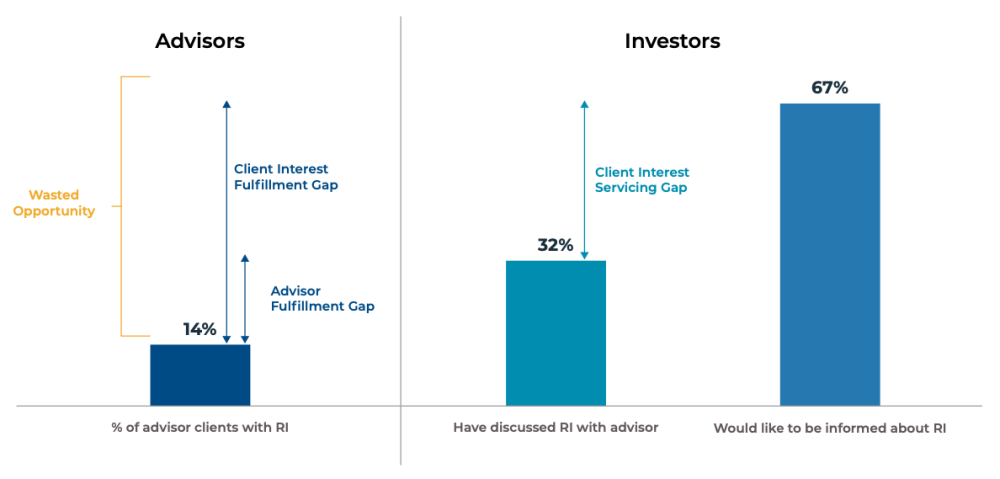
In 2023, 65% of surveyed Canadian investors expressed interest in responsible investment (RI), and two-thirds of respondents (67%) would like their financial services provider to inform them about RI options that are aligned with their values. However, only one third of those surveyed reported that their advisors are initiating discussions around RI, indicating a significant service gap. Year after year this service gap persists, leaving a full third of investors eager to speak to a financial service provider about responsible investing. With such clear client demand, why are so many financial advisors sitting on the sidelines of responsible investment?

The RIA’s 2024 Advisor RI Insights Study set out to find out. Here are some of the key findings:

– Reasons not to offer RI centre around a lack of knowledge and resources, or a perceived administration burden. Product availability is not a barrier.

– Advisors’ education and knowledge of RI are tightly linked to their overall use of RI. The more confident they are about RI, the more extensively they will use it in their practice.

– Advisors rely on investment companies – especially wholesalers – for information, and will likely turn to them with questions when introducing or increasing their RI usage.

– Investor demand is driving advisor adoption.

– Nearly 90% of RI users anticipate the growth of RI over the coming years, and non-users are open to using RI.

This means that financial advisors who learn to engage clients on ESG topics and RI strategies stand to gain tremendously.

Client and Advisor Fulfillment Gaps

Source: 2024 Advisor RI Insights Study – Topline Report

How can we drive greater adoption of RI at the retail level? It will take a 360-degree approach, from advisors informing themselves and servicing their clients based on needs and priorities, to fund manufacturers and wholesalers providing the needed support.

It is clear that the more RI knowledge an advisor has, the better positioned they are to serve their clients’ ESG-related needs and narrow the RI service gap. These recordings from the 2024 Advisor RI Bootcamp present an excellent jumping off point for anyone looking to learn about leading responsible investment products from the portfolio managers and analysts behind them.

And if you would like to learn more about RI assets and trends in Canada, be sure check out the virtual launch of the 2024 Canadian RI Trends Report on November 19th.

The opportunity is there – but it is incumbent on all of us to play our part in closing the RI service gap.

For more information about the 2024 Advisor RI Insights Study, contact membership@riacanada.ca.

Scope 3 Disclosures Are Here to Stay

In March 2024, the U.S. Securities and Exchange Commission (SEC) enacted the legislation that would require U.S.-listed companies to publicly report their climate-related risks and impacts. The long-awaited SEC Climate Disclosure Rules were released following months of intense public debate (including fierce opposition) and a record 24,000 comments submitted by companies, investors, auditors, legislators and other groups.

Now, and for the first ever time in the U.S., corporate climate disclosures would become mandatory in SEC filings and would be subject to the same level of scrutiny and audit requirements as for financial statements – ultimately putting climate disclosures on par with financial disclosures. In doing so, this groundbreaking ruling was intended to help make these climate disclosures “more reliable” and “provide investors with consistent, comparable, decision-useful information, and issuers with clear reporting requirements,” according to Gary Gensler, the SEC Chair.

However, the SEC made key omissions, including most notably, dropping requirements for the disclosure of value-chain emissions, otherwise known as Scope 3.*

*Scope 3 emissions are the result of activities from assets not owned or controlled by the reporting organization, but that the organization indirectly affects in its value chain.

Scope 3 emissions represent one of the Grand Challenges of Net Zero, and what the London Stock Exchange Group calls “one of the most vexing problems in climate finance.” These emissions are broad, spanning multiple sources upstream and downstream of company operations, and often across multiple tiers of suppliers and customers. They are also complex, as Scope 3 emissions are both costly and challenging to estimate, let alone measure directly. And often, they represent the overwhelming majority of a company’s overall emissions footprint. Increasingly, Scope 3 also represents a major obstacle for investors who are looking to cut financed emissions across their portfolios and meet net-zero commitments.

By excluding Scope 3, the SEC ruling has prompted companies and investors to wonder if this would be the end of Scope 3 disclosures for U.S. issuers and for corporate carbon accountability.

Scope 3 disclosures are on the rise, globally and in the U.S.

Here is a quick primer on Scope 3. Within carbon accounting, greenhouse gas (GHG) emissions are divided into three discrete ‘scopes’ based on where the emissions are created across a company’s operations and its wider value chain—as shown in Figure 1.

While companies have more control and influence over their Scope 1 and 2 emissions, Scope 3 emissions are generally more significant and result from companies’ supply chains (‘upstream Scope 3’) and use of companies’ products by consumers (‘downstream Scope 3’). Scope 3 is more complex for companies to track or estimate, but if gone unmanaged, may present financial risks, ranging from declining product competitiveness as consumer awareness for global warming increases, to higher cost of capital as insurers and investors aim to manage their own exposure.

Figure 1: Overview of GHG scopes and emissions across the company value chain.

Source: GHG Protocol (2013).

Given the complexity and wide reach of these emissions, it comes as no surprise that globally, fewer companies report on Scope 1, 2 and 3 emissions, as compared to on Scope 1 and 2 alone – and U.S.-based companies in particular tend to lag on Scope 3 reporting.

However, the number of companies, both globally and in the U.S., that are reporting on their Scope 3 emissions has been consistently increasing year-over-year. According to the MSCI Net Zero Tracker, as at January 2024, approximately 42% of listed companies globally disclosed at least some of their Scope 3 emissions – a 17% increase compared to two years ago.

This disclosure trend is echoed by CDP. Of the 1,077 U.S.-based companies that reported on the CDP Climate Change questionnaire in 2023, only 13% did not report any Scope 3 emissions.

We see this trend reflected within our Mackenzie climate action engagements across U.S.-based issuers. Of the 100 companies with whom we engage via Mackenzie’s thematic climate engagement program, 41 are U.S. based, and of these companies:

44% have committed to SBTi (Science Based Target initiative) or set a SBTi validated target
41% have set GHG targets that include Scope 3 emissions
73% report in line with TCFD (Taskforce for Climate-Related Financial Disclosures)
76% report to CDP

From our climate engagement discussions, we are seeing a modest but consistent year-over-year increase in Scope 3 emission disclosure. Listed below are some notable examples of U.S. companies leading the way on disclosing and abating Scope 3 emissions.


Ahead of the pack: U.S. companies leading on Scope 3 disclosure, based on Mackenzie’s climate engagements

Marathon Petroleum Corp. (MPC) is a leading integrated, downstream energy company, based in Findlay, Ohio. Marathon reports on Scope 3 Category 11: Use of Sold Products,* which is the largest source of the company’s overall Scope 3 footprint. In addition to this, Marathon has also set a 2030 target to reduce absolute Scope 3 Category 11 emissions by 15% below 2019 levels on refined product. This target is informed by methodologies devised by the SBTi and Ipieca,** and aims to demonstrate the competitiveness of Marathon’s business within the global market.

Linde PLC (LIN) is one of the world’s largest industrial gases (such as ammonia and hydrogen) and engineering companies that is helping enable the clean energy transition. With operations spanning more than 80 countries, including the U.K. and the U.S., Linde is subject to various climate disclosure rules globally. Therefore, it’s not surprising that Linde currently reports on 14 categories of Scope 3 emissions representing all relevant categories for Linde. –About 40% of this inventory has been verified by a third party to the limited assurance level. Linde has set a SBTi-validated target to reduce its Scope 1 and 2 emissions and is working on emissions estimation and methodology development in anticipation of setting additional Scope 3 emissions reduction targets by 2026.

WEC Energy Group Inc. (WEC) is one of the largest electric generation and distribution and natural gas delivery group of companies in the U.S., based in the Midwest. WEC recently undertook an extensive review of all 15 categories of Scope 3 emissions across their organization to build the company’s first Scope 3 inventory. The disclosure was a cross-functional effort, relying on subject matter experts across WEC’s supply chain, finance, gas distribution, fuels, energy efficiency and environmental teams, and overseen by a dedicated Scope 3 Executive Steering Committee. WEC currently discloses multiple categories of Scope 3 through its ESG reporting.

*Per the GHG Protocol, emissions classified as Scope 3 – Category 11: Use of Sold Products are the GHGs emitted during the use of a company’s sold products [Source: GHG Protocol (2013) – Technical Guidance for Calculating Scope 3 Emissions (V1.0)].
**Ipieca is a global not-for-profit, oil-and-gas industry association for environmental and social issues.

Based on public disclosure and our own experience, company efforts to disclose and abate Scope 3 emissions continue even as the SEC removes its focus on Scope 3.

What’s driving this increased disclosure?

These emissions disclosure trends are being driven by several factors, but most notably by the shifting regulatory landscape around Scope 3 and the rise of climate disclosure rules globally.

During the two years that the SEC spent deliberating on the final rules, a suite of climate disclosure rules and standards emerged, all of which included provisions for the disclosure of emissions across a company’s Scope 1, 2 and 3. In 2023, the European Union’s (EU) Corporate Sustainability Reporting Directive entered into force, the International Sustainability Standards Board released its IFRS S2 standard, and the state of California passed the S.B. 253, the Climate Corporate Data Accountability Act.

We operate in a globalized economy – companies have global value chains, global consumers and global investors. Rather than seeing a form of ‘accounting arbitrage,’ and a race to the lowest level of disclosure when it comes to emissions reporting, what we predict is increased disclosures for companies that operate globally. Texas-based firms doing business in California or in the EU, for example, may now be required to disclose their Scope 3 emissions, regardless of the SEC final ruling.

We see this divergence in Scope 3 disclosure rules between the U.S. and other parts of the world as analogous to the longer-standing divergence between the US Generally Accepted Accounting Principles (US GAAP) and International Financial Reporting Standards (IFRS), where the U.S. decided to maintain their own accounting standards.

In the early 2000s, the International Accounting Standards Board released a new accounting standard, the IFRS, which was intended to establish global common accounting standards. However, the U.S. continued following US GAAP, leaving many U.S. issuers to report in adherence with both GAAP and IFRS.

The direction of travel on Scope 3 disclosure is more, not less

We believe a notable paradigm shift has emerged regarding Scope 3 emissions reporting. Even if the SEC has dropped requirements for mandatory Scope 3 disclosure, U.S. issuers choosing to access global investors and supply chains will be required to adopt international climate disclosures. Ultimately, this leads us to believe that the direction of travel on Scope 3 disclosure is likely to be more, not less.


Contributor Disclaimer

The content of this article (including facts, views, opinions, recommendations, descriptions of or references to, products or securities) is not to be used or construed as investment advice, as an offer to sell or the solicitation of an offer to buy, or an endorsement, recommendation or sponsorship of any entity or security cited. Although we endeavour to ensure its accuracy and completeness, we assume no responsibility for any reliance upon it.

This document includes statements that may be considered forward-looking information. Forward-looking statements are not guarantees of future performance or events, and involve risks and uncertainties. Do not place undue reliance on forward-looking information. In addition, any statement about companies is not an endorsement or recommendation to buy or sell any security. The content of this policy (including facts, views, opinions, recommendations, descriptions of or references to products or securities) is not to be used or construed as investment advice, as an offer to sell or the solicitation of an offer to buy, or an endorsement, recommendation or sponsorship of any entity or security cited. Although we endeavour to ensure its accuracy and completeness, we assume no responsibility for any reliance upon it.

RIA Disclaimer

The views and opinions expressed in this article are solely those of the authors and do not necessarily reflect the view or position of the Responsible Investment Association (RIA). The RIA does not endorse, recommend, or guarantee any of the claims made by the authors. This article is intended as general information and not investment advice. We recommend consulting with a qualified advisor or investment professional prior to making any investment or investment-related decision.
The Case for Investing In India: The Importance of ESG Considerations

Investing in India’s rapidly developing economy offers a promising opportunity for substantial returns, yet it also presents unique challenges. As the world’s most populous country and one of its fastest-growing markets with over 4,400 listed companies, India is drawing attention in the global investment landscape. Investments are pouring into the country from institutions as well as the retail arena; some increasing their existing allocation, others making a dedicated initial allocation to the country while others are diversifying or fully divesting from their existing China exposure and into India.

India’s economic growth story is compelling. With a population over 1.4 billion, a rapidly growing middle class and robust economic reforms, India is poised for substantial growth, setting the stage for the domestic economy to thrive. Approximately 40% of India’s population falls within the age group of 18 to 35 years (the highest Gen Z and Millennial ranking in the world) which is propelling the consumer markets and is the major driver of economic growth and development regardless of events in the USA or elsewhere in the world.

India’s infrastructure is rapidly preparing for decades of growth, with examples including the new underground in Mumbai, bullet trains, the network of major highways connecting cities and the rapid increased acceptance of on-line payments.  It is clear that India is on a journey to modernization at breakneck speed.

The country has emerged as a global hub for technology, manufacturing and services with major companies moving operations into the country. “Apple Aims to move half its supply chain from China to India where a quarter of the world’s iphones will be made” (Wall Street Journal). “Boeing’s deal with Air India is the biggest in civil aviation history” (CNBC);=. “Amazon will invest $12.9 billion in India by 2030 to build new data centers” (Nikkei Asia). And the list continues…

India is uncorrelated with major markets in the world – as reported by Bloomberg: 0.27 versus NASDAQ; 0.43 versus MSCI World Index; 0.49 versus FTSE and 0.33 versus S&P 500 and is a stock picker’s dream market with significant alpha potential especially in smaller companies outside of the Index.  There is an abundance of quality companies that are not yet recognized by the market which offer huge growth opportunities vs. investment in companies that have already been publicly acknowledged and peaked. Indices are backward looking (reflecting successes already realized) and ignore smaller companies which have outperformed larger ones over the past decade due to their agility and ability to adapt quickly to changing market conditions.

However, investing in India is not without its hurdles. Issues such as regulatory complexity, political volatility, environmental degradation and social inequalities pose significant risks. Navigating the complex market structure requires more than just financial analysis – it requires a deep understanding of the Environmental, Social and Governance (ESG) factors that drive investment returns. The ability to accurately identify these factors and apply their impact on the future of a company is imperative to mitigate risk and enhance returns.

ESG Integration

ESG analysis cannot just be an add-on or an after-thought.  It must be incorporated throughout all stages of the investment process in order to understand a company’s long-term financial return potential, structural growth drivers and their overall societal impact.  This can be achieved through several approaches:

1) Negative Screening: Excluding companies or sectors that do not meet certain ESG criteria. For example, avoiding investments in companies with poor environmental records, unethical labor practices or those where revenues or profits are derived from areas that provide no environmental or societal benefits.

2) Positive Screening: Actively seeking companies that are making significant contributions to sustainable practices, social progress and ethical governance. This includes investing in firms with demonstrated environmental stewardship, social responsibility and robust governance practices.

3) Qualitative assessment: No two companies are alike, and external sustainability rating assessments may not provide sufficient in-depth analysis. Meeting with company management and discussing their approach to the environment, staff and minority shareholders can provide invaluable insights in identifying leaders.

4) Engagement: Engaging with companies to encourage better ESG practices. Investors can use their influence to promote improvements in corporate behaviour and policies. This is particularly important in a market such as India, where ESG investing remains in its infancy.

Furthermore, identifying key performance indicators that can be monitored on a continual basis is imperative to tracking the progress of a company and quantifying commitments and targets. These indicators represent a general set of transparency and ESG standards that firms are expected to meet over time.

Prioritizing ESG factors, as well as traditional financial analysis, enables investors to focus on the next story, not the last, and to thus identify new opportunities before they become mainstream and the broader market catches on.

Conclusion

As India continues its trajectory of economic growth and structural reforms, integrating ESG principles into investment strategies is not only a moral imperative, but can pave the way for long-term value creation and stakeholder prosperity. As global regulatory requirements become more closely aligned and mandated across investment platforms, partnering with skilled and experienced investment professionals is key to successfully meet your targets and ultimate goals.

Embracing sustainability is not just about doing good—it is about harnessing opportunities for growth, resilience and sustainable prosperity in India’s dynamic landscape.


RIA Disclaimer

The views and opinions expressed in this article are solely those of the authors and do not necessarily reflect the view or position of the Responsible Investment Association (RIA). The RIA does not endorse, recommend, or guarantee any of the claims made by the authors. This article is intended as general information and not investment advice. We recommend consulting with a qualified advisor or investment professional prior to making any investment or investment-related decision.
The Circular Economy, an Opportunity for Investors

In the search for opportunities that can provide additional financial returns, investors often incorporate considerations beyond traditional financial metrics into their investment decision-making process. This concept is known as return additionality. The circular economy, where materials and resources are reused and waste is avoided, can potentially offer economic benefits and may be an avenue for return additionality.

A study by Oxford University revealed that companies with robust Environmental, Social and Governance (ESG) practices often experience lower risk and greater long-term financial performance. This same study stated that companies which have specific and effective ESG strategies achieve better operational performance, and their stock price performance is positively influenced by good sustainability practices .

This may provide an opportunity for investors to identify companies that might have unrealized opportunities for revenue growth or expense savings and to encourage them to adopt circular economy practices across their operations. This shift is not just theoretical; it is already happening. Between January and September 2020, public equity fund assets focused on the circular economy increased sixfold, from US $0.3 billion to US $2 billion, according to the Ellen MacArthur Foundation.

Benefits to companies and investors

1. Saving on packaging costs

In our economy, we can see wasted resources in countless industries and situations. Packaging, for instance, can constitute a good portion of the overall cost of goods sold. Most of this value is lost once the consumer discards the package. To recuperate this value, the market is currently concentrating on recycling materials like plastic to create new products, such as outdoor furniture, construction materials and yoga mats. However, only a small portion of these recyclable material inputs are being reused (less than 12% in the EU, for example).

Reusing packaging at a larger scale may represent a potentially significant opportunity. The beauty industry, for example, tries to reduce packaging costs by using bigger bottles. Certain restaurants and grocery stores in the U.S. offer discounts to consumers who bring reusable containers: the Just Salad restaurant chain offers free toppings for customers with reusable containers . Several major hotel chains (Mariott International, Hyatt Hotels and InterContinental Hotels) are replacing single-use shampoo bottles with re-fillable ones.

2. Meeting environmentally conscious consumer preferences

Consumers are increasingly prioritizing sustainability. According to a study from Nasdaq, Gen Z shoppers worldwide are willing to pay up to 10% more for a sustainable product . They are more interested in sustainability-related concerns than the brand names themselves and they place value on sustainability over cost saving measures. As consumer preferences shift towards sustainable products and services, companies that consider sustainability are better able to build customer loyalty, capture market share and drive revenue growth. Also, innovative waste reduction programs and sustainable product designs can boost a company’s brand and public profile, better positioning it in the green economy.

3. Boosting supply chain resilience

The current linear economic model can lead to resources scarcity and eventually depletion, but a circular model can help to mitigate supply chain risks. By using fewer raw materials, companies are less exposed to the price volatility of these materials. This stability can assist with the decrease of the cost of goods sold while helping with long-term planning as it reduces the dependance on new raw material integration.

4. Managing emissions

Reducing greenhouse gas (GHG) emissions is a core pillar of the circular economy. To achieve net-zero by 2050, our economy would benefit from the redesign of products, such that they are made with reusable resources. By reducing waste at multiple stages (from production to disposal), companies can reduce the need for production, thereby cutting emissions. Waste reduction also brings down the amount of material in landfills, which decreases methane emissions. With net-zero commitments for 2030 and 2050 becoming the norm, companies have an opportunity to innovate and implement best practices to reduce cost while meeting net-zero commitments (as opposed to buying carbon offsetting credits, for example).

5. Anticipating future regulations

Regulations related to the circular economy are expected to expand rapidly worldwide. For example, the European Commission adopted an action plan for a circular economy in 2019. In 2022, heads of state and global government representatives committed to developing by the end of 2024 an international legally binding agreement to end plastic pollution. The circular economy is also a key pillar of the European Green Deal, a set of policies approved in 2020 which aim to make the bloc carbon-neutral by 2050. Countries outside of the E.U., such as Chile and China, have already adopted ESG-related regulations aimed at promoting a circular economy. By cultivating an innovative and forward-thinking mindset, companies can start to implement circular economy policies and procedures. This can help them avoid potential future fines, reduce cost and risk, and leverage first-to-market brand opportunities.

6. Diversifying operations

Participating in the circular economy can help to diversify a company’s operations when it comes to the design and production of products. This is because in the circular eco-system, companies use old materials to create new things and design products with longer lifespans. This value recovery can be further developed and implemented at scale for greater economic gain.

Conclusion

The circular economy is often seen from a GHG emission reduction perspective, but it can also offer economic benefits. Shareholders can leverage these benefits when looking for growth investment opportunities or opportunities for existing investee companies to reduce expenses. Implementing a circular economy model can help companies achieve financial savings by recapturing wasted value. As investors continue to look for return additionality, they can encourage companies to implement circular economy practices, which could improve financial returns while contributing to positive environmental changes.


Contributor Disclaimer

The information contained herein is for information purposes only. The information has been drawn from sources believed to be reliable. Graphs and charts are used for illustrative purposes only and do not reflect future values or future performance of any investment. The information does not provide financial, legal, tax or investment advice. Particular investment, tax or trading strategies should be evaluated relative to each individual’s objectives and risk tolerance.
This material is not an offer to any person in any jurisdiction where unlawful or unauthorized. These materials have not been reviewed by and are not registered with any securities or other regulatory authority in jurisdictions where we operate.
Any general discussion or opinions contained within these materials regarding securities or market conditions represent our view or the view of the source cited. Unless otherwise indicated, such view is as of the date noted and is subject to change. Information about the portfolio holdings, asset allocation or diversification is historical and is subject to change.
This document may contain forward-looking statements (“FLS”). FLS reflect current expectations and projections about future events and/or outcomes based on data currently available. Such expectations and projections may be incorrect in the future as events which were not anticipated or considered in their formulation may occur and lead to results that differ materially from those expressed or implied. FLS are not guarantees of future performance and reliance on FLS should be avoided.
TD Asset Management Inc. is a wholly-owned subsidiary of The Toronto-Dominion Bank.
® The TD logo and other TD trademarks are the property of The Toronto-Dominion Bank or its subsidiaries.

RIA Disclaimer

The views and opinions expressed in this article are solely those of the authors and do not necessarily reflect the view or position of the Responsible Investment Association (RIA). The RIA does not endorse, recommend, or guarantee any of the claims made by the authors. This article is intended as general information and not investment advice. We recommend consulting with a qualified advisor or investment professional prior to making any investment or investment-related decision.

Rising to the Challenge: Exploring Key Themes in Sustainability, Regulation and Responsible Investment at the 2024 RIA Conference

As the landscape of responsible investment (RI) continues to evolve, the theme of “Rising to the Challenge” encapsulated the industry’s unwavering commitment to progress despite unprecedented obstacles. At the 2024 RIA Conference, industry leaders and professionals gathered to address the pressing challenges and explore innovative solutions that drive sustainability forward. From regulatory shifts to geopolitical tensions, the responsible investment community demonstrated resilience and adaptability, reaffirming its dedication to fostering positive change and sustainable growth in an ever-changing world. The conference also highlighted the proactive measures and strategic insights necessary to navigate these complexities, ensuring that responsible investment remains a powerful force for good.

Held in Vancouver in May, the RIA Conference brought together over 300 responsible investment professionals from across Canada to explore the latest trends, challenges, and opportunities for the industry. Structured around several key themes, the 2024 Conference provided attendees with deep insights into sustainability practices, regulatory developments, and the future of responsible investment.

Navigating Regulatory Developments

A significant portion of the Conference was dedicated to understanding and anticipating regulatory changes. The ‘2024 Regulatory Roundtable’ session provided a comprehensive overview of proposed and current regulations around sustainability disclosures impacting the RI industry. Discussions covering topics critical to both advisors and investors, including the proposed CSA standards and disclosure rules; the duty of advisors and due diligence obligations; and fund labelling and global regulatory frameworks.

Global Challenges and Perspectives

A key session, ‘Responsible Investment in a Time of Populism’ explored the rise of populist movements and the geopolitical tensions that exacerbate uncertainties for responsible investors. The discussion delved into the latest polling data to illustrate how changing societal attitudes and dynamics could impact investment strategies, emphasizing the need for resilience and adaptability. Panelists shared actionable advice on mitigating portfolio risks and anticipating the potential repercussions of populist policies on global markets.

Keynote speakers also provided important perspectives on building a more sustainable and inclusive economic system and emphasized the role of RI principles in driving positive change and innovation. In his luncheon keynote, ‘RI in a Globalized Economy,’ Paul Clements-Hunt emphasized the important history of ESG principles, how they have evolved and the role of RI in driving positive change and innovation.

Furthermore, the conference tackled skepticism around ESG investing, including the challenges associated with ESG metrics, such as the perception of compromised financial returns and the contentious debate around the standardization of ESG criteria. Experts dispelled common myths and highlighted the importance of robust, transparent practices in fostering long-term sustainability and investor confidence.

Indigenous Rights and RI

Integrating Indigenous rights into RI practices was also significant theme at this year’s conference. The session ‘Integrating Indigenous Rights with ESG Principles’ underscored the importance of respecting Indigenous sovereignty, reconciliation and consent within investment frameworks, highlighting how such integration fosters meaningful relationships with Indigenous communities and enhances sustainable investment strategies. The focus on Indigenous rights emphasized a holistic approach to ESG, ensuring that investments contribute positively to social equity and long-term environmental stewardship.

Retail Advisors: Servicing the Client RI Gap

The opportunity for retail advisors to better service clients was thoroughly explored, focusing on the dynamics of advisor-client relationships and the role of wholesalers in promoting responsible investment. The session ‘Bridging the Client RI Gap: Innovative Practices for Advisors’ provided strategies to align client expectations with sustainable investment practices, while the discussion in ‘Driving Responsible Investment: Perspectives on the Wholesaler-Advisor Relationship’ highlighted the importance of open communication and collaboration. Together, these sessions underscored the critical role of retail advisors in advancing RI principles and enhancing client outcomes.

Transition to Net Zero

The journey to net zero was a central theme, emphasizing the crucial role of innovation and data integrity in achieving climate goals. Key sessions included:

Innovations, Developments, and Opportunities in Canada’s Energy Transition: Focused on advancements in renewable technologies, carbon capture and nuclear energy and highlighted the potential of these innovations to reduce carbon footprints.

Critical Minerals and Mining – Balancing Net-Zero Ambitions with Social Responsibilities: Discussed the need to balance economic opportunities with social and environmental responsibilities while recognizing Canada’s pivotal role in supplying minerals essential for the green economy.

Getting Accurate Sustainability Data: Addressed the challenges of current sustainability data, which is often estimated and unverified and advocated for more reliable and verified information to enhance investment decisions.

Climate Resilience – Managing Physical Risks in Your Portfolio: Explored strategies for adapting to and mitigating the impacts of climate change and stressed the importance of resilience in investment portfolios.

These sessions provided a comprehensive view of the path to net zero, combining technological innovation, responsible resource management and robust data practices.

Insights into Future Responsible Investment Practices

The conference concluded with a discussion on the future of RI, with insightful exchanges on evolving trends and strategic directions. The ‘Insights from Asset Owners’ session provided diverse perspectives on balancing beneficiary needs with emerging risks and opportunities, emphasizing the importance of sustainability in investment strategies. The concluding session, ‘Financial Markets as a Force for Good’, explored innovative approaches and emerging trends in harnessing finance to drive sustainable development and positive investment performance. Together, these discussions highlighted the potential of RI to build a more equitable and resilient global economy.

2025 RIA Conference Toronto

The 2024 RIA Conference was a resounding success, offering attendees a wealth of knowledge, practical strategies and opportunities for networking. The themes explored throughout the Conference underscored the importance of sustainability, regulatory awareness and innovative approaches to responsible investment. We look forward to continuing these vital conversations on June 3-4, 2025, at the 2025 RIA Conference in Toronto.

Turning the Tide on Biodiversity Loss Through Shareholder Engagement

Biodiversity, which encompasses all living things on earth – including microorganisms, plants, animals, and the ecosystems they form – is being destroyed at an alarming rate. One quarter of the world’s plants and animals are at risk of extinction, and 40% of ice-free land is in a state of degradation.

Five main drivers are responsible for biodiversity loss: climate change, pollution, overexploitation of natural resources, changes in land and sea use, and invasive non-native species. Many business activities contribute to these pressures, with the food, energy, infrastructure, and fashion value chains accounting for 90% of human-caused pressure on biodiversity.

What’s at stake

Biodiversity and ecosystems touch every aspect of human life. From the food we eat to the medicine we need, humans are heavily reliant on functioning ecosystems. More than 75% of global food crops rely on animal pollination, and over 70% of medicines used to treat cancer are natural or synthetic products made possible because of biodiversity.

According to the Convention on Biodiversity, 40% of the world’s economy relies on biodiversity. The already present decline in ecosystem health costs the global economy $5 trillion annually.

Given these dependencies, biodiversity loss can translate into a wide range of risks for companies, including risks to operations resulting from supply chain disruptions, liability risk, price volatility risk, and regulatory, reputational and market risks.

Additionally, ecosystem loss has major implications for tackling the climate crisis. Land and the oceans absorb more than half of all carbon emissions produced by human activities, but as ecosystems disappear, nature’s ability to act as a “carbon sink” will be diminished and the consequences for our fight against climate change could be severe. Emissions reductions must therefore be coupled with measures to protect biodiversity if we are to meet our net-zero goals.

Regulators and investors take action

Since the Kunming-Montreal Global Biodiversity Framework was adopted in 2022, biodiversity – and nature more broadly – has been moving up the agenda for investors and regulators.

Key players are taking real action against the global threat of biodiversity loss, and we expect to see a continued focus on this issue. Numerous regulatory measures have been put in place, including the EU Deforestation Act, the EU’s Corporate Sustainability Reporting Directive, and Article 29 in France, all of which require increased company disclosure on impacts and dependencies on nature.

Investors are increasingly examining the financial risks associated with biodiversity loss. The Taskforce for Nature-Related Financial Disclosures (TNFD) launched their final framework to evaluate these financial risks in September 2023. The TNFD guidance is closely aligned to the Task Force on Climate-Related Financial Disclosures framework, incorporating the same four pillars of Governance, Strategy, Risk Management, and Metrics & Targets. The TNFD framework provides an essential starting point for companies to begin identifying, assessing, and disclosing their nature-related impacts and dependencies.

Other investor-driven engagement initiatives such as the Finance for Biodiversity Foundation, Nature Action 100, and the PRI Stewardship Initiative on Nature are beginning to take shape and gain momentum.

As companies realize that continued access to capital is increasingly contingent on making meaningful progress towards true stewardship of nature, real change with generational impact will follow.

Vancity Investment Management Ltd. is the sub-advisor of the IA Clarington Inhance SRI Funds.


iA Clarington Investments Disclaimer

For definitions of technical terms in this piece, please visit iaclarington.com/glossary and speak with your investment advisor.
The information provided should not be acted upon without obtaining legal, tax, and investment advice from a licensed professional. Statements by the portfolio manager or sub-advisor represent their professional opinion and do not necessarily reflect the views of iA Clarington. Specific securities discussed are for illustrative purposes only and should not be considered a recommendation to buy or sell. Mutual funds may purchase and sell securities at any time and securities held by a fund may increase or decrease in value. Past investment performance may not be repeated. Unless otherwise stated, the source for information provided is the portfolio manager. Statements that pertain to the future represent the portfolio manager’s current view regarding future events. Actual future events may differ.
Commissions, trailing commissions, management fees, brokerage fees and expenses all may be associated with mutual fund investments, including investments in exchange-traded series of mutual funds. The information presented herein may not encompass all risks associated with mutual funds. Please read the prospectus before investing. Mutual funds are not guaranteed, their values change frequently, and past performance may not be repeated. Trademarks displayed herein that are not owned by Industrial Alliance Insurance and Financial Services Inc. are the property of and trademarked by the corresponding company and are used for illustrative purposes only.
The iA Clarington Funds are managed by IA Clarington Investments Inc. iA Clarington and the iA Clarington logo, iA Wealth and the iA Wealth logo, and iA Global Asset Management and the iA Global Asset Management logo are trademarks of Industrial Alliance Insurance and Financial Services Inc. and are used under license. iA Global Asset Management Inc. (iAGAM) is a subsidiary of Industrial Alliance Investment Management Inc. (iAIM).

RIA Disclaimer

The views and opinions expressed in this article are solely those of the authors and do not necessarily reflect the view or position of the Responsible Investment Association (RIA). The RIA does not endorse, recommend, or guarantee any of the claims made by the authors. This article is intended as general information and not investment advice. We recommend consulting with a qualified advisor or investment professional prior to making any investment or investment-related decision.
ESG Integration: How to Incentivize Change

Don’t Divest. Invest in Change

According to Bloomberg Intelligence, Global Environmental, Social, and Governance (ESG) assets are predicted to hit $40 trillion by 2030, despite macro challenges. Among the methodologies utilized, two common strategies that exist today are known as: ESG exclusion, the intentional exclusion of certain sectors or companies, and ESG integration, the integration of ESG factors into one’s fundamental analysis.

The Efficacy of Exclusion

The exclusionary approach was one of the first iterations of ESG investing, resulting in the divestment from companies in sectors deemed “bad” or “brown,” excluding them from investment portfolios. Sectors commonly subjected to exclusion include weaponry, tobacco, coal, nuclear energy, and oil and gas.

While the exclusionary approach can avoid exposure to these “bad” or “brown” sectors, studies have shown the long-term ineffectiveness in this approach. In a recent paper, Kelly Shue of Yale’s School Of Management and Samuel Hartzmark of the Carroll School of Management at Boston College, concluded “investing that directs capital away from brown firms and toward green firms may be counterproductive in that it makes brown firms more brown without making green firms more green”. When a heavily polluting firm is starved of capital, they are most likely to revert to the cheapest (and often most polluting) methods of production to continue to generate cash. If that same “brown” company wanted to improve their practices, while facing divestment, the firm would not have the capital required to make the investments and changes needed while conducting business as usual. Shue and Hartzmark also observed that a heavily polluting “brown” firm that reduced its emissions by just 1% would have a much greater impact than a typical “green” firm that reduced its emissions by 100%. See Figure 1 which highlights the decarbonation opportunity of a high emission intensity company.

Figure 1: Low emission intensity company (Company A) vs. a high emission intensity company (Company B)

Source: The green inflection point, UBS Sustainability & Impact Institute, 2022

ESG Integration: Recognizing Change

Unlike an exclusionary approach, ESG integration does not limit the investable universe. Rather, it incorporates the consideration of ESG risks and opportunities into fundamental analysis.

A 2022 study by Capital Group found that 60% of investors cited ESG integration as the ESG approach most used. At Waratah Capital Advisors, we look for opportunities in “ESG improvers” that show positive ESG momentum through our ESG integration strategy that we have run since 2018. Consider a company with a historical reputation for poor ESG practices that is also behind its peers in implementing ESG considerations. The company would be deemed an ESG improver if it began demonstrating tangible ESG improvements. By providing capital to firms considered ESG improvers, we can help to “make the bad better” and be more impactful long term.

An example of a potential ESG improver is Canadian Natural Resources (“CNQ”). CNQ is one of the largest independent crude oil and natural gas producers in the world. Despite oil and gas companies often being in the spotlight for their negative environmental impact, they possess the ability to drive meaningful, positive advancements toward the world’s Net Zero target which is crucial in meeting the Paris Agreement. The International Energy Agency (IEA) has deemed carbon capture, utilization, and sequestration as an essential technology in their Net Zero by 2050 Roadmap. CNQ is currently the largest owner of carbon capture capacity in the Canadian crude oil and natural gas sector. Holistically, we believe their overall ESG practices are among the top of their peer group. We see CNQ in a position to lead peers as an ESG improver, not only in the net zero transition but also in industry ESG best practices.

Companies within the mining sector have historically been viewed as negative ESG actors, due to the high environmental and social risks. The IEA deems several critical minerals, such as copper, lithium, nickel, and cobalt, as having an imperative role in the net zero transition. Mining companies, with exposure to energy transition minerals, will be essential to successfully build clean energy technologies. As shown in Figure 2, copper is of high importance to solar, wind, power grids, electric vehicles and batteries, and hydrogen electrolyzers as well as being of mild importance to nuclear and hydropower technologies. ESG improvers in this space show real signs of change, working on initiatives towards reducing emissions, improving operational efficiency, and demonstrating positive progress in their ESG performance data.

Figure 2: Materials used in clean energy technology

Source: Material and Resource Requirements for the Energy Transition, Energy Transitions Commission, 2023.

By solely divesting from a “brown” or “bad” ESG company, investors lose out on the opportunity to invest in change. ESG integration strategies allow investors to dig deeper into a company’s practices, compared to just looking at them from the surface through an exclusionary approach. Investors can put a spotlight on the “bad” ESG companies that are showing real signs of positive ESG momentum and in turn, have more opportunity and impact to make a change across all sectors.


RIA Disclaimer

The views and opinions expressed in this article are solely those of the authors and do not necessarily reflect the view or position of the Responsible Investment Association (RIA). The RIA does not endorse, recommend, or guarantee any of the claims made by the authors. This article is intended as general information and not investment advice. We recommend consulting with a qualified advisor or investment professional prior to making any investment or investment-related decision.