The Way to Achieve Net Zero Must Be Inclusive

In figuring out a novel solution, it’s usually the “how” that spurs the most debate. So, too, with the path to net zero. Most of us accept the science of global warming. Most of us appreciate that without remedial action, the planet and its inhabitants will be at risk. There is a consensus that we must cut greenhouse gas emissions to net zero by 2050. There is no credible objection to why we need to act. Nor, really, to when. It’s about the “how.”

History, experience, and position in the world shape views. Our own roots, as an active investment manager, lie in South Africa. We were the first investment manager with an African background to sign the Net Zero Asset Managers Initiative. We did so because we believe in the goal – and because we believe there is a particular path to its achievement.

Investing for active returns as well as for net zero in the real world is challenging. We’re learning new disciplines for the industries and companies we assess. We must understand their sustainability models and how they affect company values. Assessing companies’ and countries’ transition pathways and commitment to achieving net zero needs analysis, deep sector knowledge and, very importantly, active engagement.

It’s in calling for active engagement that we differ from an approach to net zero that is unfortunately still common in developed markets.

There is a view among many developed-market investors that the way to reach net zero is simply by cleaning portfolios. In other words, by divesting from countries and selling companies characterized by high emissions. Yes, this will surely clean a portfolio. What it won’t do is clean the real world.

Let’s play this out.

Imagine if “portfolio purity” became the standard. We’d end up with a pristine array of developed-world portfolios concentrated in a narrow array of assets. At the same time, the rest of the planet would be left to its own devices, with assets prey to bad owners and irresponsible capital-allocation practices. We’d be guaranteeing a world of partial net zero, which, in turn, would guarantee no net zero at all. Emissions would not be reduced by 2050. They would be exponentially escalating.

To divest may demonstrate either a lack of understanding or of sincerity regarding the climate crisis, because divestment exacerbates the crisis.

While emissions in emerging markets are growing, the US and Europe have contributed a combined 62% of cumulative global historic emissions. Given who’s primarily responsible for emissions over time, it would be a craven act for rich countries, their investors, asset owners and institutions to abandon the rest. It’d be akin to removing the ladder from a burning house. The effect would be to starve emerging markets of investment capital at the very time they need an extra $2.5 trillion a year to finance their energy transitions.

Electricity is a primary example of a sector where positive engagement and finance could result in gargantuan change.

Many emerging markets rely on fossil fuels for power production. Per capita electricity from such fuels in South Africa is 89%; in India, 74%; and in Indonesia, 61%. By 2019, meanwhile, the price of electricity from solar photovoltaic and onshore wind had dropped below the price of electricity from gas and coal. Yes, a transition to renewables in these markets would be a mighty undertaking. But yes, also, a transition must take place. Not just for the benefit of these countries, but to ensure that there is a net zero for the whole world.

Hence our view that we must actively engage. This means staying invested, even in certain high emitters — but with the vital caveats of a fixed time horizon for change and immutable goals to achieve net zero. From companies, we must demand clear transition plans to 2050, capable of being measured and monitored. What we are calling for is patience, because a real solution will take time.

Our focus, as a global investment community, should be on the facilitation and provision of transition finance.

As an asset allocator, we encourage the commitment of capital to help finance the vast shift that’s required. We also encourage a commitment to refining the ways in which progress against climate goals is measured.  We would like to see the creation of financial instruments that help capital allocators align portfolios with a real-world and inclusive decarbonization. These instruments would channel capital to companies and projects that move the global economy closer to carbon neutrality and let poorer nations effect a transition to net zero. An inclusive transition, just and effectively financed, will be of benefit to all. There is no viable alternative.


Contributor Disclaimer
Ninety One is an independent, global investment manager dual-listed in London and Johannesburg. Established in South Africa in 1991 as Investec Asset Management, the firm demerged from Investec Group in 2020 and became Ninety One. Ninety One manages more than $190 billion and offers active strategies across equities, fixed income, multi-asset and alternatives to institutions, advisors, and individual investors around the world.

RIA Disclaimer
The views and opinions expressed in this article are solely those of the authors and do not necessarily reflect the view or position of the Responsible Investment Association (RIA). The RIA does not endorse, recommend, or guarantee any of the claims made by the authors. This article is intended as general information and not investment advice. We recommend consulting with a qualified advisor or investment professional prior to making any investment or investment-related decision.
The Time for a Circular Economy Has Come

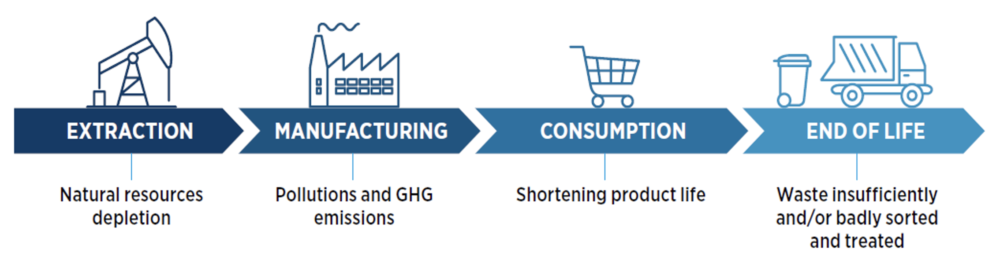
There are finite limits to our planet’s natural resources. Intensive exploitation at an increasingly rapid pace prevents nature from regenerating thus contributing to depletion and impoverishment. Our linear economic model, which consists of producing, consuming and throwing away, has a key role leading to devastating impacts on our environment.

Figure 1: Our Economy Favors an Unsustainable Linear Model

Source: Amundi Asset Management

The demographic and economic explosion of the 20th century and the advent of mass consumption with cheap and easily replaceable products have put too much pressure on our environment and we are now sounding an alarm. Indeed, this linear economy has overlooked two important points: our natural reserves are limited and nature needs time to regenerate and make new resources available. According to scientific experts, at this pace of extraction, some raw materials will no longer be available in the next 50 year[1] while there will be an increasing demand for energy and natural resources as the world population is expected to reach 9 billion by 2050.

Besides, the linear model of producing more and more and throwing away large amounts of waste, with limited recycling, is in contradiction with the planetary limits. Global waste production was estimated to be 1.3 billion tonnes per year in 2012 vs 2.01 in 2018 (+55%) and is expected to grow to 3.40 billion tonnes by 2050 under a business-as-usual scenario (+160%). As of 2018, it is estimated that globally about 37% of waste is disposed of in some type of landfill, 33% is openly dumped, 19% undergoes materials recovery through recycling and composting and 11% is treated through modern incineration. The consumer society has finally given rise to a society of waste.

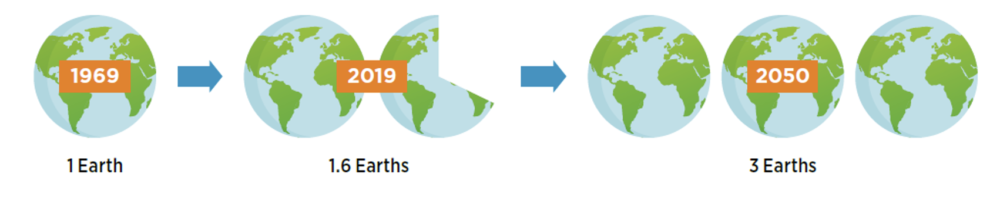
Figure 2: Almost 2 Earths were needed to support humanity’s annual resource consumption in 2019

Source: EarthOvershootDay.org

In these circumstances, how can we help companies to move from a linear to a circular model to limit the damage to our environment?

The Rise of the Circular Model

We therefore need to move from a linear economic model to a circular economic model that will limit the damage to the environment, giving it time to regenerate by promoting the extension of the life span of produced goods – notably through eco-design, reparability, durability, and the second-hand market. It must also include better treatment of waste allowing raw materials to be reused to create new goods, thus closing the loop. The circular economy is a solution that has become increasingly successful in recent years: the concept has spread from a small circle of insiders to a growing number of companies and citizens.

However, defining the circular economy is not easy and there is no universal definition today. At Amundi, we consider that the circular economy is a change of economic model that allows producing sustainable consumer goods, while protecting nature – by giving it time to regenerate – and ensuring the well-being of individuals.

This new economic model translates into:

  • A better management and use of natural resources
  • Goods designed and produced to last
  • Consumers who are informed about the environmental impacts of what they buy and who consume sensibly
  • A more efficient system for processing end-of-life products from which more secondary raw materials can be obtained.

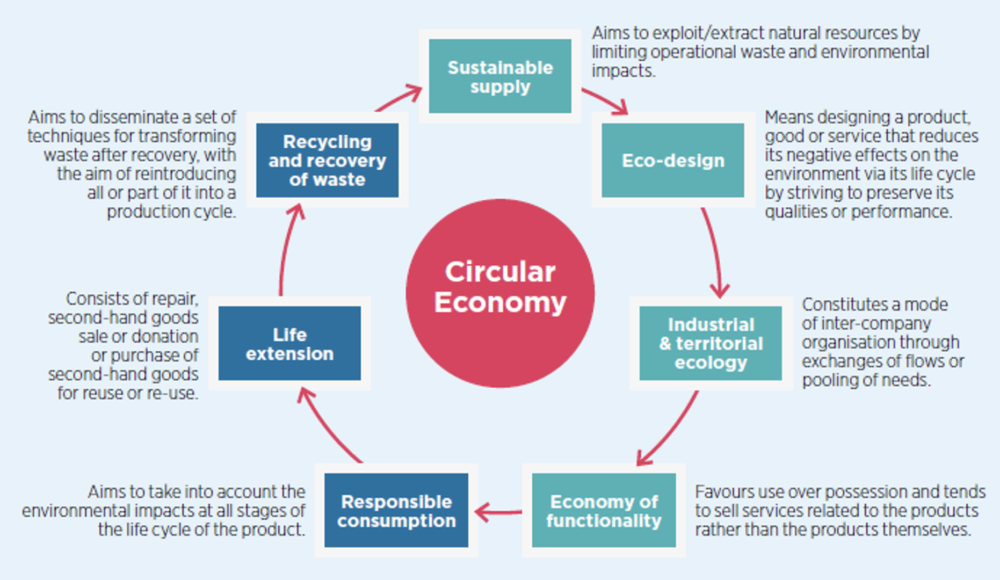
Each stage of the production of a product or a consumer good must therefore be reviewed in the light of this above definition:

Figure 3: The Circular Economy Proposes a New Economic Model that Re-evaluates each Stage of Production

Source: Amundi Asset Management

Investors have a Role to Play in Promoting a Circular Economy

As investors, promoting a circular economy is an opportunity not only to help decouple environmental degradation from economic growth but also a financial opportunity that drives innovation and competitiveness. Research shows that the circular economy offers a $4.5 trillion economic opportunity by reducing waste, stimulating innovation and creating employment. New business models focused on reuse, repair, remanufacturing and sharing models also offer significant innovation opportunities. However, for these prospects to be realized, companies need to re-think their entire business model and business strategy and this requires investor support. In the short term, there is an interest of companies to perpetuate the linear model as turnover is based on producing and selling at scale. The circular economy, on the other hand, proposes a new model in which the good has been designed to last and in which its longevity is key. This longevity translates again into eco-design, reparability, durability and recyclability and will require a complete redefinition of company strategy (aka a circular makeover). This change is not simple and certainly cannot happen overnight but again investors have a key role to play in supporting and encouraging this circular transition.

Best Practice Recommendations for Corporates

To encourage circularity, investors have to be armed with best practice recommendations to inspire the right kind of systemic change. However, there is no one circular model, but rather a variety of systems that work together to create a comprehensive circular strategy. This means there is ultimately no ‘one size fits all’ strategy for companies.  However, to promote a circular economy across all sectors  and companies one thing is key: the concept of circularity must be integrated into company strategy.

Based on our work on the topic and company engagements, at Amundi, we have identified the following recommendations for best practice divided into four main categories:

A Circular Model has to Come from the Top

Circular economy must be strongly integrated into the core business model of the company. This means circularity is not simply assimilated into general ESG strategy, but that the strategy around circular economy is a distinct topic with strategic CEO and board oversight. Updates on the circular economy strategy should be presented to the board at least once or twice a year.

Translate a Top Down Strategy into Clear Quantitative Commitments

Companies should establish strong and clear circular economy commitments with objectives and quantitative targets. Many companies are developing targets to increase the recyclability of materials used, but they must also focus on increasing the amount of recycled content used in new products (i.e start viewing second hand products/materials as new resources and not waste). Quantitative targets need to also go beyond material based targets and focus on fully circular product targets. For many sectors, this is great in theory but not practice as it is technically impossible or too expensive to scale. Regardless, these theories will only become a technical reality if companies drive strategies to dedicate resources to solving these problems. Thus, we support quantitative product targets where circular solutions are technically possible and R&D/Capex targets to mobilize resources in areas that need further innovation.

Get all Hands on Deck to Design and Prepare for a Circular Economy

A true circular strategy needs all hands on deck. This includes internal teams ranging from product developers, purchasing departments, and logistics to sales & marketing.  We recommend internal training to empower employees to incorporate circularity principles into their day to day work but also technical training where needed such as to further eco-design in product development or on  communicating circularity to customers so they remain involved in the circular process.

In addition, circularity requires collaboration with external stakeholders including suppliers and third party experts. Companies need to ensure that suppliers are seen as partners in this circular revolution. We have observed that strong supplier partnerships with a longstanding core group of supplies helps companies better integrate circularity into their business.  For areas where technical innovation is still needed, we encourage companies to work with their peers, circularity experts, and NGOs to collectively address these problems and find solutions.

Think about the End in the Beginning

Finally, at the end of life of products, we encourage companies to think of the end in the beginning (it is a loop after all). Designing for disassembly and raw material recovery is essential to kicking off this circular cycle. To effectively do this, there are a wide range of things to consider including the recyclability and longevity of individual components versus the recyclability of the products overall. Also, consideration is needed for how products and components are collected and how these materials feed back into the original system. This is certainly not an easy task and it will ultimately look different for every material, product, company, and sector. The point is, these discussions need to happen in the beginning, not the end involving the relevant people and teams right from the start.

Conclusion

True circularity is certainly easier in theory than practice but the impact of a linear model means it is no longer a viable strategy. Companies thus need to imagine new ways of doing business and a circular mindset will help companies address these impacts while remaining competitive. Yes, technical challenges exist, but our work at Amundi has shown that the integration of the circular economy by companies has accelerated over the last few years and feasible solutions are beginning to scale. It is ultimately companies that are ambitious in their adoption of circular strategies who are the ones driving change and innovation. Thus, our message to corporations is that the time to act is now.

Sources:
[1] Metal depletion: should we be worried?, Ademe, 2017.


RIA Disclaimer
The views and opinions expressed in this article are solely those of the authors and do not necessarily reflect the view or position of the Responsible Investment Association (RIA). The RIA does not endorse, recommend, or guarantee any of the claims made by the authors. This article is intended as general information and not investment advice. We recommend consulting with a qualified advisor or investment professional prior to making any investment or investment-related decision.
How to Invest in Anti-Consumerism

The climate crisis is closing in on us quickly, and at the heart of the climate crisis is consumerism. It is the reason the planet has too much plastic and CO2, losing too many trees, and using more fresh water than the Earth can produce. According to The World Counts, on a global scale we need the same as 1.8 Earths to support our demand for resources and absorb our waste.

If everyone on Earth consumed at the same rate as Western consumers, we would need five Earths to support us. And the number of consumers is growing fast. By 2030, the number of consumers on the planet will be 5.6 billion, compared with 4.3 billion right now. The World Counts defines a consumer as “someone able to buy goods and services beyond the satisfaction of basic needs. Specifically someone having more than US$10 a day to live on – also referred to as middle class.” If nothing changes, we will be out of fresh water, have no more trees, and no more seafood at some point in the next 30 to 80 years.

Writing about anti-consumerism and responsible investing is not easy. Fundamentally, the general premise of investing is buying companies that you think are going to increase sales, by increasing the production of the goods or services they sell. Investing in anti-consumerism sounds like a paradox. So where is the intersection of investing and anti-consumerism? Is there an intersection?

Tech seems like a logical place to start, although the major tech companies can hardly be seen as anti-consumer.

Apple Inc. promotes its goal of being carbon neutral by 2030 and, to its credit, has reduced greenhouse gas emissions every year since 2015, but their primary business is producing and selling phones, tablets, and computers. As a result, they emitted 22.6 million metric tons of greenhouse gases in 2020.

Alphabet Inc. (Google’s parent) and Meta Platforms Inc. (owner of the Facebook social media service) make most of their money from advertising, advertisements that promote consumption, while Amazon.com Inc.’s business relies primarily on consumption. The big tech companies obviously serve a valuable purpose, and there is a place for them in some RI portfolios, but not for promoting anti-consumerism. Most tech funds hold some combination of the mega-cap tech players – if not all of them. Here again, it’s not easy investing with an anti-consumer perspective.

How about food and water companies? Food and water are, first and foremost, basic necessities of human survival, so at the very least food and water companies are providing for human needs as opposed to human wants.

That brings us to companies like Xylem Inc., which focuses on creating “sustainable, efficient, and autonomous water systems” by increasing the use of technology and data analytics. Then there is Halma plc, which brands itself as a “global group of life saving technology companies,” including a group of water analysis and treatment companies. One of these is Hydreka, which produces equipment and software for water optimization and monitoring. Helma (and its subsidiaries, like Hydraka) is a component in the iShares Global Water Index ETF (TSX: CWW), which tracks the S&P Global Water Index, providing “exposure to 50 companies from around the world that are involved in water related businesses.”

In terms of food companies, there are many related to agriculture and fertilizer, but an easy argument can be made that they actually contribute to overconsumption, and it’s a fact that they contribute significant greenhouse gas emissions. A study from the University of Michigan found that 10%-30% of a household’s carbon emissions come from food, and according to the UN’s Food and Agriculture Organization, almost 15% of global greenhouse gas emissions come from animal agriculture – 65% of that is from beef.

What we eat is important in the fight against climate change. Two of the bigger companies that provide meat alternatives are Beyond Meat Inc. and Impossible Foods. Beyond Meat is publicly traded but Impossible Foods is not, so I’ll focus on Beyond Meat here.

The number-one ingredient in Beyond Meat’s “Beyond Burger” product is pea protein, which results in significantly lower GHG emissions to produce than beef. According to Our World in Data, the production of 100 grams of beef protein results in 50 kg of GHG emissions, while 100 grams of pea protein results in 0.44 kg of GHG emissions.

Beyond Meat commissioned the University of Michigan to study the lifecycle of the Beyond Meat Burger and found that “the Beyond Burger generates 90% less greenhouse gas emissions, requires 46% less energy, has >99% less impact on water scarcity and 93% less impact on land use than a ¼ pound of U.S. beef.” The Desjardins SocieTerra Positive Change Fund currently lists Beyond Meat as a holding. Hopefully more get on board once Beyond Meat gets more established. 

Investing in anti-consumerism is not easy, but it’s not impossible. As responsible investors, the bottom line is that we need to look at what our investments are producing and how they promote consumerism, or better yet how they don’t promote consumerism.


Contributor Discalimer
© 2022 by Fundata Canada Inc. All rights reserved. Reproduction in whole or in part by any means without prior written permission is prohibited. Commissions, management fees, and expenses all may be associated with investment funds. Please read the simplified prospectus before investing. Funds are not guaranteed and are not covered by the Canada Deposit Insurance Corporation or by any other government deposit insurer. There can be no assurances that a fund will be able to maintain its net asset value per security at a constant amount or that the full amount of your investment in the fund will be returned to you. Fund values change frequently and past performance may not be repeated. The foregoing is for general information purposes only and is the opinion of the writer. No guarantee of performance is made or implied. This information is not intended to provide specific personalized advice including, without limitation, investment, financial, legal, accounting or tax advice.

RIA Disclaimer
The views and opinions expressed in this article are solely those of the authors and do not necessarily reflect the view or position of the Responsible Investment Association (RIA). The RIA does not endorse, recommend, or guarantee any of the claims made by the authors. This article is intended as general information and not investment advice. We recommend consulting with a qualified advisor or investment professional prior to making any investment or investment-related decision.

The Path to Net Zero Will Be Circular

The imperative to reach our net-zero goals is dominating investor conversations these days, and rightly so. Climate change is arguably the greatest threat our society faces. I say “arguably” because the severity of yet another global crisis is quickly gaining recognition as potentially a more direct, more imminent threat, and will undoubtedly begin to loom large in the ESG conversation. That’s the biodiversity crisis.

Aside from the feedback loop these two issues share (accelerated climate change will increase biodiversity loss and increasing biodiversity loss will hinder our ability to mitigate climate-related risks), they have this in common as well: both are insurmountable unless we embrace the principles of circularity.

The concept of circularity is not complicated. There are three basic principles: eliminate waste and pollution, keep products and materials in use, and regenerate natural systems. They are the principles that govern the natural world.

The problem is that our current economic model is largely linear. We harvest a natural resource, we build something with it, and when we’re done with that something, we throw it away. The exceptions to this model tend to prove the rule: most of the products we create are destined for a landfill or an incinerator, or are scattered in the environment as pollution. Think proliferation of ocean plastics, where the expectation is that by 2050, we’ll have more plastic in our oceans than fish. If anyone questioned whether we really are in a biodiversity crisis, that data point alone should erase all doubt.

From an economic perspective, the value at the end of a product’s linear life is nil. More accurately, it is a negative value, since there is usually a cost associated with proper disposal. All the value that was embedded in the product—from extraction to design to manufacturing—disappears. A circular economic model involves rethinking the design of products and their components to reduce resource consumption and the use of harmful chemicals, keeping them at their highest value for the longest period of time through durability, reuse, and repairability, and ultimately, regenerating natural capital. According to the Expert Panel on the Circular Economy in Canada, our economy today is only 6.1% circular. We have a long way to go.

Our approach to addressing the risks of climate change and biodiversity has also been linear, an unconscious extension of our current “take-make-dispose” economy. Look at the drive to decarbonize our energy system and ditch fossil fuels for renewables. This approach doesn’t deviate much from business-as-usual—we’ve just replaced the inputs. No doubt this familiarity is what makes the approach appealing. Without underestimating the vast amount of innovation that has been applied to date, we must acknowledge that innovation has taken place within the confines of an economic model we understand and feel comfortable with.

Amazon offers a case study. The company has a goal of carbon neutral delivery by 2030, and its recent deal with electric truck maker Rivian for 100,000 vans represents just the start of that transformation. Almost all the major car makers see where this is going, with many pledging 100% zero emission vehicles over the next 15 years. Similarly, the drive to decarbonize our electricity grids via a switch to renewables is a core commitment for corporations and governments alike. On the surface, these commitments and targets show excellent progress, and we need them. But the thinking behind them remains tied to the linear economic model, and that’s what needs to evolve.

According to the Ellen MacArthur Foundation, a group focused on building a circular economy, the decarbonization of our energy system will only get us 55% of the way to meeting our goal of net zero by 2050. The other 45% is linked to embedded carbon in the production of materials, products, food, and the management of land. In other words, absent a change in the way we produce things, even a 100% carbon-free grid and all zero-emission vehicles will only get us part of the way there. Looking at Amazon again, what if the company became a conduit for repair and reuse, enabling consumers to extend a product’s lifespan? What if they went beyond the consideration of their own packaging, which is important, to address the upstream impacts and end-of-life plans for the products they ship? What if the company made a commitment not just to net-zero emissions, but to zero waste? Amazon is taking steps in that direction, and is now a member of the Ellen MacArthur Foundation. This is a good thing.

A circular economic model might get forced upon us anyway, as our linear decarbonization push is already showing cracks in the system due to resource constraints. The shift to electric vehicles, large-scale energy storage, solar and wind farms, and the growth of the digital economy in general, represents an exponential growth in demand for key minerals. According to the International Energy Agency, a typical electric car requires six times the mineral resources of a conventional car; an onshore wind farm requires nine times the mineral resources of a gas-fired plant. Under the IEA’s Sustainable Development Scenario, lithium demand grows by 40 times, graphite, cobalt and nickel by 25 times, and copper demand more than doubles.

The implications for biodiversity, water security, and Indigenous and community rights due to unrestrained growth in mining to meet this demand should be enough to make us rethink our approach. But even if we were willing to relive the mistakes of the past, it is doubtful we could meet this demand through mining alone. Resource availability will eventually stop us cold. The hard truth of supply and demand points to circularity.

A significant challenge for the investment community is the nebulous nature of the circular economy—it can’t be boiled down to a simple metric like tonnes of CO2 emissions. Moreover, it shares some of the systems-level challenges that have proved so hard for investors to address elsewhere. The promise of the circular economy requires systemic change, from government policies and regulations to industry standard-setting to the creation of a circular business ecosystem. Investors have struggled to address systemic issues to date, now climate change is forcing systems-thinking on us, so perhaps the timing is right.

Despite inherent challenges, circularity does offer business opportunity. According to Accenture, transition to a circular economy could generate US$4.5 trillion in annual economic output by 2030. A study by the United Nations Environmental Programme Finance Initiative of 222 European companies across 14 industries found that the more circular a company becomes, the lower its risk of default on debt over both a one- and five-year time horizon. A circular economy plays both offense and defence. So where to start?

Having the right metrics would help, but if we haven’t hit ESG-framework fatigue yet, surely we’re close. This might not be the best time to suggest we create a “Taskforce for Circularity-Related Financial Disclosures” (trademark infringements alone should warn us off). But I don’t think we need to.

Thankfully, the language of the circular economy lends itself well to the world of ESG. It is all about material flows, resource and energy inputs, supply chain risks, and business model innovation. As we move toward standardization of ESG frameworks (hello International Sustainability Standards Board), investors need to ensure that circularity metrics are front and centre. A natural ally on this front should be the banking sector. In the push to align their lending portfolios and financial products with a net-zero future, investors should be asking banks to actively measure, disclose, and set targets for the circular economy. We should ensure that financial sector commitments to drive the growth of low-carbon technology should also be pushing for these growth industries to embrace circularity.

Plastics is another area that is ripe for circular economy engagement. The Canada Plastics Pact is a momentous development that investors should be embracing and encouraging their portfolio companies to join. The CPP is a multi-stakeholder collaboration that brings businesses, government, NGOs, and other key actors in the plastics value chain together to work toward achieving an actionable set of 2025 targets, such as raising the rate of plastics recycling from today’s anemic 9% to 50%; achieving 30% recycled content across all plastic packaging; and, ensuring 100% of plastic packaging is designed to be reusable, recyclable or compostable. Investors should be encouraging their portfolio companies to join the CPP in the interests of creating the critical mass required to drive systems-level change.

There are many more opportunities to start embedding the concept of circularity into our thinking. Circular Economy Leadership Canada provides thought leadership, technical expertise, and collaborative platforms to accelerate the transition to a circular economy in Canada, and is a great resource we all should use and support. Circularity is a nascent topic for investment and engagement, but one that is entirely aligned with the push to net zero and the urgency of reversing biodiversity loss. If you were wondering why many of the net-zero and biodiversity commitments floating around feel like they are missing something, they are—circularity. It’s something we haven’t been talking enough about, but we really need to start.


RIA Disclaimer
The views and opinions expressed in this article are solely those of the authors and do not necessarily reflect the view or position of the Responsible Investment Association (RIA). The RIA does not endorse, recommend, or guarantee any of the claims made by the authors. This article is intended as general information and not investment advice. We recommend consulting with a qualified advisor or investment professional prior to making any investment or investment-related decision.

Scope 3 Emissions: The Next Frontier in Climate Engagements

In a recent report from the Intergovernmental Panel on Climate Change (IPCC) there is a jarring reflection of our current and future environmental reality, and the call to action is clear: the world needs to get to net-zero emissions and it needs to get there quickly. For companies and investors, the path forward requires looking well beyond operational emissions (known as scope 1 and 2 emissions), and towards a strategy that also includes emissions generated across value chains (known as scope 3 emissions).

Within the Greenhouse Gas Protocol, Scope 3 emissions can be broken into 15 categories with the two most meaningful categories being category 1 (purchased goods and services) and category 11 (use of sold products). Unfortunately, reporting on scope 3 emissions is poor.

As of August 2021, only 40% of MSCI All Country World Index (ACWI) constituents report some quantity of Scope 3 emissions, versus 65% for Scopes 1 and 2, and the vast majority of the data does not capture every scope 3 category. This limits the ability to accurately depict a company’s true scope 3 emissions. This challenge can be attributed to several factors, such as the difficulty in capturing accurate scope 3 data, wanting to avoid potential double counting and a general sentiment that scope 3 emissions should not be a company’s responsibility.

Given these gaps in data and uncertainty from companies, there is significant opportunity for investors to step up climate engagement efforts and tackle this area with more rigor.

Under-the-radar industries

Typically, when investors engage issuers on climate change, the focus tends to be on industries traditionally understood as high emitting, e.g. oil and gas and utilities. However, when it comes to scope 3 emissions, investors should also be aware of the risks posed by some under-the-radar emitting industries, such as technology.

Using estimation models for scope 3, these emissions made up 92% of the overall emissions for the constituents of the MSCI World Information Technology Index, versus 87% for the constituents of the MSCI World Energy Index. For perspective, under the Science Based Targets Initiative, companies setting Science Based Targets must include scope 3 emissions in their targets if their scope 3 emissions cover more than 40% of their combined scope 1, 2 and 3 emissions.

Where these scope 3 emissions come from are important for investors to understand. For technology, these emissions are linked to the grid, which provides the electricity that powers the products that have become ubiquitous in everyday life. In Canada, the grid is considered one of the cleanest in the world –electricity here primarily comes from non-emitting sources such as hydro, nuclear, solar, and wind, while only about 20% comes from carbon emitting sources including coal, oil, and gas.

However, fossil fuel generated electricity accounts for 63% of the worldwide total, with coal being the primary source at 37%. This means that the electricity that is used every time someone plugs in their phone to charge, logs on to work from home, and even plugs in their electric vehicle – can be a significant source of greenhouse gas emissions.

Scope 3 impact on portfolios

Companies that have the bulk of scope 3 emissions in category 11 (use of sold products) face transition risks related to the move to a low carbon economy; either from customers switching to lower-emission products or from increased carbon taxes, which can affect a company’s cash flow. Similarly, companies with the bulk of their scope 3 emissions in category 1 (purchased goods and services), may also face cash flow constraints due to increased supply costs.

Although scope 3 emissions have historically been difficult to quantify and measure, there are several new tools available today that can assist in company and portfolio analysis, including sophisticated scope 3 estimation models. While still evolving and improving, these methodologies can provide investors with an ability to benchmark companies within the same sector and region, helping to better identify which companies to focus engagements on.

Encouraging disclosure – a critical first step

Irrespective of the industry, encouraging disclosure of scope 3 emissions is a critical first step with those companies that currently do not measure or report. For companies that do report these emissions, investors can also consider which scope 3 categories are included and try to understand what challenges they faced producing this data.

Emissions transparency is not the only lever for engagement. Investors can also seek information on how companies are planning to reduce scope 3 emissions over time. Whether it is a car manufacturer making more fuel-efficient vehicles; a technology manufacturer reducing the energy intensity of its hardware; or an oil refiner engaging with its suppliers – these are some of the management practices that investors can ask investee firms about.

Over time we believe that consumption patterns will skew towards products that have a lower overall emissions footprint, and production will gradually catch up with this demand. In the meantime, there is a collective responsibility for all companies to understand their scope 3 emissions and investors have a responsibility to engage companies to take meaningful action to reduce this footprint.

RIA Disclaimer
The views and opinions expressed in this article are solely those of the authors and do not necessarily reflect the view or position of the Responsible Investment Association (RIA). The RIA does not endorse, recommend, or guarantee any of the claims made by the authors. This article is intended as general information and not investment advice. We recommend consulting with a qualified advisor or investment professional prior to making any investment or investment-related decision.

Supply Chain Management Paves the Way for Sustainability

Retail supply chains worldwide have a key role to play in addressing environmental and social issues related to carbon emissions, pollution, water shortages, deforestation, labour violations, worker health and safety, and more.

Supply chains, by their nature, are a complex network of tiers of suppliers that are heavily interdependent and interconnected. In a large corporation, each supplier might require inputs from thousands of sub-tier suppliers. The more intricate the supply chain, the more prone an organization is to uncertainties and hidden risks, depending on where they operate and which sub-industry they operate in.

Yet, according to the Evocadis 2019 Sustainable Procurement Barometer, only 38% of large multinationals are evaluating their partners every year. It may not come as a surprise, then, that the UN Global Compact has named supply chain practices as the biggest roadblock to achieving sustainability.

This should be cause for concern for both investors and advisors alike. Poor supply chain management affects sustainability performance, which in turn diminishes a company’s potential for future growth. If retail companies expect to continue successfully doing business, they will need greater transparency and accountability when it comes to their supply chains, especially if they hope to maintain the support of customers, investors and regulators.

How do supply chains in the retail sector impact ESG issues?

On average, retail supply chains have a greater adverse effect on environmental issues than the company’s own operations. According to McKinsey & Company, supply chains account for more than 80% of greenhouse gas emissions and more than 90% of the impact on air, land, water, and geological resources.

When it comes to social issues, such as human rights, many companies fail to conduct adequate due diligence in their supply chains, in accordance with the United Nations Guiding Principles on Business and Human Rights. Today, an estimated 24.9 million people globally are victims of forced labour, generating $150 billion in illegal profits in the private economy, according to KnowTheChain, an online resource for understanding forced labour in global supply chains. In the apparel and footwear sector alone, 54% of companies have faced allegations of forced labour in their supply chains.

The pandemic has only exacerbated these issues, including exposed weaknesses through labour shortages, logistical problems and stock delays. Ultimately, navigating the challenges brought on by COVID-19 has underscored the fact that you are only as strong as your most vulnerable supplier. To lessen the environmental and social impacts of supply chains, companies, especially in the retail sector, need to pay more attention.

Why should investors care?

At the most basic level, investors should care about supply chain issues because poor management can lead to environmental and human rights violations. On the one hand, there’s the financial perspective, and the failure to effectively manage the environmental and social elements of supply chains can lead to regulatory scrutiny, as well as serious reputational and economic losses. Essentially, once companies lose the confidence of their customers, they lose their brand value. The bottom line is that poor supply chain management is a financial risk for investors.

On the other hand, companies taking clear action in their supply chains to reduce incidents of pollution, lower their environmental footprints and increase overall efficiencies will see progress in their overall environmental performance. These companies will demonstrate stronger financial resilience to investors and be better poised for growth over the short, medium and long term.

What are some companies doing right?

One of the best ways to learn is by watching others who are leading the way. One of the current industry leaders to watch is the 1.5°C Supply Chain Leaders initiative, which is a coalition of big corporations like Ikea, Microsoft and Unilever. The coalition encourages small- and medium-sized enterprises (SMEs) to drive down their emissions, which will, in turn, help larger companies to meet their net zero goals. Through the SME Climate Hub portal, the coalition provides free resources and tools to support suppliers in their switch to more sustainable business practices.

Ikea, one of the founding partners of the initiative, has been a leader in its own right, most recently for its re-commerce, or reverse commerce, efforts to reduce throwaway culture. In August 2021, the company began testing a furniture buyback and resale program in the United States, with the hopes of eventually making it a permanent service in all its U.S. stores. As the circular economy takes root globally, retailers must incorporate sustainability into their entire supply chain.

At Desjardins Global Asset Management, we have our own role to play as an investor. That includes understanding and assessing the main environmental and social risks associated with supply chains, and engaging companies in dialogue on how to improve their due diligence when it comes to supply chains.

What does this mean for the future?

Consumers increasingly want better traceability, transparency and sustainability from the brands they spend their hard-earned dollars on. In response, the investment industry will demand greater engagement around supply chains through dialogues, shareholder proposals and collaborations. The retail industry will no longer be able to downplay or avoid scrutiny of its supply chain practices. For companies already on top of their supply chains, this will be an opportunity to shine. However, for companies which are lagging, it will be harder to hide in the shadows when it comes to environmental and social performance.

RIA Disclaimer
The views and opinions expressed in this article are solely those of the authors and do not necessarily reflect the view or position of the Responsible Investment Association (RIA). The RIA does not endorse, recommend, or guarantee any of the claims made by the authors. This article is intended as general information and not investment advice. We recommend consulting with a qualified advisor or investment professional prior to making any investment or investment-related decision.

The Index Approach to Integrating ESG into the Investment Process

Oscar Wilde – “…the unspeakable in pursuit of the uneatable.”

Responsible Investing (RI), was once a secondary or tertiary consideration but it has now become the central theme in investment management. There are over 3,000 asset manager signatories to the United Nations Principles for Responsible Investment. Reports from Deloitte and from PWC predict that North America asset managers will rapidly conform to a responsible investing discipline. The North American asset management industry, specifically the US, has the influence and the power to effect significant improvements in climate change, Diversity, Equality & Inclusion and other important aspects which define our world.

Responsible investing is not a defined concept but rather a wide spectrum with many different, possibly confusing approaches.  Screening out undesirable sectors or companies negates any progress which could be made through active engagement or proxy voting. Positive inclusion can result in a narrow opportunity set, producing significant Tracking Error, making it difficult to meet investment objectives.

The simple unifying principle in all approaches is the desire to allocate capital in a clean and responsible manner, but anyone with fiduciary obligations must consider the ramifications very carefully. McCarthy Tetrault wrote an extensive article describing the duties fiduciaries must meet when implementing RI within their investment mandates. The authors concluded ESG approaches may be the most suitable because they may minimize constraints which pose impediments to meeting required rates of return.

How can investors perform due diligence to assess where managers get their data, the degree to which the data is integrated into managers’ investment processes and the extent to which the information will influence security selection? This is a monumental task which could be simplified using more transparent and consistent data for a more thorough due diligence.

The major index providers have strong RI/ESG credentials, combining their RI/ESG expertise with their extensive benchmark index methodologies. In contrast to Active managers, Index providers offer consistent and transparent rules-based strategies which can be applied uniformly across regions and asset classes, creating a cohesive policy for investors to direct their Capital responsibly.

Moreover, index based ESG exposures provide a solid foundation for fiduciaries to evaluate how any exposure refinements may influence investment performance. For asset owners doing asset-liability studies, this is a major consideration because an ESG index data set, taken from its broad beta parent index, is very likely to be highly representative of the economic opportunity set in the economy.

Several large pension plans, most notably Ilmarinen in Finland, have allocated significant assets to Index ESG strategies, motivated by their transparent rules, their diversification and their ease of execution. In other instances, Institutions have used ESG policy benchmarks so they can align their capital allocation with their objectives.

In a competitive industry, it is not surprising that ESG presents yet another opportunity to criticize the attractive simplicity Indexing brings to investment management. Putting aside the Active versus Index debate, are the Indexing ESG criticisms valid?  It is important to evaluate them to gauge their relevance:

1.  Diverse methodologies result in inconsistent ESG scores

Regardless of whether RI/ESG strategies are Active or Index, there are many different approached. Before leveling a criticism, we should acknowledge that variety is inevitable in a discipline which lacks universal definition.

Do different scores imply weakness, or do they illuminate areas where deeper evaluation is warranted?  Interestingly, there is only 60% correlation across index providers on company ESG scores, thus the criticism (ESMA Report on Trends, Risk & Vulnerabilities, J Mazzacurati, 2021). In contrast, there is 99% correlation across credit agencies rating bonds, and this created a furor during the credit crisis.

Rating RI/ESG includes far more data points than rating bonds, so it stands to reason that there would be dispersion across different rating organizations, be they data providers or Indexing firms.  Independent assessment should not be valuable in one realm but disparaged in another.

It is important to acknowledge that investors who appoint active managers across different asset classes and regions will end up with a patchwork quilt portfolio which has inconsistent methodologies. In contrast, an index approach provides consistency across the portfolio, a more robust and uniform RI/ESG policy and investment model for asset-liability measurements.

2. Aggregate ESG scores mask the relevance of company scores

While some investors may choose to buy individual companies to tailor their own exposure, most buy portfolios in ETFs or pools. As such, they examine portfolio characteristics like beta, Sharpe ratio, tracking error and so on.

Furthermore, studies continue to confirm Brinson, Hood & Beebouwer’s findings (Determinants of Portfolio Performance, 1986) that minimize the importance of security selection as a determinant in meeting long-term objectives. From this perspective, an index with minimal tracking error should have very similar beta and Sharpe ratio characteristics to its parent index, while achieving significantly improved ESG scores, regardless of any anomalies which may occur at the company level.

If progress is achieved in increments, ESG Indices provide consistent and transparent measurement to monitor whether, in aggregate, capital is being responsibly allocated.

3. Passive investors can choose to ignore undesirable constituents

Critics have suggested passive investors, like ETF providers, should choose not to include undesirable companies, overriding index construction, in an effort to meet RI/ESG expectations.

Such comments misunderstand that passive investors who provide index exposures cannot unilaterally exclude companies, yet charge a management fee to replicate said index. To do so would create significant tracking error, raising fiduciary questions, and could arguably be called a misrepresentation.

RI/ESG index providers measure, rank and weight companies when they construct investable benchmark exposures. This cleanses capital but also maintains a strong investment thesis.

Conclusion

Responsible Investing or ESG is one of the most difficult things to integrate into the investment process for investors large and small. Highly technical knowledge is required to sift through myriads of data across the Environmental, Social & Governance considerations, requiring on-going monitoring, measuring and rating. Exclusion is easy, but it is a dull tool which prevents activist investors from exerting a positive influence for change.

Investors wishing to showcase their own governance, demonstrating they have met fundamental investment principles while responsibly allocating their capital should consider using an ESG Index. In the absence of an empirical method, the essence of what RI/ESG strives to achieve can be most accurately evaluated through explicit and consistent index methodologies. An index can provide a lower carbon footprint, higher social and governance scores and a sound risk management screen to enhance invested capital.

Contributor Disclaimer
This communication is for information purposes. The information contained herein is not, and should not be construed as, investment, tax or legal advice to any party. Investments should be evaluated relative to the individual’s investment objectives and professional advice should be obtained with respect to any circumstance. BMO Global Asset Management is a brand name that comprises BMO Asset Management Inc., BMO Investments Inc., BMO Asset Management Corp., BMO Asset Management Limited and BMO’s specialized investment management firms.
®/™Registered trade-marks/trade-mark of Bank of Montreal, used under licence.
RIA Disclaimer
The views and opinions expressed in this article are solely those of the authors and do not necessarily reflect the view or position of the Responsible Investment Association (RIA). The RIA does not endorse, recommend, or guarantee any of the claims made by the authors. This article is intended as general information and not investment advice. We recommend consulting with a qualified advisor or investment professional prior to making any investment or investment-related decision.

How Active Investment in Traditional Corporate Bonds Can Deliver Significant Social Change

There is no question that society expects the investment industry and capital markets to responsibly allocate capital to help solve some of our biggest challenges. While equity investors may have the higher profile due to their ability to influence company behaviour through engagement and proxy voting, the corporate bond market is critically important to both raising capital and impacting strategy.

Generally, corporations tend to issue corporate bonds as a form of borrowing more often than equity issuance. As a result, corporate management teams are frequently reaching out to credit investors to convince them to buy their bonds. Although credit investors don’t vote proxies, they can be a key driver of positive change.

We’ve recently seen the rise of different forms of ‘responsible’ bonds – Green, Social, Sustainability-Linked and others – which would appear to fulfill that need to make a positive difference. Responsible bonds certainly do drive positive change, but there is a strong argument that there is a significantly higher potential impact from traditional bond buyers who actively engage with companies and push for change.

Responsible bonds – a quick primer

With ESG considerations gaining more and more prominence in global capital markets, institutional investors, together with their clients and beneficiaries, continue to demand more corporate action to address those issues. One key development has been the creation of corporate bonds with covenants requiring certain favourable ESG-linked behaviours.

Original forms of responsible bonds, such as Green and Social bonds, include covenants setting out a specific set of investments that the bond proceeds must be used for. This helps ensure investors that they have driven change as the raised capital will be used for beneficial projects. Green and Social bond issuance continues to grow globally, a trend that will hopefully continue.

Taking a broader perspective on influencing corporate strategy

The influence of Green or Social bonds only extends to the specific proceeds from their issuance, which can limit their impact on corporate behaviour. For example, a coal-fired power producer with $20bn of overall debt might issue a $500m green bond to invest in one small wind turbine, driving a relatively small improvement within its overall business. Meanwhile, the proceeds from its larger, traditional bonds help maintain “business as usual.”

If active fundamental credit investors in that $20bn of traditional debt elect to engage with company management they have a powerful platform to promote responsible change to overall corporate strategy.

Though perhaps an extreme example, in reality most one-off Green or Social bond issues tend to be a small part of the issuer’s overall financial profile.  While green and social bonds can be a source of positive change, the potential impact from engaged buyers of traditional bonds can be far greater.

Sustainability-Linked Bonds – an innovative solution

Recently we’ve seen the rise of Sustainability-Linked Bonds (SLBs), which include covenants that create an incentive for a company to meet defined corporate level performance metrics, by including a step-up in the cost of the debt if the performance metric is not achieved. With Green or Social bonds, the impact is limited to the proceeds from the one bond issue; in comparison, SLBs have the potential to directly impact overall corporate behaviour and targets. Although SLBs are relatively new and there has been limited SLB issuance to date, they represent an exciting innovation that provides credit investors with another important tool to enact change.

With more issuance we’ll see just how committed companies are to setting and meeting demanding targets for performance improvement. Ultimately, as the SLB market grows, it will be important for active investors to continue to engage with companies to hold them accountable and ensure that any performance metrics are both tangible and relevant. Allotting outsized importance to one or two metrics may provide an incomplete picture of overall corporate behaviour and direction.

Metrics can also be gamed. Using our coal-fired power producer example, the company could issue an SLB and commit to reducing the carbon emissions intensity of its revenue, accomplishing that by buying another wind power company. Its emissions intensity will decrease, but society is no better off with overall emissions staying the same.

However, if a renewable power company buys a coal-fired power plant with plans to convert the facility to a more sustainable form of power generation, their overall carbon emission intensity may increase in the short run, but society actually benefits from lower overall carbon emissions over time. In this instance, providing debt funding through a traditional bond would reduce more carbon emissions for society than buying the SLB of the coal-fired power company that just used M&A to game its metric.

Active investors that look beyond SLBs and just one or two metrics will have the ability to provide capital funding for a wider variety of solutions to society’s challenges.

Looking towards the future

The various forms of responsible bonds will likely continue to evolve and their issuance will remain a growing source of positive influence in society.  However, realizing the full potential of the corporate bond market to drive change will require active fundamental credit investors that engage with companies and use their buying power in traditional bonds to influence corporate strategy.

RIA Disclaimer
The views and opinions expressed in this article are solely those of the authors and do not necessarily reflect the view or position of the Responsible Investment Association (RIA). The RIA does not endorse, recommend, or guarantee any of the claims made by the authors. This article is intended as general information and not investment advice. We recommend consulting with a qualified advisor or investment professional prior to making any investment or investment-related decision.

What Investors Need Most from COP26: Useful Data to Inform Decision-Making

Currently, delegates from hundreds of countries, leaders of business and finance, and policymakers from across the world are in Glasgow for the COP26 climate conference. There they aim to accelerate action to reduce global greenhouse gas emissions to net-zero by the middle of the century.

Among the goals of COP26 is to spur sustainable investment on a scale required to remake how the world produces and consumes energy, a change that will demand the largest reconstruction of the global economy since the Industrial Revolution. The latter transition took roughly 80 years. The world needs to reach net-zero in less than half that time.

It’s time for companies and capital-markets participants to seize the moment offered by COP26 to commit to net-zero across their businesses and portfolios. The Paris Agreement, which rests on a commitment by countries to prevent the worst effects of climate change by keeping global warming this century to well below 2°C, preferably 1.5°C, provides precedent for action.

As we look to what will be achieved at COP26 and beyond, here are three items that support the rechanneling of capital at the speed that reaching net-zero by 2050 will demand.

Stress the need to make net-zero a central part of business strategy

The net-zero revolution will reach every corner of our economy and society. It won’t be enough for today’s companies to focus solely on reducing their dependence on fossil fuels. Over the next decade, companies will need to invent solutions and services that replace existing business models.

Companies also will need to redouble their efforts to reach net-zero. At present just over a third of the world’s listed companies have set some type of target to decarbonize. Fewer have announced plans to cut emissions to net-zero. Some of the world’s largest corporate emitters of greenhouse gases have yet to report any of their emissions.

In the nearly six years since the Paris Agreement was signed, governments around the world have introduced a range of plans and initiatives, but the planet won’t achieve its climate target without net-zero commitments becoming a central part of business strategy. For the net-zero revolution to succeed, it needs to ignite bold action by companies to drive emissions down across their businesses – not best efforts but verifiable commitments backed by continuous progress toward net-zero goals.

Providers of capital must commit too. Investors must put their portfolios on a path to net-zero while banks should adjust their practices and align their lending with a 1.5°C world. For our part, MSCI has committed to being net-zero before 2040 and will team with the Glasgow Financial Alliance for Net-Zero to spearhead an alliance of financial service providers to supply market infrastructure that supports sustainability.

To ensure accountability and transparency, the COP26 conference should seal the global adoption of frameworks such as the Task Force on Climate-related Financial Disclosures for taking climate risk into account in developing strategic plans and priorities. For investors and other stakeholders, such disclosures provide critical insight into how a company may be helped or hurt by a net-zero economy.

Mandate a set of quantitative climate disclosures

Investors need quantitative data that allows them to assess the resilience to climate change of every asset, so they can value both risks and opportunities across their portfolios. Much of that information should come from companies, and much of it isn’t disclosed today.

The decarbonization targets that companies do set vary by the business activities they cover, feasibility and timeline. Some banks, for instance, have yet to report emissions from the projects they finance; this is a category that contributes the largest portion of their carbon footprint. The variety and gaps leave investors struggling to assess the potential impact of targets on the climate risks companies face.

COP26 should encourage policymakers to introduce mandatory climate-related disclosures based on internationally agreed-upon standards that incorporate specific units of measurement. At a minimum, such standards, which companies should commit to adopting, should call for companies to disclose their complete carbon-emissions footprint, the location of their largest facilities and the emissions of their largest suppliers.

If companies disclose a common, core set of climate data, investors will converge on the information they need to inform their decision-making.

Up the urgency

The middle of the century remains nearly 30 years away, but long-term investment managers need to begin decarbonizing their portfolios today as the reallocation of capital and repricing of assets is already underway.

That creates the potential for scarcity. Without a redoubling of efforts by companies to cut emissions, investors who try to align their portfolios with a world that keeps global warming to 1.5°C by the end of the century may find themselves short of investable options.

COP26 can counter that by affirming the need for all companies to set emissions-reduction targets covering both their direct and supply-chain emissions, as well as those caused by use of their products. The targets should aim to keep companies well under the net-zero budgets for their industry sector by no later than 2050.

By MSCI’s calculation, more than 90% of the world’s companies are not on track to lower their emissions enough for keeping global warming to 1.5°C. At their current rate of emissions, those companies would burn through their collective share of the global emissions budget for holding warming to that level in less than six years.

To avoid breaching a 1.5°C threshold, every listed company would, on average, need to reduce its carbon intensity by 10% each year until 2050. Yet historically fewer than one in four companies have managed to reduce their emissions by quite this much.

To create the net-zero future we want, we need to catalyze investment now. Investors need to be able to measure the carbon footprints of the companies they would invest in. Companies that aim to create and innovate need capital. And we all need to build a more sustainable world.

Contributor Disclaimer
Certain content ©2021 and reproduced by permission of MSCI ESG Research LLC; all rights reserved. The ESG data contained herein is the property of MSCI ESG Research LLC, its affiliates and/or information providers (“MSCI ESG”). Translation from English provided by RIA Canada. MSCI ESG makes no warranties with respect to any such ESG data or translation. The ESG data contained herein is used under license and may not be further used, distributed or disseminated without the express written consent of MSCI ESG.
RIA Disclaimer
The views and opinions expressed in this article are solely those of the authors and do not necessarily reflect the view or position of the Responsible Investment Association (RIA). The RIA does not endorse, recommend, or guarantee any of the claims made by the authors. This article is intended as general information and not investment advice. We recommend consulting with a qualified advisor or investment professional prior to making any investment or investment-related decision.

Is Say-on-Climate Here to Stay? It’s up to Investors

The pressure is on companies, and boards specifically, to enhance transparency on their strategies to mitigate climate risks and sustain their businesses in a net zero future. 2021 will be seen as a turning point where climate resolutions began receiving record support from investors. With 26 climate-related resolutions on the ballots this year, an astounding 14 earned majority support.

And investors can go beyond climate-targeted shareholder resolutions to raise climate concerns with the board. NEI Investments, for example, has a policy of voting against the chair if we feel the company is not adequately managing its climate-related risks. We follow up with the company after the AGM to explain our rationale and ensure our vote doesn’t get lost in the mix. But that is the challenge with voting against directors due to climate-related concerns; while voting to remove a sitting director is arguably one of the strongest actions you can take, the clarity of the message can get lost among the myriad reasons we vote against directors.

That is where the Say-on-Climate campaign comes in.

What is a Say-on-Climate?

The Say-on-Climate campaign was spearheaded by the Children’s Investment Fund (TCI) with As You Sow and the Australasian Centre for Corporate Responsibility (ACCR). Companies targeted by a “Say-on-Climate” proposal are asked to offer an annual advisory vote on their transition plan to a net zero economy. Investors are then tasked with assessing the strength of the company’s strategy to reduce emissions and align with the goals of the Paris Agreement – and to vote for or against the plan.

Several leading companies agreed to go straight to putting their climate action plans to a vote in 2021. Unilever, Moody’s, and Shell chose this route. These management-sponsored proposals received overwhelming support, nearing 90% and upwards.* On the other hand, shareholder proposals targeting other, less proactive companies to adopt a Say-on-Climate received an average support of just 25%. Investors seem wary about requiring companies to adopt this new practice, whereas they emphatically support companies that are proactively taking steps on this front. While these results don’t necessarily reflect future trends, they raise questions about what the future holds given the likelihood more companies will be targeted by the Say-on-Climate campaign.

The intended benefits – and cautions – of Say-on-Climate

Mitigating the risks of climate change requires urgent action. We commend those companies that did not shy away from putting forward their climate transition plan on their ballots, especially in this early stage where only a few companies have started to adopt this practice. Transparency is key. A growing Say-on-Climate practice should promote transparency and could pressure companies that have been slow to detail their strategies.

However, we are wrestling with potential unintended consequences related to this emerging practice. Voting for transparency is not the same as voting on the quality of a company’s climate plan. Are investors equipped to vote effectively on each and every climate action plan? And will this discourage investors from holding the board directly responsible for its oversight role on climate? Is it not the role of the board to set the strategy, and the role of investors to toss the board, if they don’t like the job they are doing – not ask them to pass their oversight responsibilities to investors? And most vexing of all, will it follow the path of say-on-pay votes and result in only the most egregious cases getting voted down? The binary nature of the vote means there is little room for nuance in assessing plans.

It is up to investors to decide whether Say-on-Climate is here to stay

What can we as investors do to make Say-on-Climate an effective tool to address climate concerns? Below are some key areas we believe we should consider and discuss.

  • Frequency: Is an annual advisory vote optimal when real transition plans will play out over years, not months? A longer voting cycle might give investors enough time and space to effectively assess progress and engage companies on areas of concern, while also giving companies enough space to make meaningful changes that are long-term in nature.
  • Balancing transparency against content: While companies choosing to be transparent should be commended, simple transparency is not the goal – a robust climate strategy is. Investors will need to balance those two elements and reflect that in their voting.
  • Accountability: Should the board or specific committee members be automatically voted down if a climate plan is poor? Or should there be an escalation process for particularly egregious plans? The benefit of the advisory vote might be to provide investors a way to distinguish between an unsatisfactory plan and a governance failure, where the latter requires votes against directors.
  • Engaging the proxy advisors: Proxy advisors will inevitably play a key role in influencing vote results if Say-on-Climate becomes common practice. Many investors will not have the resources to assess a large number of complex action plans. They will need to rely on proxy advisor research. As such, investors need to ensure that proxy advisors use a robust and transparent framework for their assessment.
  • Explain your vote: A vote number without context can send the wrong signal to a company. Investors need to follow up with companies to explain their rationale, especially in cases where a vote in favour of a climate plan represents only directional approval and does not necessarily indicate all aspects of the plan are fine.

As with just about everything ESG-related, the devil is in the details. Say-on-Climate is not a panacea and should be rolled out with care; but as long as investors stay focused on keeping the board accountable for a robust climate strategy, it could be a very useful tool for ensuring companies meaningfully address their future climate risks.

*Based on NEI review of the voting results of 14 companies
RIA Disclaimer
The views and opinions expressed in this article are solely those of the authors and do not necessarily reflect the view or position of the Responsible Investment Association (RIA). The RIA does not endorse, recommend, or guarantee any of the claims made by the authors. This article is intended as general information and not investment advice. We recommend consulting with a qualified advisor or investment professional prior to making any investment or investment-related decision.