Investing in the Time of COVID-19: An Analysis of Company Performance & Stakeholder Support

“He found a glimmer of hope in the ruins of disaster” ― Gabriel García Márquez, Love in the Time of Cholera

The COVID-19 pandemic has had a profound impact on people and societies. In the world of investments, we see a silver lining in the opportunity for corporations to distinguish themselves through their support for various stakeholders, going beyond shareholders, to create long-term value. Capital markets have not been immune to the pandemic, with extreme levels of economic activity, unprecedented financial liquidity and divergence of the realities on “Main Street” and “Wall Street”. To better understand corporate responses to the pandemic, we engaged with our portfolio companies in March and April on three topics:

  1. Financial resilience and liquidity
  2. Initiatives to deal with the acute impact of the pandemic
  3. Long-term risks and opportunities

This article highlights our analysis on a sample of our portfolio companies to explore their support of different stakeholders, the potential relationship with short-term price performance and their ability to create longer-term value. Broadly speaking, we have concluded that our portfolio companies that took a focused and substantial approach to supporting key stakeholders have fared better during the pandemic and exhibit a positive bias towards higher long-term historical returns.

Who are the stakeholders?

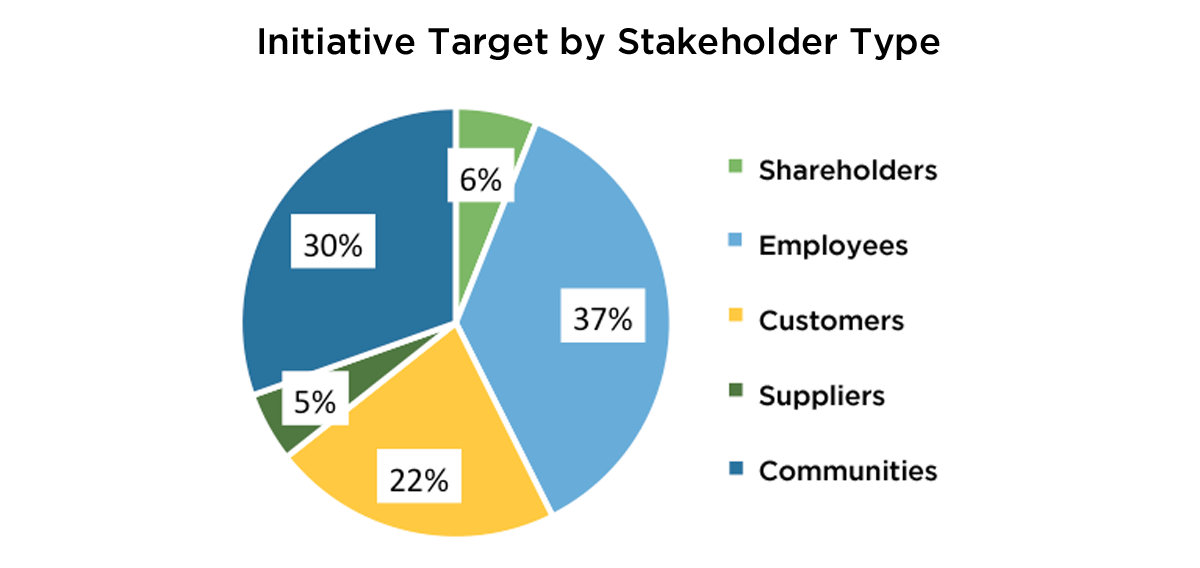
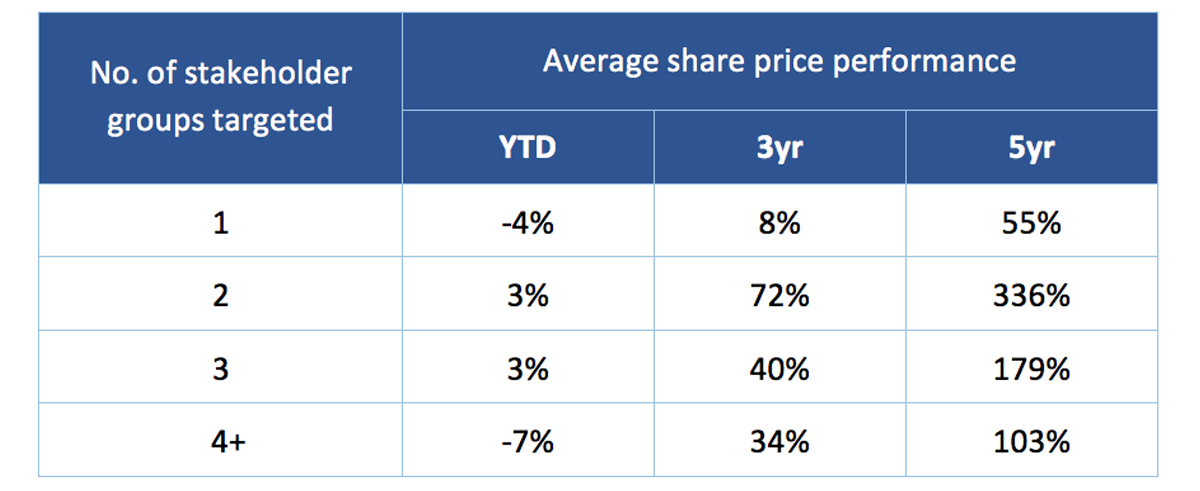
Our sample of initial efforts by companies from across our portfolios (Exhibit 1) found that the most frequently targeted stakeholder groups were Employees and Communities. There appeared to be a clear performance boost for taking an ambitious approach that targeted more than one stakeholder group, but this diminishes as more stakeholder groups were targeted (Exhibit 2). We believe that this suggests that substantial investments focused on material stakeholders had a more positive financial impact than efforts that defined stakeholders too narrowly or spread resources too broadly. We do recognize that other factors could affect the lack of linear relationship, including industry effects (banks having poor initial performance and some technology companies having extremely positive performance), and the greater impact of outliers in the smaller number of companies in our sample targeting four or more stakeholder groups.

Exhibit 1: Stakeholders targeted with Pandemic initiatives

Exhibit 2: # of Stakeholder groups targeted and average share price performance as of August 28, 2020

What were the initiatives?

Within each stakeholder category, companies took a wide range of approaches. For employees, responses ranged from providing danger pay, telecommuting options, and enhanced hygiene and sick leave practices to committing to pay laid-off employees in full. Support for suppliers included priority payments to small businesses, pausing loan payments and providing early payments to help with liquidity, while companies targeted communities through donations and working with governments, non-profits and hospitals. Most initiatives required investment of increasingly constrained corporate resources. For some companies, this meant decreasing capital targeted at shareholders (buybacks and dividends) or executives (compensation) in order to fund investments in other stakeholders. We assess these decisions similarly to any capital allocation decision and believe that the reductions in shareholder distributions were sound long-term strategies that can decrease both systemic and idiosyncratic risks for investors and create more opportunities for long-term value creation.

Simply put, as economic activity resumes, a business that has supported key employees, customers, suppliers and communities is more likely to emerge from the pandemic with the engaged workforce, loyal customers and resilient supply chains needed to restart their normal business activity and capitalize on emerging opportunities.

Looking Ahead to Resilience and Recovery

Months in, while COVID-19’s negative impact on people and economies has been deep and broad, it has disproportionately affected the disadvantaged. A robust, sustainable recovery will likely require both governments and the private sector to tackle this inequitable distribution of adverse effects. Periods of crisis present both risks and opportunities for investors. Of course, the risk exists that companies are not as resilient as believed or that the future environment is not as supportive of their activities. In cases where the impact is broad-based, there is also the systemic risk it poses to the markets in that functioning capital markets require a properly functioning economy and society.

The biggest opportunity of these rare but impactful events (other than deep dislocations in value) is the ability to observe the resilience and culture of companies as they react to the extreme uncertainty. The observations are part of an ongoing iterative process to refine our selection and research process to improve long-term risk-adjusted returns. Key learnings so far include:

  1. Rise of “S”: Companies and investors have emphasized social factors to address the deeper impact of the pandemic on employees, customers, suppliers and communities.
  2. Stakeholders beyond just shareholders: A healthy ecosystem of core stakeholders and financial prudence will benefit long-term shareholders by preserving the value of the existing business and positioning companies for a successful recovery and emerging opportunities.
  3. Resource/Capital allocation is key: Companies that focus their resources on initiatives more deeply aligned with their long-term value creation model are more likely to produce better results for shareholders. Having the culture, people, policy and capacity to make these difficult decisions and to balance different stakeholders is a key characteristic of successful long-term investments.

Going forward, there is still much uncertainty around the timing and nature of the eventual recovery. However, we continue to expect that companies that take a financially prudent approach to supporting key stakeholders will be the best positioned to create long-term value. As investors that look beyond the next year and even next decade, our job is to observe, learn and adjust course as necessary, while using our voice as active investors to encourage our portfolio companies to do the same.

Acknowledgement: This work would not have been possible without the help of Heather Sharpe, Eira Ong, and the entire JFL Research team.

RIA Disclaimer
The views and opinions expressed in this article are solely those of the authors and do not necessarily reflect the view or position of the Responsible Investment Association (RIA). The RIA does not endorse, recommend, or guarantee any of the claims made by the authors. This article is intended as general information and not investment advice. We recommend consulting with a qualified advisor or investment professional prior to making any investment or investment-related decision.

How Top-Down Portfolio Managers Can Step Up Their ESG Integration

Top-down management of an equity portfolio involves analyzing major market segments, such as regions, countries and sectors.

Security selection plays a decidedly secondary role. Yet, responsible equity investment is based mainly on information specific to individual securities, namely the increasingly mainstream ESG criteria. That being said, there is nothing to prevent managers who use a top-down approach from implementing credible responsible investment. We propose to do so by building investment universes that are consistent with managers’ decision-making levers and ESG-related objectives.

An investment universe adapted to the top-down style

For a top-down strategy to be implemented in an investment universe, this universe must be representative of the reference market. Take the example of managers who want to invest in European banks. Their primary objective is to invest in a representative subset of the European banking industry. Exposure to the subset is more important than selection of individual securities. This principle is generally applicable to all the decision-making levers specific to top-down management. Thus, all the major segments of the reference market (geographical and sectoral) should be well represented in the investment universe.

ESG criteria and the importance of setting objectives

The ESG criteria are numerous and varied: they include carbon footprint, water intensity, board independence, workplace mortality rate and so on. To guide the construction of a responsible investment universe, it is important to set precise and measurable objectives.

The objectives are used to evaluate the selected methodology. Does it truly enable the managers to meet their responsible investment targets? Representativeness of the reference market, referred to above, is a requirement that often leads to application of ESG criteria by market segment, occasionally with undesirable or unexpected effects.

Carbon footprint is a prime example of a criterion whose application by market segment can prove problematic. Managers who remove 200 securities from a global index by targeting the largest emitters by market segment reduce the carbon footprint per billion dollars invested from 94 tons to 55 tons. Even so, four of the world’s 10 largest emitters are still present because, despite their mediocre performance relative to the broad market, they stand out in their sector of activity. What is acceptable to one investor may be unacceptable to another – hence the importance of setting clear objectives.

A methodology that achieves its objectives

While the previous example calls for the development of specific objectives, it also illustrates the importance of ensuring that the selected methodology can achieve them. We think a methodology that combines global divestment filters and market segment filters gives managers sufficient flexibility to construct investment universes that combine the requirements of top-down management with varying degrees of ESG integration intensity.

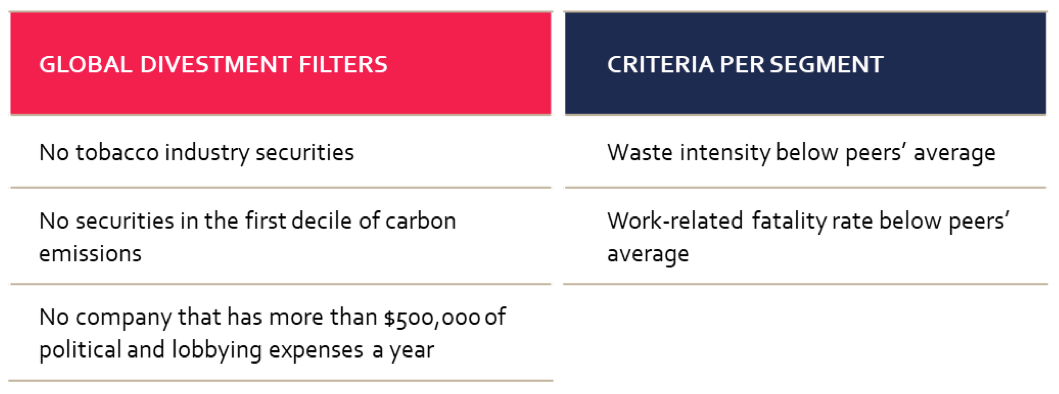
Eliminating all tobacco industry securities is an example of a global divestment filter. It guarantees the best possible performance in terms of this specific ESG criterion, but at the same time it eliminates the decision-making levers, namely the allocation to this industry and the stock selection within the industry. The use of global divestment filters should therefore be limited to those ESG criteria on which the manager or the client is not willing to compromise.

As for market segment filters, they are designed to select those companies with the best performance relative to their peers. Thus, they do not eliminate segments of the reference market or decision-making levers. They usually offer a good compromise between ESG objectives and management requirements.

A simple example

Let’s take the example of an investment universe applied to the developed country equity market and apply three divestment filters and two criteria per segment.

Table 1


The analysis of the resulting investment universe should answer two questions:

  1. Are the ESG objectives met?
  2. Is the universe sufficiently representative of the reference market for deployment of a top-down strategy?

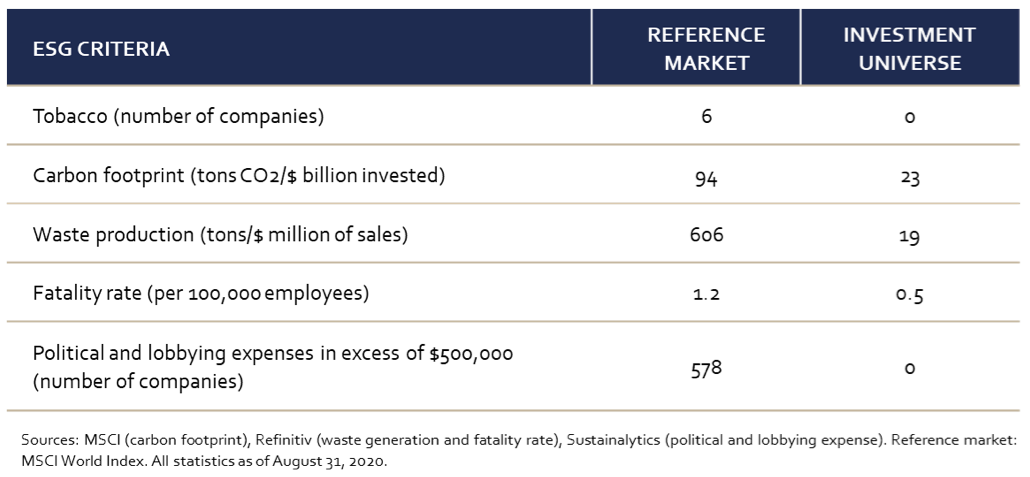
Table 2 answers the first question in the affirmative. For all the ESG objectives selected, the investment universe gets a much better rating than the broad market.

Table 2


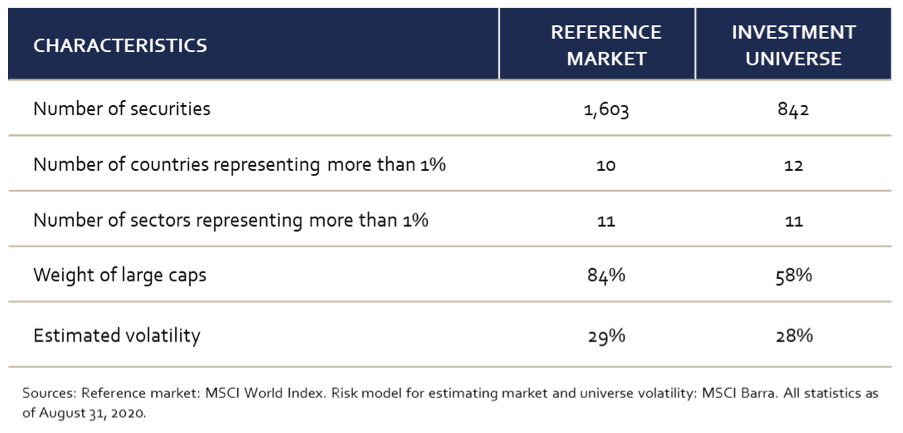
We can conclude from the figures in Table 3 that a top-down strategy could be deployed in this universe. All sectors are well represented, and the number of well-represented countries is even higher than that of the reference market. The relative importance of large caps is sufficient and the estimated volatility is similar to that of the reference market.

Table 3

This simple example shows that top-down managers can achieve ambitious ESG objectives while allowing themselves enough decision-making leeway to implement their investment strategy.

RIA Disclaimer
The views and opinions expressed in this article are solely those of the authors and do not necessarily reflect the view or position of the Responsible Investment Association (RIA). The RIA does not endorse, recommend, or guarantee any of the claims made by the authors. This article is intended as general information and not investment advice. We recommend consulting with a qualified advisor or investment professional prior to making any investment or investment-related decision.

Diversifying Diversity: Going Beyond Representation

The issue of diversity has had some growing up to do. While investors have traditionally focused diversity engagement on gender, which is relatively easy to measure because data is available, recent global anti-racism protests have forced corporations and investors to re-examine diversity priorities.

Public debate about systemic racism is also set against the backdrop of the stark realities of the COVID-19 crisis, which has had a disproportionate effect on vulnerable communities, underscoring the need for companies to prioritize long-overdue issues around racial inclusion, worker protections, pay equity, business ethics and human rights.

Expectations of companies as well as of us as asset managers have changed, and investor engagement on diversity can no longer focus on gender or representation issues alone: the topic of diversity has diversified.

Business Case

A changing global marketplace, evolving stakeholder demands and reputational risks, coupled with more robust research on the value add of diversity in general, has made diversity a corporate differentiator. Research shows that having diversity at all levels of the organization combats tunnel vision, can lead to better identification of risks and opportunities, fosters innovation and correlates with better performance.[1] And, companies proactively addressing discrimination issues tend to have better employee engagement, healthier work cultures, less reputational risk and better brand engagement.[2]

Despite this evidence, progress on gender diversity is still not where investors want it to be, and progress on racial or ethnic diversity in the corporate workforce, especially at corporate leadership levels, is significantly lagging recent progress made on gender diversity. The varying levels of (un)available diversity data globally presents a challenge to investors. This is where engagement comes in. Globally, our engagement focuses on:

  • Strategy-setting at the top
  • Setting targets and measuring progress
  • Hiring practices
  • Equitable pay
  • Employee engagement
  • Education and training

Diversity: different in every context

We consider diversity within an organization to be beneficial regardless of geographical location.* Given the varying regulatory environments, stakeholder groups and cultures that a corporation may operate in, the focus for diversity for one may not be suitable for another. There are obviously regional and market specific areas of focus that all should be aware of, but how they are addressed will often vary and evolve. We discuss some examples below.

Gender

Diversity for many investors started with a focus on gender. The 30% Club, founded in 2010, is an example of a group that has helped drive genuine change, particularly in boardrooms around the world.

Local cultural context is key. In Japan, where progress on gender diversity in corporate leadership has been slow, female talent historically was not supported through child caregiving years and the long working hours culture negatively affected opportunities for women to advance their career. Through our engagement on diversity in Japan however, we were able to identify good practices. For example, JPX, in order to promote diversity, has recognized it needs to reform how it views work, improving flexibility and recognizing the productivity that different work styles can bring. It implemented several initiatives including schemes to support child caregiving and career training, specifically aimed at supporting women throughout their career development.

Ethnicity, race and indigeneity

What diversity of ethnicity looks like varies regionally. Ideally, a company’s workforce and leadership reflect the make-up of the society it operates in. Again, understanding context is key: what are regional underrepresented groups and how does historic discrimination still manifest today? In the US, only 3.2% of executives and senior manager-level employees are Black while Black people represent 13.4% of the US population. In Canada, where Indigenous people make up close to 5% of the population, they make up far less than 1% of senior executives and board members. That indicates there are structural barriers to advancement.

Investor engagement on racial diversity is not as well-established as engagement on gender diversity. However, this is changing at an accelerated pace. Several asset managers have publicly announced engagement frameworks around racial diversity on U.S. boards. The U.S. Racial Justice Investing Coalition (RJI) recently released a statement whereby investors commit to embedding racial justice into investment decision-making and stewardship strategies.[3] In Canada, the RIA’s recently released Investor Statement on Diversity & Inclusion, calling on investee companies to enhance diversity and inclusion efforts of underrepresented groups, including Black, People of Colour and Indigenous people, represents another significant step forward.

In our engagements with North American companies on racial diversity this year, we’re encouraged to learn that boards are already feeling the investor pressure and are prioritizing the search for diverse director candidates.

Experience and background

Companies with global operations benefit from having an experienced mix of directors as well as leadership with backgrounds and experiences reflecting the regional customer and employee base. We see this as a particular issue in Japan and Korea where an organization may have a large global operational footprint that is not represented in any way on the board.

ESG context is also key: in order for companies to be prepared to address increasingly complex material ESG risks and opportunities, having senior leadership and board members with ESG-related expertise can be a particular advantage. For example, the number of directors sought with cyber security expertise has accelerated in recent years.[4] We have also seen (and advocate for) an increase of directors with climate change-related expertise, specifically for companies operating in sectors for which climate change poses a material risk. Lastly, the COVID-19 crisis has shone a bright spotlight on the need for worker protections and human capital management risks; as such, it is no surprise more policy makers and investors are considering the benefits of having employee representation on boards.

Which types of diversity should investors focus on?

The following questions can help investors determine what types of diversity to encourage at investee boards, senior leadership and other levels of the organization:

  • What is the cultural or socio-economic context a company operates in and how are related challenges addressed?
  • What is the company’s geographic footprint and customer base, and is this reflected in its workforce and leadership?
  • Does the company’s workforce and leadership reflect the diverse make-up of society in the region it operates?
  • Are there sector-related material ESG challenges that a specific mix of diverse talent can better help address?
  • How does the company report on its diversity performance across the workforce, and on diversity and inclusion efforts?

Beyond representation

We note that a company’s social licence to operate could be threatened if it does not address the expectations of its stakeholders, which can include expectations on diversity within the organization. However, diversity and inclusion efforts are only one part on the path towards solving systemic inequality. Beyond addressing representation issues in the workforce and C-suite, companies must reform business models and actions that profit from perpetuating inequities. This spans from companies benefitting from prison labour, to surveillance software with inherent racial biases, or marketing strategies that target vulnerable communities. Investor engagement can help companies align with the UN Guiding Principles for Business and Human Rights to enhance their social license to operate and be better prepared to address social inequities and related issues such as human rights, indigenous rights, living wages and worker protections.

Key takeaways

  • Diversifying investor engagement on diversity is crucial to understanding the risks and opportunities companies are facing as well as to meeting wider societal and client expectations;
  • Assessing how diverse a company and its leadership is requires understanding cultural, regional, historical and ESG contexts;
  • To address matters of equality we have to look beyond diversity and inclusion to business models profiting from perpetuating inequality.

Further reading

  • Racial Justice: The imperative for investor action – August 2020 BMO GAM ESG Viewpoint
  • A focus on gender diversity – March 2020 BMO GAM ESG Viewpoint
  • BMO GAM’s Expectations on Social Practices statement – March 2020

Sources:

[1] McKinsey & Company: Delivering Through Diversity

[2] https://www.weforum.org/agenda/2020/07/racism-bad-for-business-equality-diversity/

[3] https://www.racialjusticeinvesting.org/our-statement

[4] https://www.forbes.com/sites/chenxiwang/2019/08/30/corporate-boards-are-snatching-up-cybersecurity-talents/#47b755e3479f

Notes:
* We consider diversity to include gender, ethnicity or race, Indigenous status, sexual orientation, age, disability, background, experience, religion, culture and socio-economic status.

RIA Disclaimer
The views and opinions expressed in this article are solely those of the authors and do not necessarily reflect the view or position of the Responsible Investment Association (RIA). The RIA does not endorse, recommend, or guarantee any of the claims made by the authors. This article is intended as general information and not investment advice. We recommend consulting with a qualified advisor or investment professional prior to making any investment or investment-related decision.

Anti-Microbial Resistance: An Underestimated Threat to Global Health

Very often the greatest challenges we face as a society are recognized in their infancy by specialists whose warnings go unheeded, allowing difficult but solvable problems to escalate into full-blown crises. The most salient case in point is climate change, which today would likely not be the existential threat that it is had we taken bolder action decades ago.

An emerging danger to humanity with potential for harm as great as climate change, anti-microbial resistance (AMR) threatens the stability of health care systems worldwide and creates the very real possibility of returning us to a world in which a simple cut to the finger can lead to severe illness or death. Fortunately, we have time to contain or even eliminate this threat, but to do so we must redouble our efforts to improve awareness and take meaningful action that strikes at the root of the problem.

Understanding Anti-Microbial Resistance (AMR)

AMR occurs when bacteria and other disease-causing microbes develop resistance to previously effective drugs. In the U.S., the Centers for Disease Control (CDC) estimates that AMR causes at least 2.8 million illnesses and over 35,000 deaths annually. As a result of AMR, antibiotics may no longer work to treat even common infections.

A wide range of medical procedures rely on effective antibiotic treatments, including organ transplants, chemotherapy, and dialysis for end-stage renal disease. Antibiotic, antifungal, antiviral and anti-parasitic medications form the backbone of modern medicine, highlighting the urgency facing the health care community in addressing AMR. The need for action is recognized by the United Nations (UN), World Health Organization (WHO), and national authorities such as the CDC.

The development of AMR occurs across multiple avenues. The use of antibiotics for growth promotion and disease prevention in livestock is of particular concern to regulators and consumers. According to the U.S. Food and Drug Administration, 70% of antibiotics prescribed in the U.S. are used in animals. The sub-therapeutic doses used for disease prevention and growth promotion are more likely to result in the development of resistance than a shorter, high-dose therapeutic course. In addition, increased presence of AMR in the food supply directly threatens human health as diseases caused by resistant bacteria tend to be more severe and have fewer treatment options.

Regulations covering antibiotic use for animals have been increasing. For example, in California, farmers must obtain a prescription to use medically important antibiotics in animals. The EU banned the use of antibiotics in animals for growth promotion and the WHO published guidelines strongly recommending a complete restriction on the use of these antibiotics for growth promotion and disease prevention, absent a diagnosis.

These encouraging first steps are partly a result of increased public awareness and concern. Surveys consistently show that a majority of consumers prefer meats raised without antibiotics. This has been reflected in the growth of antibiotic-free meat sales, estimated by data analytics firm Nielsen to have increased 28.7% each year between 2011 and 2015, compared to 4.6% for conventional meat.

But AMR has a far more insidious and less widely understood avenue for development. A landmark 2017 study showed that wastewater runoff from major overseas pharmaceutical manufacturing plants has created a virtual breeding ground for AMR. The study found that “[t]he presence of drug residues in the natural environment allows the microbes living there to build up resistance to the ingredients in the medicines that are supposed to kill them, turning them into what we call superbugs. The resistant microbes travel easily and have multiplied in huge numbers all over the world, creating a grave public health emergency that is already thought to kill hundreds of thousands of people a year.”

Weak environmental standards for overseas manufacturers make meaningful change a daunting task. A key pillar of a potential solution will be to exert pressure on domestic firms that outsource their manufacturing operations. Governments can also leverage trade and other agreements to persuade problem countries to adopt and abide by waste management best practices.

Investing in a solution

Vancity Investment Management Ltd. (VCIM), sub-advisor to the IA Clarington Inhance SRI Funds, has a robust shareholder engagement program that includes a deep commitment to finding real solutions to the problem of AMR.

Over the last decade, VCIM has engaged with companies over 200 times, with more than 30 companies engaged in 2019 alone. Our work in the area of AMR includes an active role in the Farm Animal Investment Risk and Return (FAIRR) initiative. This involves engagement with 20 global food companies to encourage the adoption of antibiotics policies and the phasing out of routine, prophylactic antibiotic use across all supply chains, with clear targets and timelines for implementation.

We believe that through these and similar actions, we can reduce the suffering caused by AMR and ensure that the benefits of over a century of medical advancements can continue to result in longer, happier lives.

Contributor Disclaimer
The information provided herein does not constitute financial, tax or legal advice. Always consult with a qualified advisor prior to making any investment decision. Statements by the portfolio manager or sub-advisor responsible for the management of the fund’s investment portfolio, as specified in the applicable fund’s prospectus (“portfolio manager”) represent their professional opinion, do not necessarily reflect the views of iA Clarington, and should not be relied upon for any other purpose. Information presented should not be considered a recommendation to buy or sell a particular security. Specific securities discussed are for illustrative purposes only. Mutual funds may purchase and sell securities at any time and securities held by a fund may increase or decrease in value. Past investment performance of a security may not be repeated. Unless otherwise stated, the source for information provided is the portfolio manager. Statements that pertain to the future represent the portfolio manager’s current view regarding future events. Actual future events may differ. iA Clarington does not undertake any obligation to update the information provided herein. The information presented herein may not encompass all risks associated with mutual funds. Please read the prospectus for a more detailed discussion on specific risks of investing in mutual funds. Commissions, trailing commissions, management fees, brokerage fees and expenses all may be associated with mutual fund investments, including investments in exchange-traded series of mutual funds. Please read the prospectus before investing. Mutual funds are not guaranteed, their values change frequently and past performance may not be repeated. Trademarks displayed herein that are not owned by Industrial Alliance Insurance and Financial Services Inc. are the property of and trademarked by the corresponding company and are used for illustrative purposes only. The iA Clarington Funds are managed by IA Clarington Investments Inc. iA Clarington and the iA Clarington logo, and iA Wealth and the iA Wealth logo, are trademarks of Industrial Alliance Insurance and Financial Services Inc. and are used under license.

RIA Disclaimer
The views and opinions expressed in this article are solely those of the authors and do not necessarily reflect the view or position of the Responsible Investment Association (RIA). The RIA does not endorse, recommend, or guarantee any of the claims made by the authors. This article is intended as general information and not investment advice. We recommend consulting with a qualified advisor or investment professional prior to making any investment or investment-related decision.

The “COVID Cut” is Not Enough: Addressing the Negative Social Impacts of Excessive Executive Compensation

Since the onset of the pandemic, we have seen an extraordinary display of corporate solidarity aimed at protecting employees and supporting customers and community. One such display has been the significant number of voluntary pay cuts taken at the executive level at hundreds of publicly-traded corporations in Canada and the U.S.

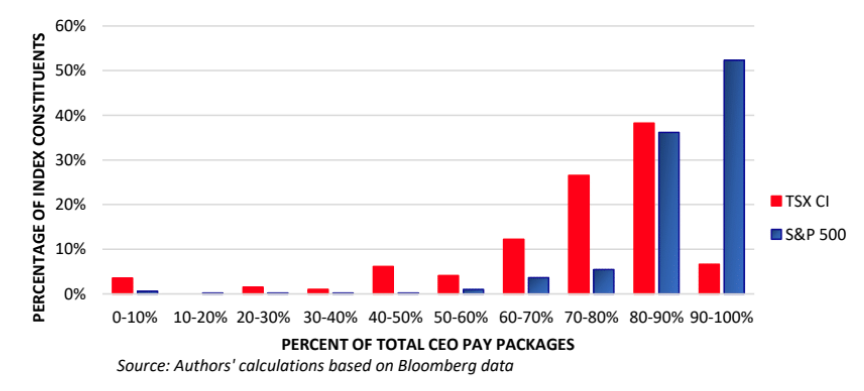
Though commendable at first glance, these pay cuts – most of which are temporary – are largely symbolic. Why? Because the cuts have been taken at the base salary level,[1] and base salary tends to make up only a tiny fraction of total executive compensation. The bulk of CEO pay, for example, is in the form of equity-based awards, which typically make up 80%to 100% of total compensation in North America, as shown in the chart below.

Figure 1: Distribution of Equity-based awards as a percent of 2019 CEO pay packages

In reviewing executive compensation in 2019, NEI found base salaries in Canada did not exceed $2.5 million;[2] and in the U.S, they did not exceed US$5 million. And some CEOs, such as those at Facebook, Akamai Technologies Inc. and Prologis (all company founders) earned just one dollar in base salary.
However, factoring in equity-based awards increased CEO pay exponentially. Total CEO compensation reached as high as $24 million in Canada for the CEO of Restaurant Brands International; and in the U.S. the high was a whopping US$280 million for the CEO of Alphabet.[3]

Based on this evidence, it’s safe to say that when it comes to executive compensation a cut to base salary is really no cut at all.

Equity-based compensation is the monster we created

These findings are a stark reminder that the exceptionally wide (and growing) compensation gap between top executives and their employees is structural in nature – and it’s a structure we as investors helped create. Equity-based compensation was introduced by investors in the 1990s to help incent executives to lead their companies to increasingly higher valuations. And it worked well – too well. Executive compensation has skyrocketed and equity-based compensation is now viewed as a key contributor to income inequality, having helped concentrate wealth in the hands of the top 1% and widening the gap between executives and their employees.[4]

To rectify this situation – and it’s high time we did – we need to return to structural origins of executive compensation, and acknowledge that investors have been complicit in perpetuating this inequity. That means putting a stop to effectively turning a blind eye to excessive compensation in proxy voting and paying much closer attention to the evident negative societal impacts associated with excessive compensation. And it also means recognizing that while company values have climbed under this structure, there is a growing body of evidence that suggests excessive pay does not necessarily add value, and worse, that the opposite may be true.[5][6]

How much is too much?

Putting a dollar figure on the word ‘excessive’ is of course fraught with challenges. However, at NEI we believe it’s a necessary step that allows us to systematically vote the proxies of companies in our funds when it comes to compensation issues. We attempt to quantify ‘excessive’ from a societal perspective by setting a cap on total executive compensation when comparing it to the median household income in Canada and the U.S.

Today that means total compensation between $12.7 to $17 million at Canadian companies, and between US$22 million to US$25 million in the U.S. is considered excessive. We also recognize these thresholds will need to evolve in light of the growing societal impact of income inequality exacerbated by excessive executive compensation.

North American CEOs are amongst the highest-paid globally. Reflecting our longstanding concerns about the negative social and economic impact of income inequality, NEI sets a cap on the level of pay for CEOs or other executives that we can support in the U.S. and Canadian markets. Our test for defining very high quantum relates CEO total compensation to median household income, an indicator of the financial well-being of typical families. In the absence of any precedent to follow, we set our range of concern as follows:

  • U.S. companies: 350 to 400 times the amount of the U.S. median household income – approximately U.S. $22 million to $25 million in 2020
  • Canadian companies: 150 to 200 times the amount of Canadian median household income – approximately C$12.7 to C$17 million in 2020.

Different thresholds are used to reflect the reality of higher CEO pay and greater income inequality in the U.S. Examining the level of CEO pay in the broader societal context is one of the factors we use to assess executive compensation. We continue to apply our pay-for-performance voting guidelines to all compensation plans, whether or not the CEO pay falls in the range of concern that triggers additional scrutiny. For more details, please see our Proxy Voting Guidelines.

And you need to look beyond the topline numbers to really see that impact. Based on 2019 compensation levels, NEI’s cap identified excessive levels – some extremely excessive – for CEOs and/or executives at 12 companies listed on the S&P/TSX Composite Index and 67 companies on the S&P 500 Index. While relatively small in number, these companies significantly influence our economy and society, employing nearly 8.5 million people and representing about 21% of total S&P/TSX market capitalization and more than a third (US$10 trillion) of the S&P 500.

The problem is clearly bigger than it looks at first glance. The question is, where do we go from here?

The road to compensation reform starts with investors

We believe there is merit to de-emphasizing financial incentives for executives in favour of a more balanced structure to compensation –one that includes purpose–and sustainability-driven incentives tied to the successful improvement of working and living conditions for all stakeholders. This approach is, after all, the primary objective of the revised “Statement of the Purpose of a Corporation” backed by the Business Roundtable in 2019. The 181 CEOs who comprise the Roundtable committed to “lead their companies for the benefit of all stakeholders –customers, employees, suppliers, communities and shareholders”. Fixing executive compensation would be a great place to start.

And to reiterate, that start needs to focus on changing the structure of executive pay. While it’s tempting to reduce the inequality challenges posed by executive compensation to a simple equation – less pay for executives and more for the workforce – such actions would not likely impact stakeholders in any meaningful way, especially at the largest companies. For example, if the total pay package paid to Walmart’s five highest paid executives was reduced by 15%, that US$15.5 million distributed equally among the company’s 2.5 million workers would add up to only six dollars per year extra in the pockets of Walmart employees.

There are more effective and sustainable ways to use and re-allocate the capital. Creative solutions include enhancements to employee benefits, funding of employee trust funds, workforce education and training, paid internships and scholarships, and financing community initiatives with clear benefits to everyone.

Whatever the solution, it needs to start with investors demanding change. An initial step would be to shift the language investors use to vote on executive compensation packages by emphasizing more on a broader stakeholder alignment and incorporating societal impacts in pay level analysis. The status quo which narrowly focuses on shareholder value will only continue to negatively impact long-term investment performance, hinder economic growth and destabilize society, is no longer acceptable.

NEI will continue to report on the many challenges posed by executive compensation in a post-COVID world throughout 2020 and 2021.

Sources:

[1] From March to August 2020, over 600 companies in the Russell 3000 announced voluntary pay cuts for their executives and/or board members. In more than 70% of the cases, CEOs and top executives committed to cut their base salary by at least 20%, and 17% of the CEOs said they would give up or defer their total base salary for 2020. https://conferenceboard.esgauge.org/covid-19/payreductions, accessed September 9, 2020.

[2] Data source: Bloomberg

[3] Data source: Bloomberg

[4] PRI (2018). Why and how investors can respond to income inequality (p.33)

[5] Marshall and Lee, 2016 cited in Economic Policy Institute

[6] A study on the most overpaid CEOs in the S&P 500 found that the average annual total shareholder returns in the three years before a high pay package were essentially the same as those in companies without excessive pay. Then, in the nearly four years after the high payout, the group of companies with the most overpaid CEOs underperformed against the S&P 500. Retrieved from: As You Sow (2019). The 100 most overpaid CEOs: Are Fund managers asleep at the wheel? https://corpgov.law.harvard.edu/wp-content/uploads/2019/03/100MostOverpaidCEOs_2019-1.pdf

RIA Disclaimer
The views and opinions expressed in this article are solely those of the authors and do not necessarily reflect the view or position of the Responsible Investment Association (RIA). The RIA does not endorse, recommend, or guarantee any of the claims made by the authors. This article is intended as general information and not investment advice. We recommend consulting with a qualified advisor or investment professional prior to making any investment or investment-related decision.

Corporate Diversity: A Key Ingredient for Innovation and Addressing Emerging Challenges at Companies

In a rapidly changing world, companies that are able to anticipate and adapt to new conditions and environments are likely to be more resilient and better positioned to navigate the emerging challenges these new conditions create.

Companies’ adaptability is rooted in their innovation, but innovation is a difficult quality to assess.[1] Yet there are proxies that can indicate a companies’ ability to foster innovation.

MSCI ESG Research looked at the role that talent management practices might play in promoting innovation and setting companies apart.[2] We found that global companies recognized as innovators[3] were leaders in specific areas of talent management practices, including diversity. The recognized innovators had more gender diverse boards of directors on average than their industry peers and were almost twice as likely to have had a persistent critical mass of at least three female directors for three years running.[4] According to the report “diversity may reflect a culture that is open minded and comfortable with differences, focused on accessing and retaining the best talent available, and eager to cultivate creativity and diversity of ideas.”[5]

The problem is not enough companies seem to be taking advantage of the existing, diverse talent pools in their regions. MSCI ESG Research examined ZIP-code-level demographic data to better assess the talent pool available in US companies’ commutable zones for a report called Racial Diversity & Talent Utilization.[6] The report compared US companies’ voluntary employee racial data against their region’s demographic data. And found that often, companies employed lower rates of minorities than were available to them: only 55% employed Blacks and Latinos at rates proportional to their representation in the communities the companies operated.[7] The percentage of companies that proportionally promoted Blacks and Latinos to management positions was even lower: only 14.3%.[8] This underutilization of talent could prevent companies from unlocking innovation capabilities and increasing the overall qualification of their workforce, senior managers and board of directors.

While our research on racial diversity was limited by companies’ disclosures[9], we have conducted extensive research on gender diversity and its benefits. For instance, in the Women on Boards 2019 Progress Report we observed that “in emerging markets, female directors and executives were actually more likely than their male counterparts to have financial expertise.”[10]

In Canada, while there have been board gender rebalancing advancements[11], companies have failed to reach gender parity and still fall short with respect to other forms of diversity. Despite Canada’s multiracial and multiethnic population[12], only 34%[13] of Canadian companies in the MSCI ACWI Index (as of Sep. 22, 2020) who are required to disclose diversity statistics and policies under the Canada Business Corporation Act[14] reported having at least one visible minority director. Only 8%[15] of companies disclosed that they had at least one Indigenous director and 8%[16] reported having at least one director with a disability. While 61%[17] reported having at least one visible minority among their senior management, the ratios for Indigenous people and people with a disability in senior management were lower: 8%[18] and 5%[19], respectively.

As companies face complex and unfamiliar challenges ahead – whether caused by a global pandemic or climate change – they will require all the tools at their disposal, including their ability to leverage people’s diversity of expertise, background, experience and perspective to innovate and find new solutions and opportunities. Investors may want to engage with companies to broaden management capabilities and board oversight effectiveness by increasing diversity.

Sources:

[1] Solomon, Brian. May 12, 2015. You’re doing innovation wrong. Forbes; De Jong, Marc, N. Marston, and E. Roth, April 2015. The eight essentials of innovation. McKinsey Quarterly; Hamel, Gary and N. Tennant. April 27, 2015. The 5 requirements of a truly innovative company. Harvard Business Review; Yu, Larry. July 2007. Measuring the culture of innovation. MIT Sloan Management Review.

[2] Eastman, Meggin. T. 2018. The Right Stuff: Talent Management and Innovation Capacity. MSCI ESG Research

[3] By Fast Company, Forbes, the Boston Consulting Group, and/or the MIT Technology Review

[4], [5] Eastman, Meggin. T. 2018. The Right Stuff: Talent Management and Innovation Capacity. MSCI ESG Research

[6], [7], [8], [9] Frazer, David and Mollod, Gillian. 2019. Racial Diversity & Talent Utilization. MSCI ESG Research

[10] Emelianova, Olga. and Milhomem, Christina. 2019. Women on boards 2019 Progress Report.

[11] Ibid. Between 2016 and 2019 there was an increase in the percentage of total director seats held by women among the Canadian constituents of the MSCI ACWI Index (moving from 22.8% in 2016 to 29.1% in 2019).

[12] Canada 2016 Census

[13] In accordance with information available at the companies’ 2020 management proxy form. It includes two REITs, which are not subject to the Canada Business Corporation Act (CBCA) but have reported trustees’ diversity statistics mirroring the CBCA requirements.

[14] An Act to amend the Canada Business Corporations Act, the Canada Cooperatives Act, the Canada Not-for-profit Corporations Act and the Competition Act (S.C. 2018, c. 8)

[15], [16], [17], [18], [19] In accordance with information available at the companies’ 2020 management proxy form. It includes two REITs, which are not subject to the CBCA but have reported trustees’ diversity statistics mirroring the CBCA requirements.

RIA Disclaimer
The views and opinions expressed in this article are solely those of the authors and do not necessarily reflect the view or position of the Responsible Investment Association (RIA). The RIA does not endorse, recommend, or guarantee any of the claims made by the authors. This article is intended as general information and not investment advice. We recommend consulting with a qualified advisor or investment professional prior to making any investment or investment-related decision.

Case Study: Incorporating ESG Metrics into Executive Compensation

Discussions on environmental, social, and governance (“ESG”) topics are not new to companies in the energy sector. While oil and gas companies may have previously been considered ESG laggards, this perception has changed over the years; in fact, many oil and gas companies were the first to incorporate ESG metrics in their compensation plans (albeit typically limited to measurable health and safety or operational measures). In December 2018, Royal Dutch Shell PLC (“Shell”), the British-Dutch oil and gas company, went a step beyond health and safety compliance when it announced it would incorporate carbon reduction metrics into its executive incentive plan.

This article examines the process Shell undertook in implementing these metrics, and the role shareholders played throughout.

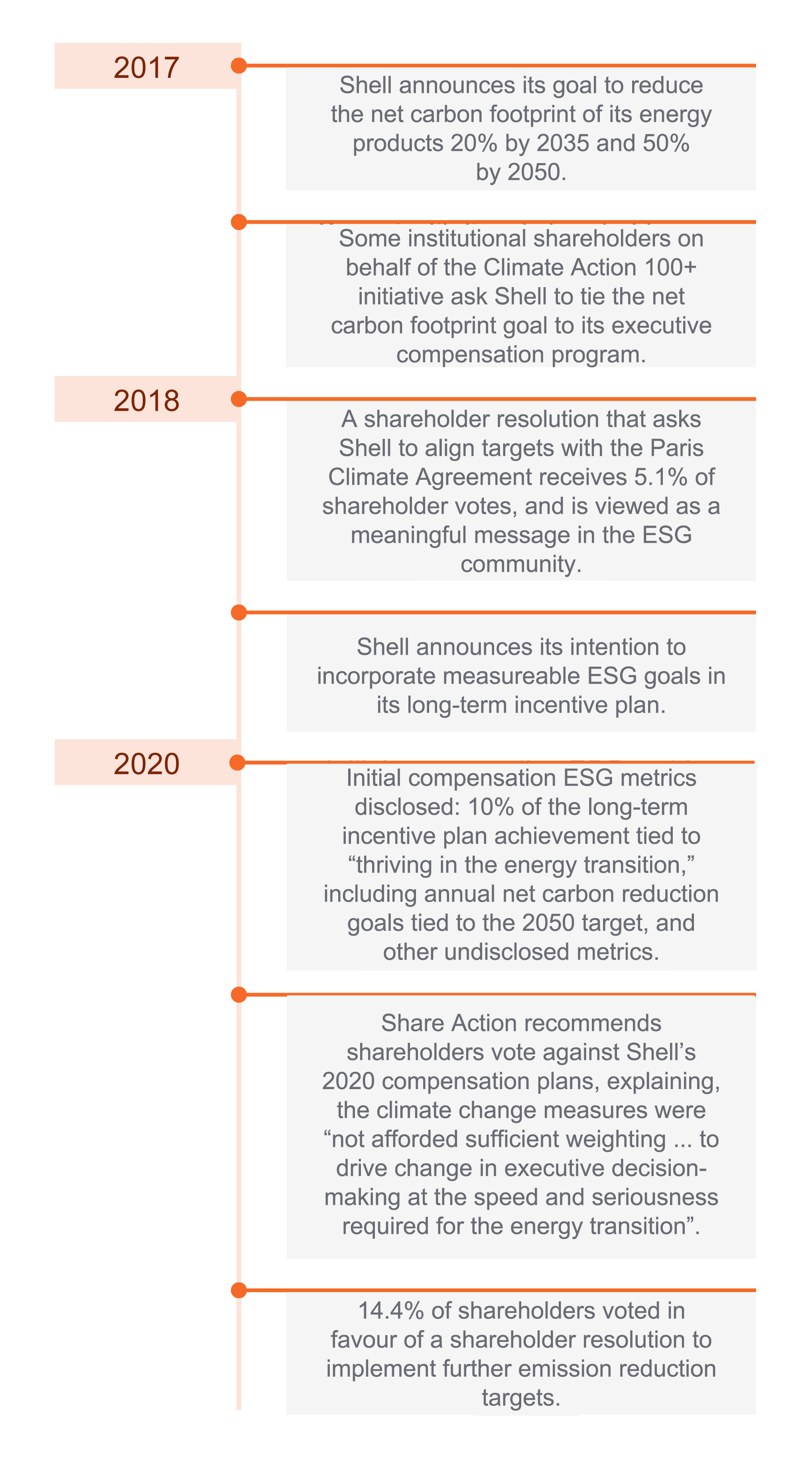
Shell’s Carbon Reduction Goals & Executive Compensation Timeline
Source: Hugessen Consulting

As illustrated by the timeline, Shell engaged with shareholders throughout the process of establishing carbon goals and incorporating those goals into the executive incentive plans. Although some shareholder resolutions received relatively low support (~5%), they still put the pressure on Shell by emphasizing their focus on ESG.

The response following Shell’s announcement that it would incorporate ESG metrics into incentive plans was somewhat surprising: ShareAction, a registered charity that promotes responsible investment, recommended voting against Shell’s compensation plan. This recommendation was driven by the fact that Shell’s 10% climate measure is outweighed in the Company’s compensation program by volume growth measures, which are achieved by increased fossil fuel output. While the introduction of a climate measure was a positive signal to shareholders, ShareAction argued that ultimately executives are still incentivized to “chase higher levels of … output” to the detriment of the climate and Shell’s long-term value. While it may initially appear as though the shareholder community was criticizing the very plan it had requested, in fact it was critiquing the effectiveness of the stated metrics. Given the media coverage of Shell’s initial announcement, it is no surprise that shareholders continued to follow the story closely and took this opportunity to signal their expectations to the market.

Shell’s approach to tying carbon reduction to executive compensation may still be a work in progress, but it has had a trickle-down effect throughout the oil and gas industry:

We expect that shareholders will be energized by these examples of “first movers,” and will continue to put forward resolutions and engage with companies on ESG topics. Furthermore, while not publicly disclosed, we recognize that these case studies appear at almost every industry boardroom table and are top of mind for companies when they consider implementation in their organization.

Although ESG metrics have become more prevalent in compensation plans over the past few years,[5] there will surely be bumps in the road as companies attempt to answer the questions that come with the development of any performance-based compensation program: What metrics make sense? What is the appropriate weighting? Should they be part of the short-term or long-term compensation program? What should the leverage opportunity look like – and what happens if the goal is not met? Shell was one of the first to tackle these questions under the watchful gaze of its shareholders and the broader investor community. We expect more examples to be disclosed in the near term; in particular, we will see how shareholders react to new ESG measures and their view of alignment with performance, integration with the company’s corporate strategy, and the degree of transparency in the short-term and long-term metrics. There will certainly be more learnings to come from each company’s unique path in incorporating ESG metrics in their executive compensation programs.

Article Sources:

[1] Reuters: “Chevron ties executive pay to methane and flaring reduction targets

[2] The resolution was developed in partnership with Follow This, and is intended to be presented at the FY2020 AGM

[3] Wall Street Journal: “BP Agrees to Draft Climate Change Shareholder Resolution

[4] CBC: “Canadian oil giants emphasize climate change and diversity as they compete for investment

[5] Hugessen Consulting: “Integrating ESG considerations into Executive Compensation Governance

Timeline Sources:

RIA Disclaimer
The views and opinions expressed in this article are solely those of the authors and do not necessarily reflect the view or position of the Responsible Investment Association (RIA). The RIA does not endorse, recommend, or guarantee any of the claims made by the authors. This article is intended as general information and not investment advice. We recommend consulting with a qualified advisor or investment professional prior to making any investment or investment-related decision.

The Rise of Impact Investing: COVID-19 and the Evolution of RI

2020 feels different. Year over year responsible investing (RI) has gained momentum, but 2020 feels like a tipping point. It feels like the notion of “tipping point” has been used countless times to describe the state of the market, but 2020 feels different than other years.

The COVID-19 pandemic has devastated society and the economy as we know it, creating the “perfect storm” of environmental, social and governance (ESG) issues. This has accelerated both the need and importance for investors to take action. As we look forward to an economic recovery, we need to not only think about how to rebuild, but how to rebuild better.

Resilience Rules

The COVID-19 pandemic has provided the world with an opportunity to pause and an opportunity for investors to reflect on RI’s path forward. Undoubtedly, the stakes have changed over the past 6 months. The term “resilience” comes to mind when describing what investors should look for as they assess the ESG factors associated with investee companies – the capacity to recover quickly following difficulties and the ability to adapt – a fitting term for the current times.

The examination of ESG factors (particularly “E”) has historically focused on compliance and efficiency. While these are in their own right important concepts, there is a sense now that it isn’t good enough for companies to reduce costs through maximizing efficiency or to simply operate within the confines of their legal license to operate. Instead, the narrative of “building back better” will drive a shift in thinking towards resiliency and purpose. Take the oil and gas industry as an example.

There is little doubt of the impact that companies in this industry are facing and will continue to face going forward. Growth in renewable energy technologies continues to be strong, leading to a decline in prices. At the same time, the pandemic has very likely had a permanent impact on the demand for fossil fuels, meaning we may have seen peak demand for fossil fuels come and go in 2019.[1] The result is an altered supply and demand dynamic for oil and gas companies to grapple with. Mix in a commitment by the Canadian government to legislate net zero emissions by 2050 and to set more ambitious 2030 emissions targets (with a touch of more stringent regulation of course), and you get a scenario where the oil and gas industry needs to step up.[2] The good news is that this is already happening. However, while some of the largest players have made significant progress in improving their efficiency, they are now focused on positioning themselves at the forefront of the transition to a low carbon economy, including ambitious targets to cut oil and gas production and major organizational restructuring – a clear shift from efficiency to resiliency.[3]

Continuing with this train of thought, the most significant issues that we are facing today, including the climate crisis, systemic racism and the COVID-19 recovery process will not only require companies to become more resilient, but that they operate in a manner that is positively impacting the environment and society. For investors, it will be imperative to invest in companies who are on the right side of change, and not on the wrong side of it. These companies are not only resilient but will also be well positioned to meet changing consumer expectations and preferences. If investors do this, they can achieve the popular goal of “doing well by doing good”.

The Importance of Impact Investing – the “New” Kid on the Block?

Change, by definition, is difficult. As outlined in a recent report published by the Future Fit Foundation, our economy is not currently built to accommodate the concept of “purpose”.[4] Perhaps this is best captured in a quote by environmentalist Paul Hawken:

“We have an economy where we steal the future, sell it in the present, and call it GDP.” – Paul Hawken

Enter impact investing. As investors, we have the opportunity to allocate capital towards businesses that are demonstrating resilience and purpose; who are positioned to do well by doing good through achieving strong financial returns while positively impacting the environment and society. Investing with impact in mind will be a key concept for ensuring that the environment, society, businesses and our economy flourish. While impact investing isn’t without its challenges, such as defining and measuring impact, this is no reason to avoid it. Fortunately, the United Nations Sustainable Development Goals (UN SDGs) provide a holistic framework that can be leveraged by companies and investors to map their activities to areas that address global systemic challenges including climate change, inequality and poverty. These goals may have never been more important than they are today.

As an asset manager, we have been thinking quite a bit about impact investing and the SDGs, leading to the development and launch of the CI MSCI World ESG Impact ETF and the CI MSCI World ESG Impact Fund last year. Investing in companies that are contributing to positive environmental and social impact is increasingly becoming commonplace for investors that incorporate ESG factors into their investment decision-making process. This trend is likely to continue (and accelerate) as we enter a COVID-19 recovery process and continue to feel the impacts of systemic issues like racism and climate change. The transformation of RI into just “investing” has been a topic of debate in recent memory. With current events sparking a change in the way in which investors think about and approach RI, 2020 could be remembered as a year where we take a big step forward in the evolution of RI. While impact investing is certainly not a new concept, it’s positioned now to be the “new” kid on the block – the “new” RI.

Sources:

[1] https://carbontracker.org/peak-fossil-fuels-new-grounds-for-hope/

[2] https://www.canada.ca/en/privy-council/campaigns/speech-throne/2020/stronger-resilient-canada.html

[3] https://www.responsible-investor.com/articles/what-can-investors-learn-from-the-covid-19-pandemic

[4] https://futurefitbusiness.org/wp-content/uploads/2020/07/Future-Fit-Business-Beyond-COVID-19.pdf

RIA Disclaimer
The views and opinions expressed in this article are solely those of the authors and do not necessarily reflect the view or position of the Responsible Investment Association (RIA). The RIA does not endorse, recommend, or guarantee any of the claims made by the authors. This article is intended as general information and not investment advice. We recommend consulting with a qualified advisor or investment professional prior to making any investment or investment-related decision.

A Simple Framework for Selecting and Integrating ESG Data

According to the Global Sustainable Investment Alliance (GSIA), professionally-managed assets labeled as “ESG” or “sustainable” accounted for over 30 trillion globally at the start of 2018. As of that same year, they represented more than 50% of all professionally-managed assets in Canada, Australia, and New Zealand, respectively.

As AUM of professionally-managed ESG assets continues to grow and more firms consider how to incorporate it into their everyday processes, they are faced with the challenge of determining which sources of ESG information best align with their investment approach and workflows. The rise of ESG-related financial regulatory initiatives is another ongoing challenge as companies are forced to continually reassess their compliance strategies. Regardless of firm type, size, and mandate, selecting ESG data is especially difficult because it is a nuanced and evolving space that does not have a single, definitive set of standards for how and what information should be measured and reported.[1]

Some of an investor’s customization needs can be met by a singular vendor that supplies ESG ratings. Others want to create custom scores by combining and aggregating several datasets. We can categorize these approaches into the following buckets:

  • Buy: Purchase one or more datasets that include pre-calculated ESG scores. Investors may use the top-level ESG score provided for each company or customize their analysis by aggregating the underlying category-level scores supplied by the vendor.
  • Build: Create a custom measure for ESG performance rather than using pre-calculated ESG scores. This will require additional resources and granular metrics on specific ESG issues such as governance practices and environmental impacts. Building a proprietary ESG score will guarantee the investor has full transparency into the calculation and can tailor the methodology to meet their needs.
  • Blend: Customize ESG analysis and create a custom measure by combining multiple ESG datasets with different attributes and data items. This approach falls between the two preceding buckets in that it requires fewer resources than build and offers a greater level of customization than buy. An example would be using a dataset that has aggregated ESG scores across a breadth of issues in conjunction with a provider who offers detailed carbon emissions data.

The decision to use the buy, build, or blend approach is often influenced by the resources committed to implementing ESG strategies and the scale of the project at the hand. These resources can include budget, team size, and experience working with ESG data. The scale of the project refers to whether an investor is rolling out one ESG portfolio or creating an entire suite of ESG products as well as whether the team is looking to monetize a custom ESG score.

By understanding the firm’s needs, investors can efficiently narrow their focus to vendors that meet their criteria. While investors’ specific data requirements will vary, two concerns are relevant to all ESG integrations:

  1. ESG regulations will undoubtedly continue to evolve and influence how ESG information is incorporated and evaluated
    While the EU leads the way with a comprehensive ESG regulatory framework, this will eventually impact other regions as well. New regulations will require data providers to adapt their methodology; they will also likely require investors to re-evaluate their data integration, portfolio mandates, and reporting capabilities. As a result, investors must bring inquisitiveness into the data selection process to understand where they fall in the considerations we discussed above. They will also need to look into how vendors will adapt to regulations in the future so that they (and their clients) can have a better understanding of what’s to come.
  2. ESG data is not evaluated in isolation and will need to be connected to other content in the investment process
    The backbone of that connectivity is a reliable symbology model. Even the most insightful ESG data is useless without a consistent set of permanent identifiers to ensure that data from different content sets are linked to the same securities over time. This is easier said than done for many firms as vendors often employ proprietary company identifiers, requiring investors to learn and connect multiple symbology models.

While the AUM of professionally-managed ESG assets continues to grow and more investors enter the ESG space, their time should not be spent struggling to navigate the landscape of ESG data providers.

The framework established above is intended to simplify this landscape and highlight the importance of understanding key differentiators between ESG products. If followed correctly, it can be extremely useful in drawing connections between key internal considerations and specific vendors on the market. The more time investment firms spend on assessing their own needs and taking the steps required to fulfill them, the more confident they can be when framing vendor discussions and selecting an ESG provider.

Sources:

[1] https://advantage.factset.com/solving-the-esg-data-challenge

RIA Disclaimer
The views and opinions expressed in this article are solely those of the authors and do not necessarily reflect the view or position of the Responsible Investment Association (RIA). The RIA does not endorse, recommend, or guarantee any of the claims made by the authors. This article is intended as general information and not investment advice. We recommend consulting with a qualified advisor or investment professional prior to making any investment or investment-related decision.

ESG and COVID-19: Four Market Trends

The global pandemic has impacted all of us on a deeply personal level. It has wreaked havoc on our society and our economy, destroying demand and bringing much commerce to a virtual standstill. Just as physical distancing and video meetings are the new normal for social activity, volatility and uncertainty are the new normal for markets.

Fundamentally, we are dealing with a crisis of public health – a crisis for people. For long-term investors, this raises questions about the steps that companies are taking to keep their people safe, well and employed. After all, companies are made of people, and the most resilient companies will be the ones that protect and retain their talent to position themselves for success when the recovery begins.

The pandemic is having myriad impacts on markets, including the market for responsible investments (RI) that incorporate environmental, social and governance (ESG) factors. Here are four market trends to watch at the nexus of ESG and COVID-19.

‘S’ is moving to the forefront

As Benjamin Franklin once said, “It takes many good deeds to build a good reputation, and only one bad one to lose it.” Given the people-focused nature of this crisis, corporate reputations could thrive or plummet based on how companies treat their people and communities. Research shows that over 80% of market value is based on intangible assets, such as brand and reputation. In the COVID-19 era, this puts a spotlight on the ‘S’ in ESG.

In past crises, employees have often been viewed as disposable resources. But in the age of social media, ESG disclosures and CEOs denouncing shareholder primacy, it is less acceptable for a public company to build a margin strategy based on layoffs. Over 330 institutional investors managing north of US$9.5 trillion in assets have made this clear in a public statement on how companies are responding to the pandemic. Capital allocators are asking companies to take every measure possible to retain workers, since unbridled unemployment will only deepen the crisis.

Employee health and safety, including mental wellness, are also moving front and centre. Flexibility has become essential for childcare considerations. So, while social factors had previously been overshadowed by climate change in the ESG space, they are now moving to the forefront as companies will be remembered for how they treated their people and the communities in which they operate.

Investors and consumers can track the good deeds being done by Canadian companies in a new database curated by Canadian Business for Social Responsibility and Upswing Solutions.

In addition, racial discrimination has become highly visible in recent months as citizen journalists share videos of violence and brutality against Black and Indigenous communities, often at the hands of police officers. But racial injustice extends far beyond violence and law enforcement. Nonviolent forms of racial discrimination and inequity are present in many aspects of society, including the companies in which we invest, further emphasizing the importance of social issues in responsible investment. Learn more about the role that investors can play in advancing diversity and inclusion here.

ESG is delivering alpha

The pandemic’s economic impacts have been enormous. Though equity markets collapsed in Q1 2020, they bounced back in Q2. After the explosion of ESG in 2019, driven by the idea that ESG factors are material, it’s only natural for investors to wonder how responsible investments are performing relative to the broader market in 2020.

In the Canadian market, the data for Q1 2020 indicate that RI funds lost less than their counterparts in the market downturn, which further strengthens the case for incorporating ESG issues into investment decisions. According to data provided by Fundata, a staggering 83% of RI funds outperformed their average asset class return in Q1, and 80% of RI funds outperformed over the one-year period ending March 31, 2020. As the market rebounded in Q2, RI funds still held up well relative to their conventional fund peers: 60% of Canadian RI funds out-performed their average asset class return in the three-month period, with more than 86% of RI funds outperforming over the one-year period ending June 30, 2020.

Similarly, in the U.S. market, a Morningstar analysis found that 72% of RI equity funds ranked in the top half of their category in Q2 and all 26 RI equity index funds outperformed their respective conventional index fund peer.

The evidence suggests that ESG factors are delivering alpha in both active and passive strategies. In the pandemic context, this data supports the argument that incorporating ESG issues into investment decisions can strengthen risk management and lead to financial outperformance.

Assets are still flowing into ESG funds

Jon Hale, Morningstar’s head of sustainability research, recently analyzed flows into mutual funds and ETFs in the U.S. market. Despite the downturn, the data shows that RI funds set a record for inbound flows in Q1. The 314 RI funds in the U.S. market attracted net flows of approximately US$10.5 billion in Q1, surpassing the previous record set in Q4 of last year. Research from Morgan Stanley and Bloomberg found similar trends.

We’re seeing a similar pattern in Canada, with Q1 inflows into responsible investment funds outpacing the whole of 2019. Net in-flows into ESG-focused ETFs rose to $740 million, significantly outpacing the $142 million invested in 2019. The available data illustrates that investors remain interested in ESG funds, and perhaps even more so in the pandemic context, which is creating a sense of urgency around societal issues.

Impact investment opportunities are on the rise

The pandemic is shining a light on impact investments, as unique opportunities emerge for investors to help address the crisis by allocating capital to organizations that are helping those most affected by COVID-19. For example, the U.S.-based ImpactAssets runs a donor-advised fund (DAF) that provides financing for fledgling social enterprises and nonprofits in need during the economic downturn. The firm estimates it will see more than US$143 million invested through its DAF by the end of Q2 — more than the total for all of 2019.

Here in Canada, Vancity was first out of the gate with a new product that enables retail investors to directly support those most impacted by COVID-19. The B.C.-based credit union launched its Vancity Unity Term Deposit on March 23rd “to maximize the financial help available to people so they can get back on their feet” during this time of financial hardship. Investors benefit from a fixed rate of return while helping to address the pandemic’s negative social consequences in their community.

These market signals indicate that impact investment opportunities are on the rise as investors seek to help their communities through the crisis.

Conclusion

The evidence suggests that COVID-19 has strengthened the case for incorporating ESG factors into investment decisions, and that the general market movement towards ESG will not be hindered by this downturn. Rather, this crisis is likely to accelerate the adoption of ESG and impact strategies as societal issues move to the forefront and investors feel a greater sense of urgency to make an impact and align their investments with societal objectives.

This article was originally published in Investment Executive and has been republished with permission.