Managing Climate Risk in Institutional Investment Portfolios: Case Studies

As the climate crisis with its physical impacts accelerates, along with the transition to a net-zero emissions economy, Canadian investors increasingly recognize the material and financial risks to their portfolios posed by climate risk. Increasingly large institutional investors know they must assess and manage climate-related risks if they are to meet their fiduciary duties to clients and beneficiaries.

In steps that align with The Investor Agenda, an initiative to accelerate and scale up the actions that are critical to keeping global warming to no more than 1.5 degrees Celsius, some Canadian pension plans have developed climate action plans involving low-carbon investment strategies, corporate engagement, disclosure and policy advocacy. This article explores how three Canadian pension plans, the Caisse des Depots et Placement du Quebec (CDPQ), OP Trust; and the Ontario Teachers’ Pension Plan (OTPP) are addressing climate risk in their investment portfolios.

Each of these Plans has developed a range of approaches to assess and manage two fundamental climate change risks: physical risk (e.g., the impacts of heat waves, droughts, wildfires, sea level rise, floods and stronger storms) and transition risk (e.g., the impacts of government climate policies like carbon pricing and the technology transition to renewable energy, electric vehicles, and energy and resource-efficient technologies). One strategy is to “decarbonize” portfolios by reducing the carbon intensity of entire portfolios or of particular asset classes. Another common strategy is to align their portfolios with the “well-below 2 degrees Celsius” Paris Agreement goal. Some have set time-bound targets for emission reductions. Others have set quantitative goals to scale up their low carbon, climate positive investments, and are reporting their strategies and progress in line with the Task Force for Climate-Related Financial Disclosure (TCFD) framework.

CDPQ

CDPQ adopted its Climate Action Plan in 2017 with four pillars: integrating climate risks and opportunities into all investment decisions, reducing the portfolio’s carbon intensity, increasing low carbon investments, engaging companies, and participating in industry leadership initiatives. It aims to reduce the carbon intensity of its portfolio by 25% by 2025 via carbon budgets for each asset class. CDPQ also plans to increase its low carbon investments across asset classes by 80% to USD $32 billion by the end of 2020.[1] If a climate-related risk is deemed material to a particular investment, CDPQ performs a rigorous qualitative analysis of the risk and its impact, employing specialized consultants as necessary. The fund prefers engagement to exclusion, but will reduce its exposure where engagement does not produce satisfactory results. They align their investment staff compensation with achieving these carbon reduction goals.

CDPQ’s Climate Plan is based on four principles: (1) achievable targets, (2) measurable performance, (3) transparent disclosure of process and results, and (4) collaboration. The Plan is ahead of schedule, with CDPQ having added $16 billion in low carbon assets for a total of $34 billion by year-end 2019 and reduced its portfolio carbon intensity of its portfolio by 21% in this same period.[2]

OPTrust

Similarly, OPTrust published its Climate Action Plan in 2018 with eight pillars designed to enhance the Fund’s resilience to climate change. OPTrust undertook several studies as part of its climate change analysis. The first, in 2017, was with Mercer Consulting who conducted a climate change scenario analysis of the total fund to evaluate the likely resiliency of its portfolio to a 2degree Celsius world, the goal of the Paris Climate Agreement. The second, in partnership with Ortec Finance, was an asset liability management/strategic asset allocation project that integrated physical and transition risks and opportunities associated with climate change into several multi-horizon time scenarios. A third, currently underway, is a bottom-up study to establish a baseline assessment of climate-related risks to the total fund, including carbon footprint, stranded assets and energy transition analyses.

The fund conducted a survey to identify their external managers’ considerations of ESG and climate in their investment processes. Subsequently, the OPTrust team created a clear set of expectations for integrating ESG and climate factors into the investment process for use in its manager meetings. Because the global scale of climate-related risks requires collective action, OPTrust is collaborating with organizations including Ceres’ Investor Network, CDP, and the Investor Leadership Network, and is a participant in the Climate Action 100+ initiative to engage the highest emitters of greenhouse gas emissions.

OPTrust is currently in discussion with data providers to help devise bottom-up climate change risk metrics for physical risk and transition risk for all asset classes. It also continues to look for risk models that provide actionable information on such key issues as carbon value at risk that will allow the portfolio managers to confidently and fully integrate climate change into portfolio construction and the investment process.

OTPP

Ontario Teachers’ Pension Plan (OTPP) fully integrates climate risk in the organization’s investment processes and across all its investment professionals. The Plan’s overall approach is to integrate climate change consideration in its investments, engage with companies, industry, regulators and policymakers to effect positive change, and to seek the investment opportunities that arise. In 2017 OTPP developed its Low Carbon Economy Transition (LCE) Framework. The LCE Framework identified and monitors twelve signposts that are indicators of the direction and pace of change of the economy towards a low carbon future, which helps the organization to assess the long-term merits and resiliency of investments.

OTPP systematically integrates the risks and opportunities associated with climate change across asset classes and throughout all levels of the organization. The Fund is also active externally with companies, industry, and others to manage risks and invest in opportunities. Ontario Teachers’ starting premise is that we are transitioning to a low carbon economy; however, how smooth or disruptive that path is uncertain. The Low Carbon Economy Transition Framework identifies three different scenarios or pathways that require the organization’s ongoing attention: 1) an orderly transition to a low carbon economy; 2) a transition consistent with current policies and practices; and 3) a period of sustained dependence on fossil fuels that ultimately leads to drastic and disruptive actions to curb further warming.

An important element of Ontario Teachers’ climate strategy is to exercise its influence as a major pension fund investor and to collaborate with peer organizations. In addition to representation on boards of companies in the portfolio, Ontario Teachers’ is a signatory to and participant in Climate Action 100+, the global investor initiative to engage companies having high carbon emissions; a founding member of the Investor Leadership Network, comprising fourteen global asset owners (six of them Canadian pension funds) advocating for stronger climate change disclosure; and a member of SASB’s Investor Advisory Group. OTPP also sits on the board of the Global Real Estate Sustainability Benchmark (GRESB), and helped found GRESB’s Infrastructure Assessment. As part of the Canadian financial ecosystem Ontario Teachers’ is a member of the Canadian Coalition for Good Governance and the Accounting for Sustainability CFO Leadership Network.

OTPP has not formally catalogued all its investments that support the transition to a low carbon economy, but its $30 billion real estate portfolio meets either LEED or BOMA BEST standards and its airports are all carbon neutral or working toward carbon neutral. The Fund also has direct investments in: renewables, climate-related technologies, sustainable agriculture and forestry, and water-related infrastructure. In November of 2020 OTPP launched a € 750 million Green Bond to advance its sustainable investing program.

Ontario Teachers’ Pension Plan is developing a sector specific ESG Maturity Framework that draws upon SASB’s standard setting work for 77 industries and uses data from Bloomberg and MSCI along with our proprietary assessment of the companies’ governance, policies and practices around the material sustainability factors. The framework enables OTPP to categorize companies’ ESG management as baseline, advanced or exceptional, and track company progress concerning such things as risk management practices, intensity of carbon emissions, and disclosure of climate risk consistent with the TCFD recommendations.

These three large Canadian pension plans are leaders in recognizing and managing climate-risk in their investment portfolios. Each has taken concrete and measurable steps to address the challenges posed by climate change. They have set timetables for their own organizational goals. They have drawn on internal and external expertise in developing their objectives. In addition to their internal structures, they also work within broader climate-related coalitions and frameworks. While each of the three have their own policies and procedures for managing climate-risk across their portfolios, they all recognize the economic materiality of climate change as investment risks, and have become early movers in taking comprehensive action to identify, evaluate and manage climate-related risks in their portfolios.

This article is drawn from “Portfolio Climate Risk Management: Case Studies on Evolving Best Practices” a Ceres report published in July 2020.

Sources:

[1] CDPQ (2020) https://www.cdpq.com/en/investments/stewardship-investing/climate-change, accessed Jan. 13, 2021.

[2] Ibid.

RIA Disclaimer
The views and opinions expressed in this article are solely those of the authors and do not necessarily reflect the view or position of the Responsible Investment Association (RIA). The RIA does not endorse, recommend, or guarantee any of the claims made by the authors. This article is intended as general information and not investment advice. We recommend consulting with a qualified advisor or investment professional prior to making any investment or investment-related decision.

3 Trends That Will Shape Canada’s Sustainable Finance Landscape in 2021

The coming year is set to be a watershed for sustainable finance in Canada as the federal government and financial industry stakeholders double down on climate-conscious policies and practices. Here are three key trends that will shape Canada’s sustainable finance landscape in 2021.

The Federal Government Will Launch a Sustainable Finance Action Council

In 2019, Canada’s Expert Panel on Sustainable Finance made a series of recommendations for the federal government to align Canada’s financial system with a climate-smart future, and advised the government to establish a Sustainable Finance Action Council to help implement its recommendations. The government recently responded in its Fall Economic Statement by allocating $7.3 million over three years to create the Action Council, which will function as a coordination mechanism between the government and the financial sector.

The Action Council will be tasked with developing a well-functioning sustainable finance market, making recommendations “to attract and scale sustainable finance in Canada, including enhancing climate disclosures, ensuring access to useful data on sustainability and climate risks, and developing standards for investments to be identified as sustainable.” The Action Council will be launched in early 2021, ushering in a new era of federal support for sustainable finance.

Banking Authorities Ramp Up Climate Risk Assessment

In the spring of 2020, the Bank of Canada published a report warning of significant economic risks from climate change and the transition to a low-carbon economy. The Bank noted that delayed action would increase the risk of an abrupt repricing of assets, while earlier action would allow more time for the market to adapt.

As a result, the Bank will ramp up its work on climate change in 2021 as it convenes a pilot project with the Office of the Superintendent of Financial Institutions (OSFI). The two supervisory bodies will work with a group of financial sector stakeholders to assess the financial system’s exposure to risks from the transition to a low-carbon economy. The project will strengthen the authorities’ understanding of financial institutions’ governance and risk-management practices related to climate change.

A report on this work is scheduled for publication at the end of 2021. Relatedly, OSFI plans to launch a discussion paper on building financial resilience to climate risks earlier in the year.

We Will See the Rise of ‘Transition Finance’

‘Transition finance’ refers to financing that helps high-carbon companies transition to lower-carbon business models, bridging the gap between traditional and sustainable finance. This concept is important for the Canadian market, which is heavily reliant on extractive industries such as energy and mining. These industries need to transform their business models to succeed in a low-carbon world, but they cannot access “green” or sustainable financing due to their high emissions profiles. Transition financing tools, such as bonds with interest rates linked to meeting reduced emissions targets, will help them make the shift.

The CSA Group, a Canadian standards-setting body, is developing a Transition Finance Taxonomy – a classification system to identify business activities that qualify for transition financing. This framework is expected to become available to industry participants in 2021, unlocking a new market for transitioning the Canadian economy towards net zero emissions. The Responsible Investment Association will host Transition Finance Week from October 18th to 22nd to convene industry dialogues around this subject.

This article is an excerpt from a column published in Investment Executive. Read the full article here.

The Critical Role of Transparency & Partnerships in Big Pharma

The pharmaceutical industry has always borne its fair share of scrutiny. However, in 2020, COVID-19 has shone a light on the sector like never before. As the first wave of COVID-19 vaccines rolls out, there can be no doubt about the pivotal role played by pharmaceutical companies in fostering global public health and a resilient future economy.

So what is pharma’s role in a resilient future? Clearly it involves partnerships. The response to the pandemic has demonstrated that global access to the benefits of pharmaceutical products can be furthered when companies collaborate – both within the industry and with public, private and multinational organizations. There is before us now an opportunity for pharma players to leverage relationships in a transparent way to address societal needs. For investors looking to advance global access to medicine and pharmaceutical products, the utility of partnerships must become an important topic for future corporate engagements in the sector.

It’s no longer far fetched for industry players to work together

That collaborative future may have already arrived. Throughout the pandemic, many pharma companies embraced working collaboratively to manage manufacturing constraints on the road to COVID-19 treatments and vaccines. In fact, in a move that went unchallenged by the US Department of Justice, a number of companies such as Eli Lilly, AbCellera Biologics, Amgen, AstraZeneca, Genentech, and GlaxoSmithKline sought approval to share information with their competitors to expedite the production of safe and effective monoclonal antibody treatments for COVID-19. Players like AstraZeneca have also taken a global approach to distribution, working with other manufacturers around the world such as the Serum Institute of India. Another example includes an initiative launched by the Bill and Melinda Gates Foundation with Eli Lilly, as part of the COVID-19 Therapeutics Accelerator, where the company’s collaborators – Abcellera, Shanghai Junshi Biosciences Co., Ltd. and Columbia University – all agreed to waive their royalties on Eli Lilly therapeutics distributed in low and middle income countries.

The idea of sharing intellectual property, knowledge and information has long been a focus of pharmaceutical industry engagements by investors who believe in access to medicine as necessary in a fair and sustainable economy. Perhaps there is an opportunity to broach this issue with a greater likelihood of success given the receptiveness to partnerships displayed by companies during this pandemic. Given the undeniable benefits of collaborating to rapidly scale up manufacturing and distribution capabilities to address our recent global health concerns, it seems reasonable to expect that post-pandemic conversations on sharing knowledge and facilities would gain more traction.

Partnerships with non-industry players can further the access agenda

In particular, public-private relationships in the pharmaceutical sector have received significant attention during this pandemic. Many pharma companies received government funding for research and development to help spur the rapid development of COVID-19 vaccines and therapeutics; and through the establishment of national level advance purchase agreements. If these partnerships are fairly and equitably implemented, pharma firms should, in recognition of the public’s financial contribution, consider pricing their products in a way that facilitates accessibility and affordability.

Yet even as these relationships funnel resources towards specific public health needs, national level partnerships can create tensions around the need for global access to pharmaceutical products. Investors with an eye to furthering sustainable economies globally may consider pushing for greater insights from companies on how they plan to manage potentially competing national and global priorities. Agreements with multinational entities like COVAX (the global entity coordinating equitable distribution of COVID-19 vaccines) can help mitigate potential conflicts. Investors may wish to leverage the example of COVAX in post-pandemic engagements to encourage companies to consider the inherent limitations of national level partnerships.

Partnerships must be complemented by transparency

The pandemic has opened the door for investors to dialogue with companies on how a collaborative approach to the development, manufacture and distribution of pharmaceutical products can play an important part in facilitating access to medicine and pharmaceutical products. Engagements should seek to better understand the nature of agreements with government, multinational organizations, foundations, as well as between industry players. As responsible investors look towards a resilient economy, it will be important to seek appropriate disclosure on public-private agreements, to ensure that the public’s contribution is adequately recognized by the company, especially in light of the tensions that can exist among partners in pursuit of various commercial, national and global interests.

Expectations on transparency are shifting. Within the context of this ongoing need for enhanced transparency, the Global Health Innovation Alliance Accelerator has launched the Master Alliance Provisions Guide (MAPGuide) – a database of actual and template contractual provisions from global health alliance agreements “that addresses key principles on which partnerships are built”. It is likely that investor expectations of industry players will continue to move towards enhanced disclosure so investors can better understand these relationships and verify their intended impact on society.

Health is everyone’s business. For the benefits of these relationships to be fully maximized, stakeholders, including investors, must be able to hold companies accountable. The currently limited transparency on the workings of the pharmaceutical industry has been questioned by the public and investors during the pandemic, and should be considered even more pointedly in the post-COVID-19 world. In ongoing engagements with pharmaceutical companies, this is a timely opportunity for responsible investors to encourage companies to not only collaborate for social betterment, but to do so with maximum transparency.

RIA Disclaimer
The views and opinions expressed in this article are solely those of the authors and do not necessarily reflect the view or position of the Responsible Investment Association (RIA). The RIA does not endorse, recommend, or guarantee any of the claims made by the authors. This article is intended as general information and not investment advice. We recommend consulting with a qualified advisor or investment professional prior to making any investment or investment-related decision.

Committing to a Green Economy – Is Enough Being Done in Canada?

The earth is on course for an average temperature increase of 3–4°C by 2100 unless CO2 emissions are reduced. Global warming of this magnitude will result in substantial human migration, regional conflicts over increasingly scarce resources, and extreme weather events, causing devastating physical damages and economic costs. While the sense of urgency to address global warming is apparent, the question remains, is enough being done in Canada?

The 2015 Paris Agreement set goals for nations to reduce their greenhouse gas (GHG) emissions significantly by 2030, with the goal of reaching “net zero” emissions by 2050. To meet the objective of the Paris Agreement, the Intergovernmental Panel on Climate Change suggests that, in order to transition to a global low carbon economy, capital investment of between USD 1.6 and 3.8 trillion annually would be required for the new energy systems alone.[1]

In Canada, the federal government committed to reducing greenhouse gas (GHG) emissions by 30% below 2005 levels by 2030, while aiming to become carbon neutral by 2050. As a first step towards implementing the commitments, on December 9, 2016, Canada’s First Ministers introduced a Pan-Canadian Framework on Clean Growth and Climate Change. Under this framework, there has been an acceleration of initiatives put in place by federal, provincial and municipal governments to reinforce their commitment to carbon neutrality. These include legislation like the Greenhouse Gas Pollution Pricing Act which aims to set a price on carbon emissions and a CAD $2 billion Low Carbon Economy Fund to support projects that are reducing GHG emissions; a program that the City of Toronto is taking advantage of to reduce emissions from ambulances and emergency paramedic response units.

The federal government’s long-term infrastructure plan also committed to CAD $55 billion over the next decade on green infrastructure and public transit projects. More recently, in November 2020, the Minister of Environment and Climate Change, the Honourable Jonathan Wilkinson, delivered a commitment to legislate the Canadian Net-Zero Emissions Accountability Act with a current intention to increase disclosure and transparency of the government’s progress on delivering to net zero.

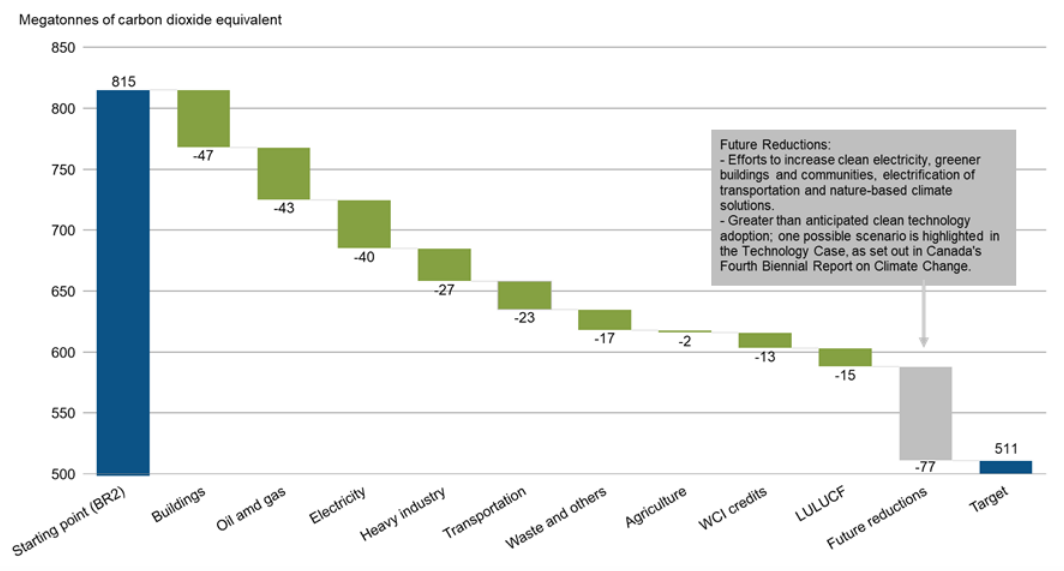
These initiatives are bringing Canada closer to the 2030 commitment with a gap of 77 Mega tonnes of carbon dioxide equivalent left to account for.

Contributions to emissions reductions by 2030 [2]

Source: Government of Canada, Environment and Climate Change: Progress Towards Canada’s Greenhouse Gas Emissions, 2019

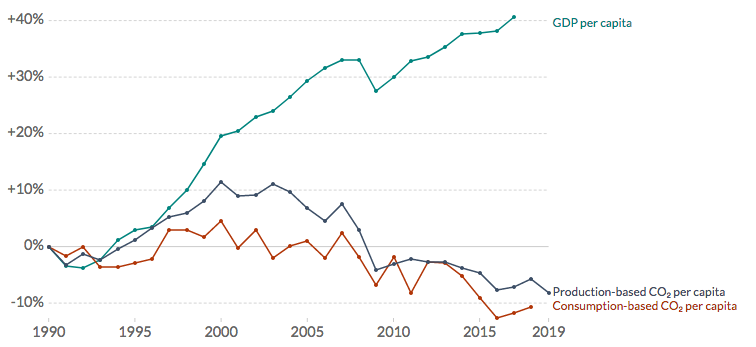
In addition, over the last two decades, Canada has made progress in “decoupling” its GDP growth from its CO2 emissions – a necessary development in order to achieve targets without adversely impacting the economy.

Change in per capita – CO2 emissions and GDP, Canada


Source: https://ourworldindata.org/co2/country/canada?country=~CAN

With encouraging progress in Canada and globally, there are several challenges that still need to be addressed by governments. For one, a meaningful investment and consideration is required for the millions of jobs that are employed by the energy sector (globally 58 million, with about half in fossil fuel industries). A reskilling or upskilling is critical to ensuring the existing workforce is not disadvantaged by the transition. Secondly, Canada’s contribution to change is limited to its 2% contribution of global CO2 emissions. The leading countries that can make a significant contribution to climate change are China, contributing about 28%, and the US, contributing about 15%. A more concentrated focus is required in high emitting countries to meet the Paris Agreement. Thirdly, and perhaps the most critical part of this journey is ensuring governments remain on course and aligned to the targets, regardless of the political party or faction that is in power. Perhaps the most dramatic turn was witnessed more recently in the US when President Trump took office only to withdraw the US from the Paris Agreement; and in Canada this misalignment is evident between the federal and provincial governments as they push varying agendas with different degrees of urgency. Some segments of the population either do not feel the urgency of global warming or perhaps are too economically dependent on traditional energy sources to see the urgency of accelerating their transition.

While there is much focus on governmental commitments, investors and corporations have a critical role to meeting the Paris Agreement. In 2019, a group of 33 of the world’s largest asset owners formed the UN-convened Net-Zero Asset Owner Alliance committed to reducing carbon emissions in their portfolios, worth over US $5.1 trillion, to net-zero by 2050. A year later, the Net-Zero Asset Manager Alliance launched with 30 founding signatories and about US $9 trillion in assets. Alliances and investor networks are important to aligning and uniting the priorities of the investment industry and have a tremendous impact in moving all sectors, both public and private.

One of the benefits of such investor networks is promoting and requiring standardized disclosures, such as aligning to the Taskforce for Climate-related Financial Disclosures, which is foundational to enabling investment managers to assess and integrate the risk of climate change across their holdings and portfolios. As more asset owners and managers join such alliances to enhance their assessment of climate risks, it could have a meaningful impact on the cost of capital for companies which will serve as a motivation to align to the Paris Agreement. With such a broad reach, the investment management industry needs to work closely with governments to lead this change.

As UN Secretary-General António Guterres said at an action event, “We are dealing with scientific facts, not politics. And the facts are clear. Climate change is a direct threat in itself, and a multiplier of many other threats.” This is a global problem, and while challenges will be faced through this transition, it nevertheless must be a priority for every government, corporation and individual. For now, Canada and the Canadian investment industry are making meaningful progress on the journey towards a greener economy but there is a long road ahead.

Sources:

[1] IPCC, 2018: Global Warming of 1.5°C.An IPCC Special Report on the impacts of global warming of 1.5°C above pre-industrial levels and related global greenhouse gas emission pathways, in the context of strengthening the global response to the threat of climate change, sustainable development, and efforts to eradicate poverty [Masson-Delmotte, V., P. Zhai, H.-O. Pörtner, D. Roberts, J. Skea, P.R. Shukla, A. Pirani, W. Moufouma-Okia, C. Péan, R. Pidcock, S. Connors, J.B.R. Matthews, Y. Chen, X. Zhou, M.I. Gomis, E. Lonnoy, T. Maycock, M. Tignor, and T. Waterfield (eds.)]. In Press.

[2] Government of Canada, Environment and Climate Change: Progress Towards Canada’s Greenhouse Gas Emissions, 2019

RIA Disclaimer
The views and opinions expressed in this article are solely those of the authors and do not necessarily reflect the view or position of the Responsible Investment Association (RIA). The RIA does not endorse, recommend, or guarantee any of the claims made by the authors. This article is intended as general information and not investment advice. We recommend consulting with a qualified advisor or investment professional prior to making any investment or investment-related decision.

Biodiversity: The Next Frontier of Sustainable Finance

What comes to mind when you think of biodiversity loss? A continuous stream of news will often highlight tragedies such as coral bleaching or forest fires in the Amazon but for many, the tangible impacts of biodiversity loss may have only been felt recently with Covid-19.

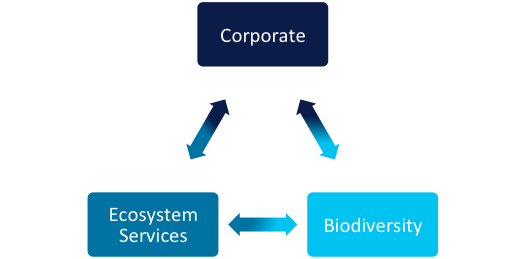
The biodiversity crisis is considered a major factor in the emergence of zoonotic diseases such as Covid-19, SARS and Ebola (meaning diseases that are transferred from animals to humans). The World Economic Forum has estimated the cost of Covid-19 to be potentially over USD $20 trillion, and according to the OECD protecting biodiversity will be vital to avoid the next pandemic. However, the impact of biodiversity loss is much greater than pandemics alone. Biodiversity provides economic and social value such as food, building materials, clean air, and fresh water with the World Wildlife Fund (WWF) estimating the monetary value of biodiversity around USD $125 trillion a year.

Humans both depend on and impact biodiversity

We rely on biodiversity in three different ways[1]:

First, biodiversity provides ecosystem services such as climate regulation, carbon sequestration, water purification, pollination, and habitat provision. For example, 75% of global food crops rely on animal pollination[2] and an estimated USD $235-$577 billion of annual value of global crop output is at risk due to pollinator loss. Furthermore, marine and terrestrial ecosystems are carbon sinks for anthropogenic emissions with global gross sequestration around 5.6 gig tons of carbon per year (equivalent to 60% of global anthropogenic emissions).[2] Mangrove forests are also a natural defense for flooding and protecting mangroves can provide over $US 65 billion in benefits per year. Coral reefs as well protect coastlines form storm damage and erosion.

Second, we rely on material benefits such as food, energy, and medicines. For example, in addition to food, 70% of drugs used for cancer are natural or synthetic products inspired by nature and over 2 billion people rely on wood fuel to meet their primary energy needs.[2]

Finally, biodiversity provides non-material benefits. It can improve a person’s quality of life, aid in physical and psychological wellbeing, and is often integral to cultural identity.

However, biodiversity is in a state of rapid decline due to human activities. A growing human population and increased human activities such as urban development, farming, overfishing, logging, and mining are altering the natural world at an unprecedented rate.[2] The WWF reported that the population sizes of species have dropped on average 68% since 1970. Around 25% of species assessed are threatened which indicates that over 1 million species may face extinction within decade.[2]

Biodiversity Presents both Risks and Opportunities for Corporates

Biodiversity loss is a risk that can no longer be ignored. According to the World Economic Forum’s 2020 annual survey, biodiversity loss has now been cited as one of the top 5 global risks for the next ten years along with other environmental risks such as extreme weather and climate action failure.

Biodiversity risks can be broken into three categories:

  1. Systemic Risks or risks with widespread impacts that can indiscriminately affect global stability such as threats to food security, health, or socioeconomic development. Pandemics such as Covid-19 and systemic crop failures like the Irish potato famine can be classified as a systemic risks.
  2. Physical Risks relate to the direct impact of biodiversity loss. Many sectors can face physical risks, which can disrupt normal business operations including the availability of certain commodities, stable operational conditions or the value of the business such as real estate prices in areas prone to forest fires.
  3. Transition Risks are related to the transition to a nature positive economy, which can include increased regulation, litigation, reputational risks as well as shifts in consumer preferences. For example, changes in consumer habits towards plant-based milk products constitute a risk to dairy farmers.

Biodiversity can also present a major opportunity for corporates (greater than USD $10 trillion a year by 2030 according to the World Economic Forum) as business and society embark on the transition towards a nature positive economy. Transition opportunities relate for instance to the circular economy and regenerative agriculture. For example, while customers switching to more plant based diets is a risk for meat and dairy production, it can also present an opportunity to create more plant-based products for customers. However, to capture these opportunities, corporates will have to understand what is at stake for biodiversity and to dedicate capital towards this new economy.

Biodiversity Considerations are essential for Investors but Measuring Biodiversity is Complex

Understanding how to effectively account for biodiversity in terms of risk and opportunities is difficult due to the complexity of the issue. With biodiversity, there is no one-size-fits-all metric (such as CO2 equivalent emissions for climate change) or long-term scenario analysis. Furthermore, a wide variety of corporate actions impact biodiversity loss. Finally, the implications of biodiversity loss are not uniform, with certain geographies and species being particularly more vulnerable.

The Five Pillar Framework

To simplify biodiversity, biodiversity loss can be broken into 5 primary direct drivers based on the Intergovernmental Science-Policy Platform on Biodiversity and Ecosystem Services (IPBES, 2019 classification).

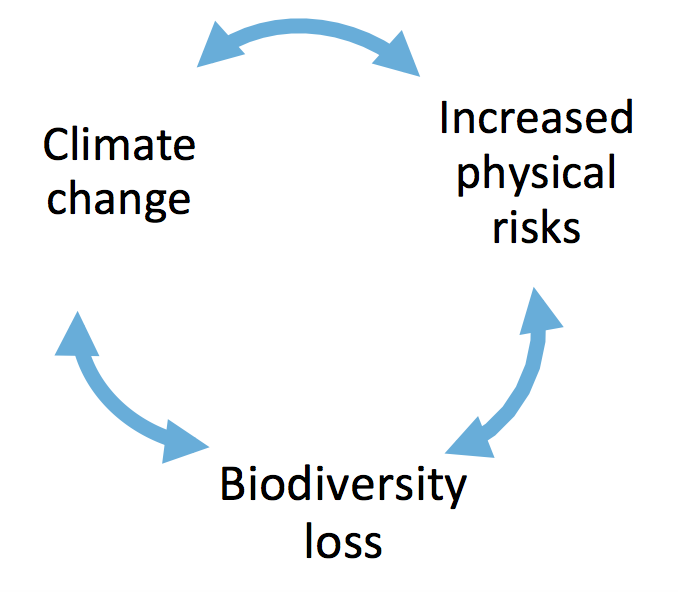
  1. Climate Change is closely linked to the biodiversity crisis. Extreme weather conditions exacerbate climate change and alter natural ecosystems including droughts, higher temperatures, and wildfires. In turn, a loss of biodiversity can adversely impact climate change creating a vicious and perpetual cycle (i.e. loss of forest cover reduces carbon sinks).
  2. Land Degradation and Habitat Destruction is defined as the deterioration or loss of productive capacity of soils and land. There are many causes of this including over cultivation of land leaching nutrients from the soil, deforestation for agricultural production or urbanization. Extreme weather events can cause erosion and degrade soil.
  3. Unsustainable Resource Exploitation means harvesting resources at a rate that cannot be naturally replenished. This can include deforestation, intensive water consumption, overfishing, and illegal wildlife trade. Over exploitation of one species can threaten food stability in an ecosystem and impact other species.[3] Furthermore, resource exploitation such as intensive logging can also impact land quality and local habitats.
  4. Pollution is a significant contributor to biodiversity loss. This includes physical pollution such as plastic and micro-plastics, agricultural pollutants including pesticides, hazardous and toxic waste from both industrial processes as well as chemical leaching from medicines and consumer products. Many of these toxins end up in waterways and can accumulate overtime, causing harm to humans, plants, and animals alike.
  5. Invasive Species are non-native species that are introduced to new environments. They often do not have natural predators and can cause significant damage to local species and habitats. These introductions can be intentional for commercial or recreational purposes such as the Burmese python in Florida or unintentional through shipping.

This framework will help categorize the exposure, impacts, risks, and opportunities for corporates and sectors related to biodiversity.

Biodiversity is Complex but there are Actionable Steps Investors Can Take

Biodiversity is complex as the five direct drivers of biodiversity loss are often interconnected. In addition, corporate disclosure is limited with only a handful of companies demonstrating efforts on robust biodiversity disclosure. While there are some initiatives to boost nature related disclosures such as CDP forests, we are a long way off from a clear investment framework on biodiversity reporting.

However, we have to start somewhere. There are opportunities for investors to strengthen commitments and solutions. Biodiversity dedicated solutions can include negative screening, impact investing as well as funds and bonds with biodiversity linked objectives. Investors need to first ramp up their biodiversity capabilities and expertise.

The first step is awareness and education. It is important for investors to start putting resources towards biodiversity to understand risks and opportunities in specific sectors most exposed such as food.

The second step is to strengthen commitments regarding biodiversity including policies on specific biodiversity drivers. For example, some investors are creating deforestation commitments or specific commitments on commodities particularly exposed including soy, cattle, palm oil and seafood.

To effectively carry out these commitments, data is required leading to the third step, quantitative assessment. Finding reliable biodiversity data is overwhelmingly complex. However, new and innovative approaches are starting to emerge and investors can start simple with biodiversity adjacent indicators that are already available including waste, CO2, and packaging.

To increase the quality of biodiversity data, investors must engage on the topic. This can include engagement with corporates on biodiversity risks and impacts, but also can include overall engagement for more robust and granular reporting.

Finally, biodiversity is too complex for investors to address alone. It is essential that investors collaborate with peers as well as experts and data providers. Organizations like CDP can help provide a starting point to assess corporate performance, but as new standards emerge for biodiversity, investors need to be part of the conversation.

Overall addressing biodiversity at the investor level is in its infancy. However, 2021 could be a major turning point for biodiversity with major political and economic initiatives such as the One Planet Summit, which took place in Jan 2021, emerging European regulations, and the first recommendations from the Taskforce on Nature-Related Financial Disclosures (TNFD), similar to TCFD for climate, aiming at providing a framework for companies to assess their exposure to biodiversity.

Sources:

[1] IPBES, Summary for Policymakers, 2019.

[2] IBPES, 2019

[3] HSBC, 2020

RIA Disclaimer
The views and opinions expressed in this article are solely those of the authors and do not necessarily reflect the view or position of the Responsible Investment Association (RIA). The RIA does not endorse, recommend, or guarantee any of the claims made by the authors. This article is intended as general information and not investment advice. We recommend consulting with a qualified advisor or investment professional prior to making any investment or investment-related decision.

Overcoming Regulatory Challenges to Active Ownership in North America

Recent studies report rapid growth in Responsible Investment (RI) strategies in North America, with a 48% and 42% increase in Canada and the U.S, respectively. Likewise, the PRI reported a 14% and 22% increase in the number of signatories in Canada and the U.S., albeit with North America standing at 589 total signatories compared to 1,285 in Europe. Central to many of these RI strategies is active ownership: investors using their influence through voting and engagement to improve the ESG performance of investee companies.

This trend is impressive against the somewhat surprising backdrop of North American regulatory headwinds towards active ownership, with underlying scepticism from regulators in these markets manifesting as public policy in 2020. By comparison, in Europe regulators pushed for bold regulation promoting responsible investment, as it finalised the EU Taxonomy on Sustainable Finance, alongside improving reporting such as the Sustainable Finance Disclosure Regulation (SFDR). In fact, European regulators aimed for these changes to happen so fast that investors – successfully – pushed back on the timeline of their introduction.

Now more than ever, North American investors need to consider what their role is in influencing the ecosystem in which they operate, reflecting on what has happened over 2020 and how best they can work together in the future.

US regulators create headwinds for active ownership

Early 2020, the U.S. Securities and Exchange Commission (SEC) solicited comments on two proposed sets of rule amendments to increase the regulatory burden on proxy advisers and further restrict the ability for investors to file shareholder proposals. The SEC’s motivation for these was to address its concerns over the accuracy and transparency of proxy voting advice, which investors use to inform their proxy voting decisions, and to amend thresholds and mechanisms by which investors can file shareholder proposals to avoid ‘misuse’ of the process.

Both proposals received significant levels of criticism from the investment community, citing views that the SEC’s underlying concerns regarding the accuracy of proxy research or the irrelevance of shareholder proposals were misplaced, thereby making the proposals not only unnecessary, but also in danger of stifling active ownership activities that have become commonplace throughout the industry.

When the SEC confirmed their final rules, it appeared that investor feedback had an impact, with some of the more troublesome elements, such as requiring that proxy advisers provide a pre-publication review for issuers, dropped entirely. Other burdensome requirements remained, such as the introduction of higher thresholds for investors to file shareholder proposals – disappointingly, given the effectiveness of such proposals in driving improvements in ESG practices at companies.

Simultaneously, the U.S. Department of Labour (DOL) also opened a comment period on two rules that impact private pension plans regulated under the Employee Retirement Income Security Act (ERISA). The first of these rules aimed to block the inclusion of any investment fund partaking in “ESG investing” as a default option to beneficiaries in their ERISA plan. The second sought to increase the burden on ERISA plans to actively vote their proxies by requiring a deep cost-benefit analysis for voting activity related to environmental & socially themed proposals.

Similar to the SEC proposals the investment community responded by raising serious concerns over the underlying reasons motivating the rule-making, as well as the impracticality of the proposals for plan fiduciaries and other institutional investors.

In the final rule concerning  ‘ESG investing’ products, the DOL decided to shift its focus away from the term ‘ESG’ to the use of pecuniary and non-pecuniary factors. Interpreted as a victory by many, it seems that the DOL conceded that ESG factors can in fact be pecuniary – impacting the risk/return profile of an investment or portfolio. In practice this means that funds integrating ESG considerations can still be selected by ERISA plan fiduciaries as a default option.

The proxy voting rule was similarly reframed, noting that fiduciaries must not pursue non-pecuniary objectives through their voting if at the expense of the financial interest of their plans. The concession made here is that the ESG objectives often pursued through active ownership can be pecuniary to fund performance. The prescriptive and impractical nature of the original proposal was replaced by a principles-based approach that puts less burden on fiduciaries to demonstrate that every individual vote has been assessed on a cost/benefit basis. However, it is not all good news; fiduciaries will still need to commit more time to overseeing the proxy voting policies of their funds and service providers.

Although different in scope, the SEC and DOL proposals shared underlying characteristics: separating the goals of ESG investors from traditional investment goals, and limit the tools and spaces in which ESG products could be deployed. While they prompted an impressive and passionate response from the investor community, U.S. regulators still introduced regulation that negatively impacts responsible investment, even if in a weaker form than originally proposed.

Canadian regulators consider similar actions

There has also been a rise in regulatory interest in active ownership in Canada. Although much of this regulatory focus is supportive of accelerating sustainable finance, this past July the Ontario Capital Markets Modernization Taskforce proposed a set of draft regulatory reforms that, by comparison, raised alarm bells in the investment community.

When the Taskforce was formed in early 2020, a group of Canadian investors presented suggestions to make TSX-listed companies more attractive ESG investments on the global market, such as enhancing ESG disclosure requirements in line with the Taskforce on Climate-related Financial Disclosures and the Sustainability Accounting Standards Board and introducing measures to increase board and executive diversity. Those suggestions encouragingly made their way into the Taskforce’s draft report.

However, the Taskforce also proposed regulating proxy advisors, echoing their U.S. counterpart in noting their concerns about transparency and accuracy of proxy advisor reporting to investors. The Taskforce suggested an SEC-like no-action process for shareholder proposals, which is widely regarded by the investment community as a process that dials back shareholder rights in favour of corporate interests. This sceptical attitude towards proxy voting advisors and the shareholder proposal process in Canada was surprising: investor engagement with companies tends to be far less contentious than in the U.S., voting on ESG items or shareholder proposals rarely gets majority votes and investors do not tend to file as many shareholder ESG proposals, which are often used as a last resort.

These Taskforce recommendations impacting proxy voting advisors and the shareholder proposal process received much criticism from investors. The Canadian Coalition for Good Governance (CCGG) warned of the erosion of investor protections and increasing regulatory burden for investors as “antithetical” to the OSC’s investor protection mandate. Canadian shareholders also commented collaboratively, taking the opportunity to provide in-depth context around how active ownership activities work in practice and explain why the Taskforce’s recommendations would be unnecessary in the Canadian market and impractical to implement.

At the time of writing, the Taskforce is yet to release its final set of recommendations due by the end of 2020. The hope is that these final recommendations maintain their support for ESG-related disclosures, but that investor feedback has convinced the Taskforce to revisit reforms that would negatively affect the proxy voting and shareholder proposal processes.

Championing active ownership is more important than ever

With the significant growth in RI strategies that employ active ownership and the resulting focus from regulators, we are at a crossroads where banding together to shape the future of our industry has never been more important. Although the policy initiatives discussed above are either still a work in progress or could be repealed with the U.S. regime change, the misconceptions about our industry that result from these initiatives remain in play.

There are many ways of working together to affect change, such as directly contacting regulators or working through industry associations. At BMO Global Asset Management we take the same approach when engaging policy-makers as we do engaging investee companies: respectfully conveying our investor perspectives, taking the time and energy to dive deeply into topics, sharing our expertise on ESG issues and providing education or examples of best practices when necessary.

One take-away from 2020 is that the investor voice can be incredibly powerful in helping to better educate regulators on ESG and active ownership, and that we have to make ourselves heard to ensure our position as responsible stewards of capital – especially now that responsible investing in North America is growing faster than ever.

Contributor Disclaimer
Any statement that necessarily depends on future events may be a forward-looking statement. Forward-looking statements are not guarantees of performance. They involve risks, uncertainties and assumptions. Although such statements are based on assumptions that are believed to be reasonable, there can be no assurance that actual results will not differ materially from expectations. Investors are cautioned not to rely unduly on any forward-looking statements. In connection with any forward-looking statements, investors should carefully consider the areas of risk described in the most recent simplified prospectus.
This article is for information purposes. The information contained herein is not, and should not be construed as, investment, tax or legal advice to any party. Investments should be evaluated relative to the individual’s investment objectives and professional advice should be obtained with respect to any circumstance.
BMO Global Asset Management is a brand name that comprises BMO Asset Management Inc., BMO Investments Inc., BMO Asset Management Corp., BMO Asset Management Limited and BMO’s specialized investment management firms.
®/™Registered trade-marks/trade-mark of Bank of Montreal, used under licence.
RIA Disclaimer
The views and opinions expressed in this article are solely those of the authors and do not necessarily reflect the view or position of the Responsible Investment Association (RIA). The RIA does not endorse, recommend, or guarantee any of the claims made by the authors. This article is intended as general information and not investment advice. We recommend consulting with a qualified advisor or investment professional prior to making any investment or investment-related decision.

Why ESG Portfolios have Proven to be More Resilient in the Context of COVID-19

If a key investment story of 2020 is COVID-19 and the disconnect between manic markets and a traumatized global economy, a less dramatic but financially urgent sequel to that story may focus on heightened market volatility and the search for more resilient investment solutions. Environmental, social, and governance (ESG) investing has emerged as a key method for pursuing such portfolio resilience, particularly in the context of proliferating economic and systemic social risks.

ESG investing and the pandemic

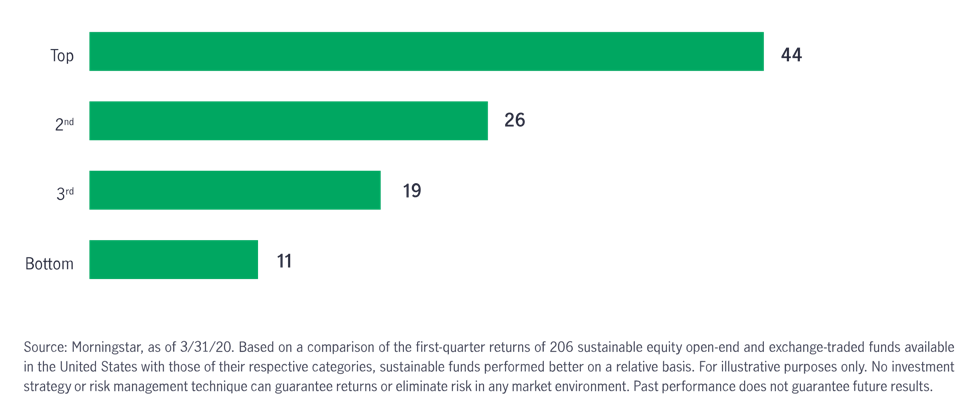
At the onset of this year’s pandemic-driven volatility, signals of ESG-related strength were widely noted, both at the company level and in ESG-focused equity investment strategies. For example, a Harvard Business School working paper released in April documented how companies that the public perceived as behaving more responsibly during the March downturn had less-negative stock returns than their competitors.[1] And in a widely cited U.S. mutual fund industry study, fund rating agency Morningstar remarked that “4 times more sustainable funds finishing in the best quartile than in the worst quartile of their categories” during the first quarter.[2]

Sustainable equity funds performed well during the crisis

Q1 2020 return rank % by Morningstar category quintile
What was the key to this resilience? One reason is a widespread energy sector underweight among ESG investment approaches. As COVID-19 dealt a serious blow to the near-term prospects for global economic growth, that helped trigger an oil price collapse and major volatility across the energy sector. A structural view against the future prospects of traditional energy companies, it appeared, helped the performance of a broad swath of ESG funds versus their traditionally managed peers.[3]

Beyond the cautious sector view, the Wall Street Journal noted in late March that ESG factors, particularly social factors, could become more important at the corporate level as investor interest in companies’ approach to human capital management grew more urgent.[4] And as Morningstar’s Head of Sustainability Research for the Americas John Hale declared, ESG strategies appeared to be notably consistent outperformers because they tended to pursue the “quality companies of the 21st Century,” with a focus on “selecting stocks with better ESG credentials.”[5]

In this moment, ESG factors showed their close alliance—even an identity—with the most operative contemporary definitions of quality. Notably, though, this isn’t quality conceived as a history of profitability, but quality associated with a mix of quantitative and qualitative signals of sustainability, particularly factors that have often been called nonfinancial, intangible, or prefinancial.

In times of crisis, the prefinancial costs can become financial—sometimes, materially so—flipping the script of materiality and displacing other factors that might formerly have been deemed to have a greater impact on a company’s bottom line. One of the questions we face now concerns whether this reshuffling of factors on the basis of their materiality requires a tactical or a more strategic shift in investment approach.

The pandemic and the proliferation of social risks

As the pandemic has progressed, it appears that companies with a stronger ESG proposition seemed better prepared to weather the economic storm that no one projected would happen,[6] not to mention the social unrest that soon followed. Surfacing a range of systemic social risks, the pandemic has underscored the fragility of economic structures in relation to social factors.

According to some observers, ESG strategies have maintained an edge through 2020’s market dislocations because they’ve taken a long view on what counts as a sustainable investment across sectors. Banks and other institutions that formerly downplayed the significance of ESG investing have consequently developed a keen interest in sustainable investment characteristics.[7] We think this set of key characteristics is a dynamic but finite set of interrelated ESG factors.

Some ESG factors that we believe are most relevant to our investments
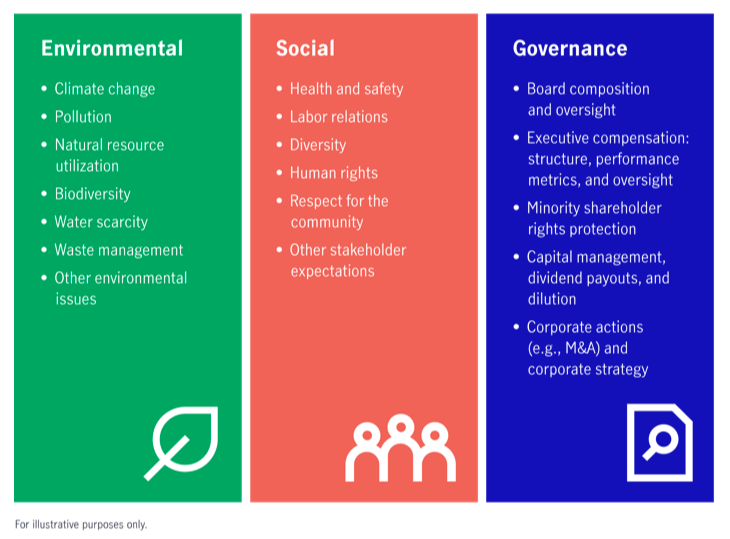
An ESG strategy’s potential for outperformance, moreover, rests on its practice of modeling different scenarios of deterioration or strength. That can mean anticipating the consequences for corporate health in the context of varying climate scenarios or the degree of positive or negative momentum due to changes in social conditions. While the social factors at issue in the pandemic have varied by region and time frame, the social factors we’ve observed as being the most material for the greatest number of companies include health and safety, labor relations, and respect for the community.

Health and safety: public health structures under pressure

Health and safety are at the center of the pandemic’s swirl of uncertainty. In March, market participants of all levels of sophistication suddenly found themselves grappling with personal and community-focused health questions that could have profound consequences for their lives, livelihoods, and investment portfolios:

  • Is it safe for anyone to go to work or for my children to go to school? How long will my family need to shelter in place?
  • Is our public health system equipped to handle the pandemic or will it be pushed past its breaking point?
  • Would resources aimed at finding a cure be allocated in a way that hastened the development of truly effective treatments for the general population or shareholder-and insider-focused profits?

There were and continue to be no guarantees that the resolution to these health and safety questions will be positive in the short to medium term, neither for the global population nor for the global economy. Faced with such staggering uncertainty, traditional asset managers and asset owners were all equally in the dark about what they could reasonably expect from their portfolios in the way of risk/adjusted returns. But because of their focus on systemic risks, ESG-strategies can be more aware of the materiality of social risks for different companies, industries, and economically interdependent regions exposed to outbreaks.

Labor relations: a major stress test for companies in hard-hit areas

At no time since the Great Depression did so many people lose their jobs or have the safety of their employment put into doubt so quickly. Consequently, labor relations swiftly became a flash point for companies across the capitalization spectrum:

  • How steadfast could companies be in treating employees empathetically—putting their health and safety, not to mention their jobs, above corporate profits? What if the crisis wears on into 2021 and beyond?
  • Would companies be able to create safe workspaces for their employees? At what cost?
  • Were companies fully aware that their behavior during the crisis might define their future ability to retain talent and customer loyalty?

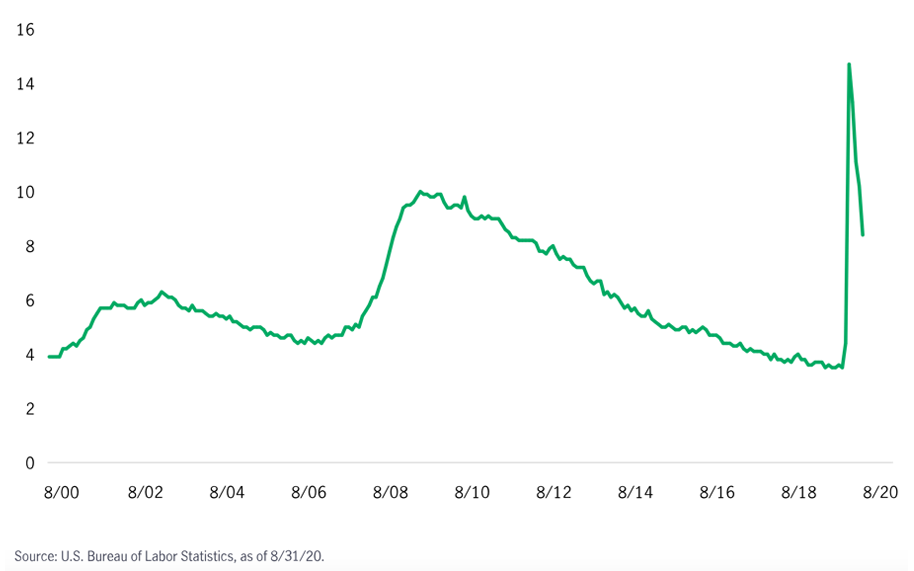
In the early stages of the first wave of the pandemic, charts showing unemployment data registered an implausibly sharp spike. Within a matter of weeks, U.S. unemployment rose above 14%, indicating tens of millions of people had lost their jobs. While data was more mixed in European countries, emerging economies also faced a severe employment shock.[8] What could companies and sovereigns realistically do to protect the unemployed and the still employed but quickly overextended essential workers? How companies treat their employees in the context of once-in-a-generation financial difficulty is perhaps the ultimate stress test measuring the relative strength of the social factor across companies, industries, and sectors.

U.S. Civilian unemployment rate (%)

August 2000-August 2020
Respect for the community: positive catalyst for change?

Respect for the community has become another flash point of risk and opportunity for many companies since the onset of the crisis:

  • Would companies take pains to shift their operations smoothly—for example, by implementing business continuity plans or by putting certain operations on hold until a time of relative safety?
  • If a company operated in the presence of the general public, did it respect pandemic-mitigation measures or treat these in a more cavalier manner?
  • Did companies donate resources to help the broader community? Whether that meant donating PPE gear or converting manufacturing capacity to build ventilators, produce hand sanitizer, and so on.
  • In what ways have companies pledged to change for the long term, particularly with respect to how they see themselves and their operations having an impact on the communities in which they operate?

Many companies have shown a willingness to tread a path toward social change. Nowhere is this more evident than in the United States, where the pandemic has exacerbated tensions in the country’s ongoing reckoning over its history of racial injustice. Where companies stand on the relevant issues has more than occasionally had an impact on their business, and—on the hopeful side—these positions may become catalysts for improved results in U.S. board diversity, gender equality, and equitable compensation structures that favor broad stakeholder interests.

Sustainable investing is resilient investing

For ESG investors, the central focus is on sustainability, a condition of resiliency represented in company fundamentals and management effectiveness at managing material risks, which, in aggregate, gives companies a better chance of thriving in the future. As it was recently put in Responsible Investor, the measure of company’s sustainability comes down to “how resilient and agile [they are] in handling many stakeholders, global uncertainties, shocks and disruptions—regardless of whether these are caused by a pandemic, social unrest, or an environmental emergency.”[9]

Qualitative, prefinancial factors are accepted by ESG strategies as potential drivers of future business strength and weakness. That may be one reason why momentum continues to gather behind ESG strategies, as investors increasingly look to see whether a company has the strategic vision and capabilities to achieve and maintain strong ESG performance—in other words, long-term resiliency and the ability to manage tail risks.

Sources:

[1] “Corporate Resilience and Response During COVID-19,” Alex Cheema-Fox, Bridget LaPerla, George Serafeim, and Hui (Stacie) Wang, Harvard Business School Accounting & Management Unit Working Paper No. 20-108, April 2020.

[2] “Sustainable Funds Weather the First Quarter Better Than Conventional Funds,” Morningstar, April 3, 2020. The study is cited by interactive investor, “The reason why ESG funds outperformed during the market sell-off,” March 24, 2020, and CNBC.com, “The coronavirus downturn has highlighted a growing investment opportunity —and millennials love it,”April 14, 2020, among others.

[3] Morningstar, April 3, 2020.

[4] “Coronavirus Pandemic Could Elevate ESG Factors,” Wall Street Journal,March 25, 2020.

[5] Morningstar, April 3, 2020.

[6] Of course, numerous well-known public figures have spoken in the past about the likelihood—even the inevitability—of a pandemic wreaking havoc on the global economy. See, for example, Microsoft co-founder and philanthropist Bill Gates’s 2015 Ted Talk.

[7] Wall Street Journal, March 25, 2020.

[8] “Emerging economies in full-blown unemployment crisis,” United Nations, June 4, 2020.

[9] “No Surprise: Sustainability Funds Outperform the Market—Despite COVID-19,” Responsible Investor, April 24, 2020.

Contributor Disclaimer
A widespread health crisis such as a global pandemic could cause substantial market volatility, exchange trading suspensions, and closures, and affect portfolio performance. For example, the novel coronavirus disease (COVID-19) has resulted in significant disruptions to global business activity. The impact of a health crisis and other epidemics and pandemics that may arise in the future, could affect the global economy in ways that cannot necessarily be foreseen at the present time. A health crisis may exacerbate other pre-existing political, social and economic risks. Any such impact could adversely affect the portfolio’s performance, resulting in losses to your investment.
The opinions expressed are those of Manulife Investment Management as of the date of this publication, and are subject to change based on market and other conditions. The information and/or analysis contained in this material have been compiled or arrived at from sources believed to be reliable but Manulife Investment Management does not make any representation as to their accuracy, correctness, usefulness or completeness and does not accept liability for any loss arising from the use hereof or the information and/or analysis contained herein. Manulife Investment Management disclaims any responsibility to update such information. Neither Manulife Investment Management or its affiliates, nor any of their directors, officers or employees shall assume any liability or responsibility for any direct or indirect loss or damage or any other consequence of any person acting or not acting in reliance on the information contained herein.
All overviews and commentary are intended to be general in nature and for current interest. While helpful, these overviews are no substitute for professional tax, investment or legal advice. Clients should seek professional advice for their particular situation. Neither Manulife, Manulife Investment Management Limited, Manulife Investment Management, nor any of their affiliates or representatives is providing tax, investment or legal advice. Past performance does not guarantee future results. This material was prepared solely for informational purposes, does not constitute an offer or an invitation by or on behalf of Manulife Investment Management to any person to buy or sell any security and is no indication of trading intent in any fund or account managed by Manulife Investment Management. No investment strategy or risk management technique can guarantee returns or eliminate risk in any market environment. Unless otherwise specified, all data is sourced from Manulife Investment Management.
Manulife, Manulife Investment Management, the Stylized M Design, and Manulife Investment Management & Stylized M Design are trademarks of The Manufacturers Life Insurance Company and are used by it, and by its affiliates under license.
RIA Disclaimer
The views and opinions expressed in this article are solely those of the authors and do not necessarily reflect the view or position of the Responsible Investment Association (RIA). The RIA does not endorse, recommend, or guarantee any of the claims made by the authors. This article is intended as general information and not investment advice. We recommend consulting with a qualified advisor or investment professional prior to making any investment or investment-related decision.
Catastrophic Bonds and Insurance-Linked Securities: A Fundamentally ESG-Oriented Investment

As long-time investors in catastrophe bonds (cat bonds) and insurance-linked securities (ILS) portfolios, we are seeing by their nature how these specialized investments can help actively promote environmental, social and governance (ESG) considerations.

ILS are used by insurers and reinsurers as an economically attractive alternative to traditional reinsurance. With these instruments, investors put up collateral through the securitization and share in a portion of reinsurance risk in exchange for the opportunity to earn premium income.

Cat bonds are a specific segment of ILS structured as floating rate 144A bonds to transfer reinsurance risk associated with natural peril events that are remotely occurring but highly costly for insurance markets. These uncorrelated and diversifying investments further support the potential capital required of re/insurers to cover losses so that rebuilding can occur for those impacted.

We believe there are a variety of key investment factors to consider in cat bonds/ILS that speak to an ESG mindset and the asset class can inherently promote ESG.

The cat bond/ILS market is a climate risk price indicator and can serve as a market-enforcement mechanism that encourages better climate risk management.

Large ILS constituents can play a role in how re/insurance addresses climate change impacts because trends such as rising temperatures and sea levels result in increased hazard frequency and severity created by hurricanes, tornados, winter storms, hail, and flooding. Insurance underwritten to help communities and economies deal with these events is priced according to risk level and modeling assumptions from weather and insured loss-based data. The greater the exposure level that a community or property seeking insurance has to these risks, the higher the premiums for their insurance will be, potentially impacting capital levels available to protect these communities.

If a community or property has taken steps to manage or mitigate these hazards – such as better structure engineering or placing buildings and structures in locations with sustainability-based development plans – they will be rewarded with lower premiums. Alternatively, if they have not pursued sustainable development strategies geared toward handling climate change impacts, they will be penalized with higher premiums.

The cat bond/ILS market promotes social and economic welfare.

Twenty-five years ago, global reinsurance firms were the only insurance providers that communities could rely on to address damages incurred beyond the amounts covered by their initial, primary insurance. Hurricanes Katrina and Harvey, as well Japan’s Tohoku earthquake, demonstrated the importance cat bonds/ILS can play in the insurance markets’ ecosystem by providing an additional funding source necessary to help people and communities rebound.

Cat bond/ILS market growth has enabled the creation of public insurance pools, whereby local government entities and sovereign nations – mostly in developing markets – can transfer re/insurance risks to capital markets.

Developing countries such as the Philippines and Columbia issue catastrophe bonds through the World Bank that enable them to get disaster recovery capital and mitigate the setbacks to growth and economic development that a catastrophic event could create. In the case of the Philippines     , catastrophe bonds are helping to lessen typhoons’ impact on economic output.

Similarly, Mexico received a payout from a catastrophe bond issued by the World Bank after an earthquake in 2017. That money helped finance housing and public infrastructure reconstruction and rehabilitation in affected areas. Furthermore, several groups have formed a trust that purchased the first coral reef insurance policy to help support rebuilding coastal ecosystems following hurricanes’ or severe storms’ damage.

In the United States, state-run pools in Florida, Texas, and California, to name a few, have been issuing ILS for as long as 10 years to provide insurance to communities that couldn’t obtain it in private markets.

Many of the cat-bond/ILS instruments offer disaster-risk financing that is transparent and efficient.

One key ILS feature is the quick and efficient mechanism for issuing payouts once an event triggers insurance protection. These triggers are based on fully transparent measures, such as an events’ scale or losses exceeding a specific dollar amount. This design is deliberate and provides timely payouts in the wake of a disaster when money is most critically needed.

The World Bank has implemented these types of triggers successfully when partnering with developing nations to issue cat bond protection against impact from major hurricane, earthquake and pandemic-related events. In the current COVID-19 pandemic, two World Bank-sponsored bonds helped to provide financing to a handful of emerging markets in support of response efforts.

These mechanisms are a vast improvement over traditional governance of payments from private insurance markets, government, and non-governmental organizations, as those payments were not always issued in a sufficient and timely manner. 

These securities are based on insurance designed to provide additional capital sources to aid the broader societal goal of helping countries and communities recover from disastrous events, thereby creating a category of investments with ESG goals as a foundational principle.

Overall, climate change, health funding, food supply issues and compromised infrastructure can all magnify the severity of economic losses suffered by communities and nations. The result can further widen the “protection gap” as economic losses suffered from major events such as hurricanes, droughts, and pandemics cannot be adequately covered by re/insurance capital alone.

Today, the presence of cat bond/ILS investors in this market helps provide critical capital influx to boost re/insurance capacity and increase the speed of access to capital. These beneficial results provide insurers with more flexibility to address protection gaps. Closing these protection gaps is a key component of insurers’ ability to build out more resilient ESG-oriented programs.

RIA Disclaimer
The views and opinions expressed in this article are solely those of the authors and do not necessarily reflect the view or position of the Responsible Investment Association (RIA). The RIA does not endorse, recommend, or guarantee any of the claims made by the authors. This article is intended as general information and not investment advice. We recommend consulting with a qualified advisor or investment professional prior to making any investment or investment-related decision.

Learning from Corporate Diversity Leaders

There is a strong and growing business case for gender, ethnic and cultural diversity in corporate leadership. In terms of profitability, the most diverse companies are now more likely than ever to outperform less diverse peers.

In 2019, top-quartile companies in ethnic and cultural diversity in executive teams outperformed peers in the bottom quartile by 36% in profitability, up from 33% in 2017 and 35% in 2014, as shown in a recent McKinsey analysis.[1]

This is good news, both for society at large and for investors who make understanding corporate diversity practices an integral part of the security selection process. Given there is currently very little disclosure in much of the world by most companies on racial diversity, to scope out innovative practices our analysts have been reaching out to companies in our coverage that we consider best-in-class in sustainability and asking them how they are thinking of diversity as a key component of a strong human capital pipeline.

Our approach has focused on gathering information in the service of three main goals:

  1. Spurring management to think about racial diversity.
  2. Motivating companies to track diversity by candidly assessing their company’s workforce profile and to be transparent about it externally.
  3. Sharing insights, such as the value of informal networks within a company, in which mentorships or other internal structures increase visibility, experience and opportunity for minority groups.

Recruitment and pay equity practices are key parts of human capital management and a frequent topic of discussion with our portfolio companies. We have, for example, discussed with Intel its establishment of the “Rooney Rule”: in the program, hiring managers are required to interview at least one person of color for a job as a way to get talented people in front of managers that may otherwise have been overlooked for systemic or discriminatory reasons. This can be a way of bypassing more subjective (and thus potentially discriminatory) promotions and forcing accountability on managers that systematically overlook qualified minority employees.

Intel has also created a hotline that allows underrepresented minorities to call with questions or concerns about their immediate managers or just to get help with career choices or decisions. People that used the hotline had lower churn than those that didn’t, as it provided a way for employees to discuss more passive forms of discrimination from their immediate management. The hotline also offers something of a centralized form of mentorship; one difficulty with career advancement is that underrepresented minorities tend to have fewer informal mentorship opportunities and networks than others.

Intel also tracks cohort data to ensure that underrepresented minorities progress through the organization. Some companies explain lack of diversity in management by pointing to efforts in their infancy and noting the time it takes for them to become effective, but that ignores the fact that while entry level hiring decisions may increase diversity/inclusion, career progression tends to be more limited. Tracking and providing cohort data highlights progress in real time, rather than just pointing to an indefinite point in the future for progress to be more evident to shareholders.

CVS Health, another ClearBridge portfolio company, approaches racial equality both internally, as it pertains to employees, and externally in the targeted work CVS does for communities that are underrepresented in terms of health access. CVS has, for example, developed Colleague Resource Groups, groups of employees with shared interests or affinities with goals that help the organization. Groups include the Black Colleague Resource Group, which promotes inclusion, networking, community outreach and mentorship, Juntos, a multicultural organization of members of ethnic groups of Latin America , Pride+, focused on inclusion for LGBTQ+ employees, as well as groups focused on recognizing Indigenous peoples of the Americas environmental awareness, women’s leadership development, fitness, faith and more.

CVS highlights an opportunity for diversity and inclusion for a company that is not only one of the few companies to disclose detailed employee diversity data but is also committed to addressing the diverse health needs of the communities in which it operates. CVS has undertaken large-scale efforts to improve the health of underserved communities. Its hallmark program, “Project Health,” offers in-store health screening to large numbers of people, largely ethnic minorities, in underserved communities, then helps connect those people with primary care providers and clinics. CVS works with local health clinics and government-sponsored community health centers to enhance local access to quality care. It     also supports local food banks to address nutritional insecurity, which can have significant health implications. During the COVID-19 pandemic, the company is also making a concerted effort to set up testing sites in underserved communities.

In addition, in what is both good business and social policy, CVS adapts stores to minority community needs, tailoring its store assortment and staff to the ethnic makeup of local communities. The company emphasizes hiring store managers, pharmacists and pharmacist technicians to align with local demographics and languages spoken, particularly Spanish.

The many forms diversity programs can take speaks to the many avenues that exist for bolstering diversity in the workplace, even while overall disclosure of racial data remains a challenge, especially in the U.S. By learning and sharing insights like these from corporate diversity leaders, we hope to publicize practices and thereby help and encourage other companies to find their way toward a more diverse future.

Sources:

[1] Diversity wins: How inclusion matters, McKinsey 2019.

RIA Disclaimer
The views and opinions expressed in this article are solely those of the authors and do not necessarily reflect the view or position of the Responsible Investment Association (RIA). The RIA does not endorse, recommend, or guarantee any of the claims made by the authors. This article is intended as general information and not investment advice. We recommend consulting with a qualified advisor or investment professional prior to making any investment or investment-related decision.

Investing for Racial Inclusion

In recent months, racial discrimination has become highly visible as citizen journalists share videos of violence and brutality against Black and Indigenous communities, often at the hands of police officers.

But racial injustice extends far beyond violence and law enforcement. Nonviolent forms of racial discrimination and inequity are present in many aspects of society, including the companies in which we invest.

Racial discrimination and Canada’s diversity deficit

In November of 2019, Boston Consulting Group published a report on diversity and inclusion in corporate Canada. The report, which was based on a survey of 5,082 working Canadians at companies with over 1,000 employees, found that 34% of those who identify as people of colour experienced discrimination in the workplace. It also found that 40% of Indigenous respondents had been subjected to workplace discrimination.

In addition, Black, Indigenous and people of colour (BIPOC) are significantly underrepresented in corporate leadership positions.

As I detailed in a previous column, publicly traded companies incorporated under the Canada Business Corporations Act (CBCA) are now required to disclose the proportions of Indigenous peoples and members of visible minority groups on their boards and within senior management. Norton Rose Fulbright, a law firm, recently analyzed the diversity disclosures of 199 corporations as of early July, and the numbers are dismal. While 64.8% of issuers reported no representation of visible minorities in senior executive roles, 75.4% reported having no representation of visible minorities on their boards.

The figures are even starker for Indigenous representation, with 96.5% of issuers reporting that they do not have Indigenous representation on their board of directors and 97.5% having no such representation in senior executive positions.

Overall, Norton Rose Fulbright found that the average representation of visible minorities is 4.7% at the board level and 7.4% at the senior executive level. These numbers stand in stark contrast to the latest available data from Statistics Canada, which show that visible minorities make up 22.3% of the Canadian population while Indigenous people account for an additional 4.9%. There is clearly a large diversity deficit in corporate Canada.

Diversity is good for values and valuation

These severe racial inequities are unjust, and they paint a stark picture of how far we have to go on diversity and inclusion. Racial inequities also mean lost opportunities for companies and investors – there is intrinsic value in having a diverse and inclusive workplace.

While a business case should not be required for society to act, the investment case for diversity and inclusion happens to be quite strong. A global study from McKinsey found that companies with the most ethnically diverse executive teams are 33% more likely to outperform their peers on profitability, while companies with the most ethnically diverse boards worldwide are 43% more likely to see higher profits.

Here in Canada, a report from the Centre for International Governance Innovation, based on an analysis of 7,900 Canadian companies, found that a 1% increase in ethnocultural diversity was associated with an average 2.4% increase in revenue and a 0.5% gain in workplace productivity.

On the risk side, Starbucks lost an estimated US$16.7 million in sales due to an incident of racism in 2018 after it shut down 8,000 of its stores for anti-bias training. The company also suffered reputational damage from negative press during the incident which Apex Marketing Group pegged at nearly US$16 million.

There is clearly a strong case for diversity and inclusion from both the values and valuation-driven perspectives on responsible investment.

Market Developments

The market is moving to help close the diversity deficit. In June, the newly established Canadian Council of Business Leaders Against Anti-Black Systemic Racism announced its formation and launched the BlackNorth Initiative to increase the representation of Black people in boardrooms and executive suites across Canada. As one of its first programs, BlackNorth launched a CEO Pledge for corporate leaders to make a series of commitments to advance racial diversity and inclusion within their organizations

In October, institutional investors managing over $2.3 trillion in assets signed the Canadian Investor Statement on Diversity & Inclusion – a pledge for investors to promote D&I within their portfolios and their institutions, coordinated by the RIA. Signatories to the statement, which include some of the largest institutional investors in the country, acknowledge the existence of systemic racism and its impacts on Black and Indigenous communities and People of Colour, while further acknowledging the existence of inequities and discrimination based on other factors including, but not limited to, gender, sexual orientation, age, disability, religion, culture and socio-economic status. Canada’s investment industry also had its inaugural Diversity & Inclusion Week – a week of thought leadership and insights for investment professionals to promote D&I in their portfolios and their organizations with over 700 virtual attendees.

Also in October, the RIA published its 2020 RIA Investor Opinion Survey based on an Ipsos poll of 1,000 retail investors, with a special focus on investors’ attitudes towards D&I in their portfolios. The survey found that 73% of respondents would like a portion of their portfolio to be invested in organizations providing opportunities for the advancement of women and diverse groups, and 72% want their fund manager to engage with Canadian corporations to encourage more diversity in leadership.

Impact investing for racial justice is also on the rise in Canada. A coalition of Black business leaders launched the Black Opportunity Fund in partnership with the Toronto Foundation. The fund will support Black-led organizations and businesses across the country. The fund’s investments will be wide-ranging, but will have a particular focus on education, health care, community support and housing.

Raven Indigenous Capital Partners, Canada’s first Indigenous-led and -owned social finance intermediary, launched the Raven Indigenous Impact Fund in 2019 to provide patient capital and technical expertise to early stage Indigenous-led enterprises. The Fund focuses on poverty reduction, community resilience and the development of an Indigenous middle class.

Funds like these will play an important role in breaking down systemic racism and advancing Black and Indigenous led businesses in Canada.

There are also opportunities to invest for racial justice in public markets. Impact Shares has developed a nonprofit exchange traded fund called the NAACP Minority Empowerment ETF. The fund tracks the Morningstar Minority Empowerment Index, providing exposure to U.S. companies with strong racial and ethnic diversity policies. As a nonprofit organization, Impact Shares donates all net advisory profits from the fund’s management fee to the National Association for the Advancement of Colored People, which provides investors with an extra layer of social impact.

As stewards of capital, investors can also engage with corporations to promote diversity and inclusion by, for example, encouraging D&I strategies and asking companies to sign BlackNorth’s CEO Pledge.

Conclusion

Responsible investment has deep roots in mobilizing against racism. Going way back to the mid-1700s, Quakers prohibited their members from owning slaves and petitioned the U.S. Congress to abolish slavery. More recently, in the 1970s and ’80s, international investors launched the first modern divestment campaign, diverting capital away from South African companies as a protest against their complicity in the racist apartheid regime. South African businesses lost access to global capital markets and eventually flipped, pressuring the government to end apartheid.

Now is another moment for action. Investors and advisors have an opportunity to help put a bookend on centuries of racial injustice by advancing diversity and inclusion in their portfolios.

This article was originally published in Investment Executive and has been republished with permission.