How Asset Managers are Pushing Companies Towards Meeting their Net-Zero Targets

Financial firms have the power to encourage companies to take on more ambitious steps to lower their carbon footprints

With just 27 years to go until 2050 – the deadline for countries and businesses to reach net-zero carbon emissions – there’s enormous pressure on companies to reduce their climate-related risks. Moving to net-zero isn’t going to be easy – it requires a lot of capital and the will to make change. Asset managers, however, are uniquely positioned to help businesses achieve their net-zero goals.

Increasingly, managers believe that the companies trying to lower their environmental risk will be better positioned for the future, which is not only good for the planet, but also for investment returns. Yet businesses are strapped for resources and often lack the expertise to deal with this challenge, which is why some financial companies are now trying to help businesses meet their targets by offering climate solutions that bridge policy, science and finance.

While there are still skeptics about the impact climate will have on the broader economy, many business leaders acknowledge the significant risk. According to the inaugural BMO Climate Institute survey of small- and medium-sized businesses in North America, 69 per cent of respondents expect the physical impacts of climate will disrupt operations over the next five years. Another third say severe weather patterns are already creating challenges.

Managing climate risk

When it comes to climate risk, we believe asset managers need to consider environmental challenges. Fixed-income managers in particular can’t afford to ignore environmental, social and governance (ESG) factors when assessing credit risk, says Vishang Chawla, Portfolio Manager, Active Fixed Income at BMO Global Asset Management.

“When you look at ESG, you have to think about which companies are going to be around 10, 20 and 30 years from now because we’re buying 30-year bonds,” notes Chawla. “As a credit analyst, when you make that investment, you have to ask yourself if you want to own this company for 30 years. So you have to think about net-zero.”

Fixed-income asset managers are doing more than deciding which investments to hold – they’re engaging company leadership to adopt net-zero. Unlike with equities, the money raised by sustainable bonds should be earmarked for specific projects, explains Chawla. As a result, asset managers can analyze a net-zero plan and assess whether it’s going to advance the company’s net-zero goals. This gives asset managers the opportunity to provide guidance to management on how to strengthen their ESG initiatives if it finds their plans are lacking, he adds.

“As active managers of billions of dollars of credit, part of our responsibility is being in touch with the management of those companies, asking the tough questions and looking at the balance sheet,” says Earl Davis, Head of Fixed Income and Money Markets at BMO Global Asset Management. “It’s from there that you start seeing trends and are able to push or influence companies.”

The interactions between asset managers and companies can be notable. When a large Canadian energy company was raising funds for its sustainability initiatives, BMO Global Asset Management engaged with this company to encourage it to adopt stronger net-zero goals.

Making a measurable impact

The Global Impact Investing Network estimates the market for impact funds, which includes sustainable funds, to be about US$1.16 trillion dollars. Sustainable funds seek to invest in companies that are attractive from both a financial return and ESG perspective. The issuance of green bonds, which are financial instruments designed to fund projects that have environmental or climate benefits, have been an important contributor to that growth.

Sustainable bond funds offer an effective way to tap into the green bond market. With these funds, you’re getting access to companies that have used green bonds to affect change for specific projects. They include projects like Brookfield Asset Management’s push to extend the life and increase the capacity at Shepherds Flat, one of the largest onshore wind projects in the U.S. By replacing the existing turbines with longer blades and updated technology the company expects the project will increase its generation capacity of clean energy by about 25 percent per year, or about 400-gigawatt hours. Bell Canada is another example. The telecom recently issued a sustainable linked bond to fund a variety of renewable energy projects to offset its carbon footprint as it upgrades its 5G network.

Taking a long-term view

Asset managers must take a long-term view of the impact of climate change, but the industry is facing pressure to put short-term returns first. Some managers are concerned that the push to net-zero contradicts the goal of providing the best risk-adjusted return. At least one large asset manager has caved to these pressures by pulling out of an investment-industry initiative on climate change, claiming that having a stance on net-zero conflicts with its ability to remain independent.

Davis thinks the pushback against net-zero is short-sighted. “When we invest, we invest from a net present value perspective, so from that you look at the cash flows going through in the future,” he says. This perspective doesn’t mean you have to sacrifice returns, he adds, noting that the risk profiles and performance of many sustainable bond funds are similar to conventional bond funds.

The difference comes down to how managers weigh risk. The risks fixed income managers are looking for may not be making headlines today, but if those risks increase in the future, then it could have a material impact on a company’s performance. “Part of our role is to ensure future sustainable financial returns,” he says.

For BMO Global Asset Management’s Davis, it’s about working with the companies to find solutions that make sense and will deliver results. “When you think about net-zero as a whole, no one person or institution could do it on their own,” he says. “This has to be a global effort.”


Contributor Disclaimer
The viewpoints expressed by the individual portfolio manager represent their assessment of the markets at the time of publication. Those views are subject to change without notice at any time without any kind of notice. The information provided herein does not constitute a solicitation of an offer to buy, or an offer to sell securities nor should the information be relied upon as investment advice.  Past performance is no guarantee of future results.  This communication is intended for informational purposes only.

BMO Global Asset Management is a brand name under which BMO Asset Management Inc. and BMO Investments Inc. operate.

®/™Registered trademarks/trademark of Bank of Montreal, used under licence.

RIA Disclaimer
The views and opinions expressed in this article are solely those of the authors and do not necessarily reflect the view or position of the Responsible Investment Association (RIA). The RIA does not endorse, recommend, or guarantee any of the claims made by the authors. This article is intended as general information and not investment advice. We recommend consulting with a qualified advisor or investment professional prior to making any investment or investment-related decision.
Climate Drivers to Propel Infrastructure Investments

The new year has started off much like the last year, with the global economy feeling the macro effects of the COVID-19 pandemic, high inflation, and geopolitical instability. Amid all the uncertainty in the global markets and economy, we believe certain macro drivers should benefit infrastructure assets in 2023 and beyond.

The Inflation Reduction Act

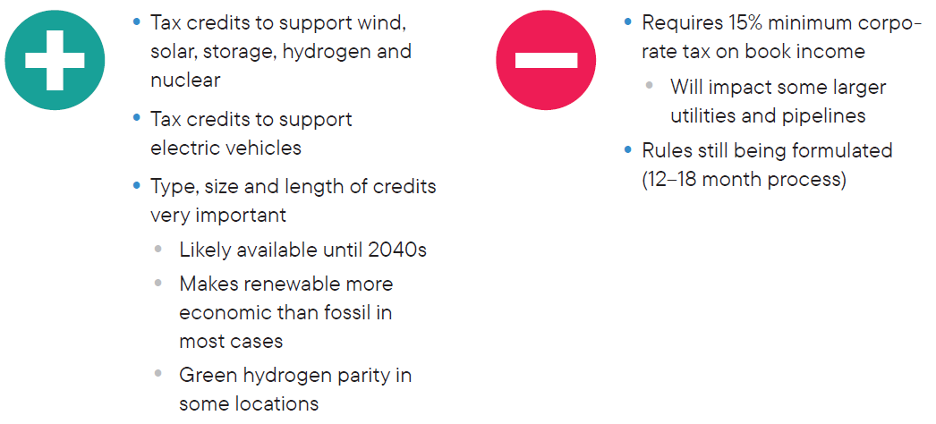
U.S. fiscal policy related to climate change should be a significant driver for infrastructure. The U.S. Inflation Reduction Act (IRA), signed into law in August 2022, is one of the most significant pieces of climate legislation in U.S. history. We believe it will be industry-transformative for utilities and renewables. The increasing need for electrification—such as for more electric vehicle charging infrastructure and more residential and smaller commercial rooftop solar services—will require new substations, new transformers, and upgraded wires along distribution networks. The impact of this legislation was seen in the 2023 capital expenditures plans of utilities, together with the forward order books of companies involved in the energy transition—such as renewable, storage and components suppliers—increasing their growth profiles.

The U.S. Inflation Reduction Act Score Card

Exhibit 1: Inflation Reduction Act’s Key Impacts

One major macro takeaway from the IRA: we believe there is no reason to build anything other than renewables from now on. The main reason? Tax credits. U.S. production tax credits for solar/wind are available until 2032 or until a 75% reduction in greenhouse gases is achieved (based off of 2022 numbers). Either way, this is expected to be a tailwind for infrastructure investment for well over a decade.

Energy Security

We expect energy security will be another key driver. The security of energy resources is driving policy globally now, and a significant amount of infrastructure will need to be built to attain energy security. The Russia/Ukraine war brought on higher gas prices and supply constraints, which highlight the importance of energy security and energy investment. This priority supports energy infrastructure, particularly in Europe, where additional capacity is needed to supplant Russian oil and gas supply.

Muted recession impact

After seeing economic growth in 2022 slow from the rapid pace of 2021, the year 2023 is expected to bring recessions in the major economies of the United States, Europe, and the United Kingdom. Plus, China’s growth will likely be below trend for at least a good portion of this year. However, we still feel that infrastructure assets have higher relative appeal versus equities, even in the event of a recession.

Bond yields should push higher before abating, along with inflation, later this year. For equities, contracting multiples driven by those rising bond yields have characterized the first part of this bear market. An earnings recession generally marks the second phase of a bear market, and we expect that earnings hit to be a force, particularly in early 2023.

We believe the impact of a recession on infrastructure assets should be muted, particularly for regulated assets. Regulated infrastructure assets involve companies that generate their cash flows, earnings and dividends from their underlying asset bases. Those asset bases are expected to increase over the next several years, which makes infrastructure earnings look better protected than global equities.

Inflation Impacts

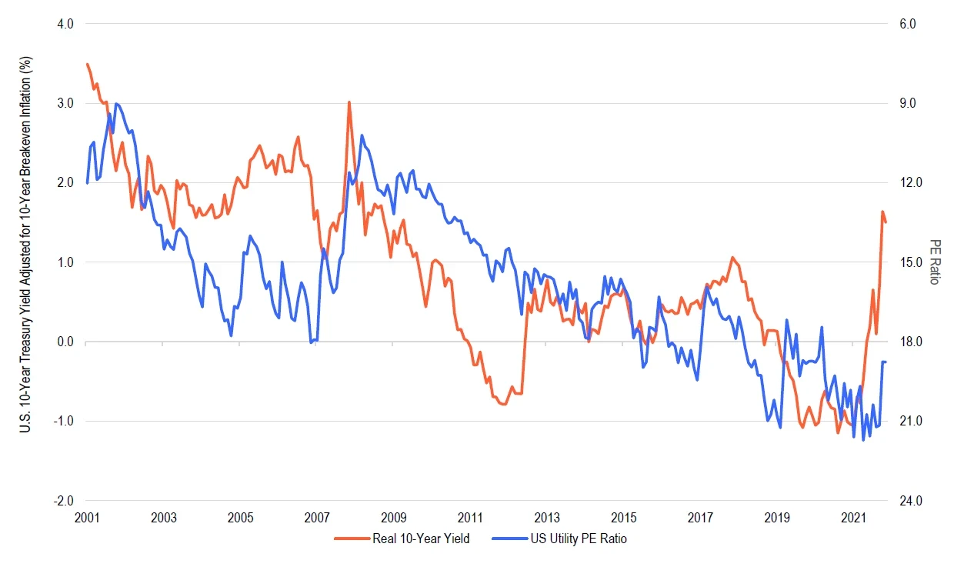
Inflation proved to be much stickier than expected last year, and by late 2022 inflation ranged from around 7% in the U.S. and Canada, to about 11% in the U.K. and European Union[1]. Most infrastructure companies have a link to inflation in their revenue or returns. Regulated assets, such as utilities, have regulated allowed returns that are adjusted for changes in bond yields over time. As real yields rise, utilities look poised to perform well (see Exhibit 1), and we have tilted our infrastructure portfolios to reflect this.

Utilities Poised to Perform Well

Exhibit 2: US 10-Year Real Yield Vs Utilities Price-to-Earnings (P/E) Ratio
As of October 31, 2022.

This means that the underlying valuations of infrastructure assets are generally not affected by changes in inflation and bond yields. However, we have seen that equity market volatility associated with higher bond yields impact the prices of listed infrastructure securities, making them more compelling when compared with unlisted infrastructure valuations in the private markets.

Secular growth drivers for infrastructure assets should be on full display this year. U.S. President Joe Biden wants to reduce U.S. emissions by 50% by 2030, with the goal of having roughly half of U.S. power coming from solar plants by 2050. This will require nearly US$320 billion to be invested in electricity transmission infrastructure by 2030 to meet net zero by 2050.

The dire need for infrastructure spending to support climate change initiatives underpins the anticipated growth in this sector for the next decade and beyond, and the first steps for meeting these long-term goals are being taken now.

Notes:
[1] Bloomberg, January 2023


Contributor Disclaimer
This material is intended to be of general interest only and should not be construed as individual investment advice or a recommendation or solicitation to buy, sell or hold any security or to adopt any investment strategy. It does not constitute legal or tax advice.

The views expressed are those of the investment manager and the comments, opinions and analyses are rendered as at publication date and may change without notice. The information provided in this material is not intended as a complete analysis of every material fact regarding any country, region or market.

Commissions, trailing commissions, management fees, brokerage fees and expenses may be associated with investments in mutual funds and ETFs. Please read the prospectus and fund fact/ETF facts document before investing. Mutual funds and ETFs are not guaranteed. Their values change frequently. Past performance may not be repeated.

WHAT ARE THE RISKS?

All investments involve risks, including possible loss of principal. The value of investments can go down as well as up, and investors may not get back the full amount invested. Stock prices fluctuate, sometimes rapidly and dramatically, due to factors affecting individual companies, particular industries or sectors or general market conditions. To the extent a strategy focuses on particular countries, regions, industries, sectors or types of investment from time to time, it may be subject to greater risks of adverse developments in such areas of focus than a strategy that invests in a wider variety of countries, regions, industries, sectors or investments. Investments in infrastructure-related securities involve special risks, such as high interest costs, high leverage and increased susceptibility to adverse economic or regulatory developments affecting the sector. In addition to other factors, securities issued by utility companies have been historically sensitive to interest rate changes. When interest rates fall, utility securities prices tend to rise; when interest rates rise, their prices generally fall.

The information provided is not a recommendation or individual investment advice for any particular security, strategy, or investment product and is not an indication of the trading intent of any Franklin Templeton managed portfolio.

ClearBridge Investments is a subsidiary of Franklin Resources, Inc.

RIA Disclaimer
The views and opinions expressed in this article are solely those of the authors and do not necessarily reflect the view or position of the Responsible Investment Association (RIA). The RIA does not endorse, recommend, or guarantee any of the claims made by the authors. This article is intended as general information and not investment advice. We recommend consulting with a qualified advisor or investment professional prior to making any investment or investment-related decision.
Bringing Impact into Portfolio Management: Reflections from Impact Frontiers

As part of a global program, a cohort of asset managers and owners in Canada just spent 18 months grappling with the practical challenges of how to bring impact considerations into the creation and management of their portfolios. While not straightforward, their work was ultimately fruitful. These cohort members are now able to manage their portfolios’ real-world impact alongside financial performance and to see the relationship between the two. Cohort members’ reflections could help others wanting to invest with impact.

Impact investing considerations

The investment sector is used to having standard, widely understood numbers and metrics for financial performance that all investments use. But that’s not the case with impact performance due to the multi-dimensional complexity of impact – as one must consider who is impacted, in what way, and to what degree. For example, the benefits of a company producing renewable energy for Africans and one developing plant-based proteins for North Americans are very different, even though both investments could be within an environmental portfolio. To present a picture of a portfolio’s impact, then, one must use an integrated framework for scoring impact that is relevant to that portfolio. 

So that’s what cohort members did.  

Overview

Impact Frontiers is an educational initiative to advance the state of impact management practice. Cohort members worked together and studied alone to learn and test new ways to measure and manage impact and integrate impact into their investment practices. Members experimented with new approaches on real portfolios, developed tools to use in their work and gained insights from peers and impact measurement experts. 

No Easy Template; Rather, a Replicable Process

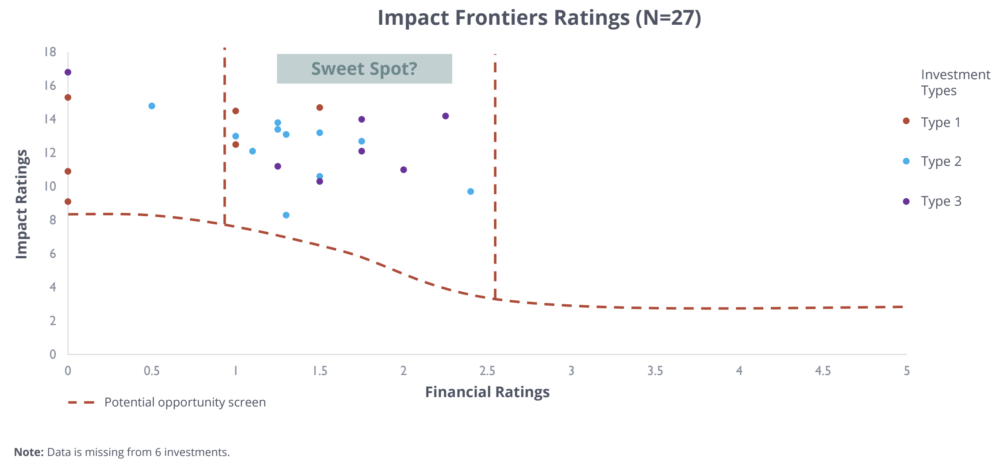
Clear about the impact outcomes they were looking for from a portfolio, cohort members then determined which metrics would support attainment of those outcomes. They developed custom frameworks that combined data points, research and analysis to score investments on social and environmental metrics, and then plotted impact metrics against a relevant-to-them financial metric, such as return on equity. 

These were custom frameworks that worked for their portfolios – for example, some examined carbon intensity, others the number of new jobs created, and others how well an investment increased the resilience of the local food system.  

Cohort members found that a key benefit of this work was its wide applicability and understandability:

  • Process was widely applicable. While metrics and resulting graphs were different, cohort members found the process applicable and helpful for everyone. Large asset managers with many varying funds were able to develop a flexible assessment that could be piloted with one fund and then extended across to others. Managers with small staff teams were able to develop a framework that would not be too onerous to maintain.  
  • Results were widely understood. Cohort members found that the final graphs helped colleagues see and understand impact, and how it could continue to be measured alongside financial performance, supporting company buy-in. Other members found the graphs demonstrated that positive impact contributes to the success of a business – which is valuable when speaking with potential investors.

Portfolio Snapshot

Challenges

Cohort members pointed out several challenges to measuring impact. Many gaps in data, even with more established commonly used metrics like GHG emissions, presented a common challenge, as did inconsistent reporting expectations. But a challenge is sometimes also an opportunity. Several cohort members found the problem of data gaps could be minimized by incorporating a more qualitative approach into scoring and even using storytelling. 

Tips for all Investors

  1. Work with and learn from others. While impact measurement is an emerging field, there is a robust global community of expertise. Working with others within your own team or within wider impact measurement networks is incredibly useful. Different perspectives and experiences will be handy as you experiment, test and roll out a new integrated impact-finance methodology.  
  2. Break away from a siloed perspective. Leading investors examine impact right at the start of their due diligence, and from all angles – company products as well as operations, negative as well as positive impacts, and the interconnection between stakeholders that may affect impact. 
  3. Do. Then Re-do. It’s worth remembering that once an impact scoring framework has been made, it’s not set in stone. New learnings and data will, and indeed should, refine and modify the framework over time. 

It is Worth Doing

The hard work to integrate impact is worth it, not least because it meets the growing calls for more transparent, robust and understandable impact measurement, management and reporting in Canada’s investment sector. 

The recent 2022 Canadian Responsible Investment Trends Report confirmed there is growing demand for sophistication and more vigilant reporting within responsible investing. The measuring of impact brings that sophistication and vigilance into portfolio creation and reporting, which help managers to ward off concerns around greenwashing, which continue to shape ESG investing.  

The approach for integrating impact is adaptable and flexible and works even for those new to impact. And while  there are and will continue to be challenges,these are manageable and should not stop you from progressing today on your impact measurement work.

Overall, cohort members learned that relationships between impact and financial risk and return can be analysed empirically and managed proactively. Doing so enables investors to improve their impact performance while meeting their financial goals, set more comprehensive goals for their portfolio and communicate more clearly with colleagues, investors and stakeholders about impact and financial performance.

A Note about the Impact Frontiers Canadian Cohort

The cohort of asset managers and owners were enrolled in the Impact Frontiers program in Canada from spring 2021 to fall 2022. The cohort was made up of participants from large and small asset managers and owners, managing portfolios of varying asset classes, including Anthos Fund & Asset Management, Builders Vision, Cofra Holding, Desjardins Investments, Fair Finance Fund, Foundation of Greater Montreal, Mackenzie Investments, The McConnell Foundation and Raven Indigenous Capital Partners. The Canada cohort was motivated to join and learn from a global network of Impact Frontiers practitioners who are leading impact measurement and management efforts. 

Additional Resources:

  • https://impactmanagementplatform.org/ – A collaboration between leading providers of sustainability standards and guidance, this website offers many resources to support the practice of impact management 

Contributor’s Note
Rally Assets is an impact investment management and advisory firm. Rally Assets and Impact Frontiers worked with many partners including the RIA to deliver the Impact Frontiers program in Canada. This article brings together ideas from many of the cohort members

RIA Disclaimer
The views and opinions expressed in this article are solely those of the authors and do not necessarily reflect the view or position of the Responsible Investment Association (RIA). The RIA does not endorse, recommend, or guarantee any of the claims made by the authors. This article is intended as general information and not investment advice. We recommend consulting with a qualified advisor or investment professional prior to making any investment or investment-related decision.
The Inflation Reduction Act: A Deepdive for Responsible Investors

The Inflation Reduction Act of 2022 (“IRA”) was passed in the United States in August of 2022 and despite its name, is in fact a dramatic benefit for climate change and clean energy project investment. We believe that the large tax credit programs and grants for clean energy investing in the IRA will provide a significant tailwind for the companies we invest in for our mandates that are focused on the energy transition. There is an important alignment between the enhanced investment opportunities created by the IRA, and the various components of the act that are designed to deliver the reduction of US carbon emissions by about 40% by 2030 from 2005 levels.

National Versus International Impacts

The IRA is a domestic program designed to spur USA economic activity and jobs in clean energy investing and carbon reduction. As a result, there were some early concerns expressed in the media by other countries that the IRA was essentially protectionist, by focusing on the USA domestic industries. In reality, we believe countries need to start at home to have a positive impact on climate change while augmenting industrial activity and building a green economy skill set. Other countries are doing the same, but the IRA is so impactful that it will likely spur competition among countries as they seek to make themselves as attractive a place to invest as the USA and introduce their own version of an IRA. This could increase available government incentives in many countries, which will increase investment activity in emissions and carbon reduction which is good for the global energy transition and the climate as well as providing additional investment opportunities for our portfolios.

Our mandates look globally for companies that are helping drive the energy transition towards a more sustainable future. Most of the companies we invest in operate internationally or rely on global supply chains. The US IRA comes at the same time as supportive initiatives in other countries, such as China’s 14th Five-Year Plan and market reforms, and the REPowerEU plan which are driving a dramatically increased forecast of renewable capacity expansion by the International Energy Agency (the “IEA”) as published in May 2022. The IEA sees renewables growing by almost 2400 GW over 2022-2027, which is equal to the entire installed power capacity of China today and is 30% higher than the forecast in the 2021 IEA report. The Russian invasion of Ukraine in February 2022 also had an impact on increasing renewables growth as energy security came into focus. A significant portion of this expansion of renewable power capacity will come from the public companies that we invest in, directly translating to the potential for revenue growth and strong investment returns if we identify the companies best positioned to take advantage of the supportive environment. Already we have seen increasing growth projections, supported by the IRA, in solar panel and tracker manufacturing as well as hydrogen.

Long-Term Investment Benefits

In a global context, the IRA is unique as it provides long-term policy visibility as it is in place for ten years. This is particularly beneficial for USA wind and solar projects which are seeing extended tax credits until 2032. Permitting reform is also part of the IRA which should assist in all areas of renewable energy development. This longer-term policy clarity allows for project investment decisions to be made that lower risks, reduce costs and enhance returns in companies that we are considering for investment. The IRA contains a hydrogen production tax credit of up to $3/Kg, which will drive investment growth in this area that we think is a key opportunity as our mandates look at hydrogen in the local context, providing opportunities for local sourcing and use. Hydrogen is still very early stage and the IRA production tax credit is helpful, but we remain diligent and selective on which companies and projects meet our investment criteria.

Investors, including us, typically prefer certainty. The duration of the IRA is attractive as it allows for planning and implementation of projects across  potentially different Administrations. Permitting facilitation as well as clarity on domestic content should  speed project development. The IRA is the most extensive investment in climate in US history and investments are just being planned to capitalize on $269 Billion of tax credits and subsidies towards renewable energy, clean fuels, carbon capture and storage, hydrogen hubs and electric vehicles that results in massive greenhouse gas reduction and investment in low or no carbon energy. The largest near term beneficiary is the power sector with provisions for rapid development of wind and solar in the next decade. We see opportunities in utility scale wind and solar as well as for solar in residential and commercial & industrial applications. The IRA, with clarity on the domestic content requirements, should make these projects economically attractive in many more jurisdictions in the USA which allows us to expand the companies and jurisdictions in which we invest.

Notable Features of the IRA

As clarity comes regarding the utilization and applicability of the tax credits, the companies initially expect that they can keep most of the benefits for themselves, rather than sharing with consumers. This is addressed in the IRA in the form of social adders which are passed on to consumers, focused on lower income populations and solar energy. In addition, the IRA will help consumers with direct utility bill rebates in 2023. This provides us confidence in incorporating the supportive features of the IRA in our investment analysis and investment thesis on companies. We typically build in a margin of safety in our assumptions when we set our expectations for companies, but these additional features of the IRA reduce the risk that regulators will recapture any of the investment upside potential in the future. Other questions include qualification for items like production tax credits, which have a domestic content requirement. We don’t yet know the details on domestic production, whether it has to be fully or partially produced in the USA or simply assembled. Despite this, there are already discussions underway regarding increasing USA polysilicon crystalline capacity and battery manufacturing, among other opportunities that we are following closely.

The IRA is unique with its “all carrot, no sticks” approach that provides numerous subsidies to kickstart investment and  there are no items like cap and trade or carbon taxes in the legislation to jeopardize or reduce investment. This supports growth and jobs and doesn’t penalize anyone. Our assessment of the act is that it has many features that can contribute to improving the sustainability of the US economy, while providing attractive investment opportunities in specific companies and projects. The implementation of these projects may not actually reduce near term inflation, but we believe it will certainly improve the reputation of the USA on the world stage and increase the size and speed of investment in carbon and emissions reduction businesses across the USA and, with competing incentives, in other countries around the world. A win-win for society and for our investment efforts for our clients.


RIA Disclaimer
The views and opinions expressed in this article are solely those of the authors and do not necessarily reflect the view or position of the Responsible Investment Association (RIA). The RIA does not endorse, recommend, or guarantee any of the claims made by the authors. This article is intended as general information and not investment advice. We recommend consulting with a qualified advisor or investment professional prior to making any investment or investment-related decision.
Indigenous Rights and Reconciliation are Material: How Can Investors Support Due Diligence?

Investors across the country recognize the importance of ensuring Canada’s transition to a net-zero economy distributes the benefits and challenges fairly among Canadians—often referred to as a Just Transition. At the center of the discussion are Canada’s Indigenous peoples, who have historically been excluded from the benefits of Canada’s economic successes, while also bearing the brunt of its environmental and social fallout. For investors today, this translates to Indigenous rights and reconciliation risks and opportunities related to their investments. 

With Canada’s mining sector expected to grow to meet demand for the minerals and metals to green the world’s infrastructure, investors have to evaluate how companies are considering Indigenous reconciliation and rights issues in the near term. For example, as recently as October 2022, an Australian company walked away from two mining projects in Quebec due to opposition from the Kebaowek First Nation. There are various ways that these are material to investors, making improvements to related disclosures from issuers essential.

Why Corporate Disclosures on Indigenous Rights and Reconciliation Are Material

The moral case for ensuring Indigenous communities and their lands are treated appropriately is clear and self-evident for investors of all types; the Truth and Reconciliation Commission provides a historical account of past and ongoing atrocities committed against Indigenous peoples. The “business case” for investors is also substantial. It includes several key considerations:

  1. Delays – delays on large mining projects from failing to account for the impact of development on and near indigenous lands can cause major financial losses. Perhaps one of the most famous examples is the Dakota Access Pipeline (DAPL), originally estimated to cost $3.8 billion USD, which ended up costing the Energy Transfer Partners (ETP) closer to $7.5 billion. In its own court filings from the period, ETP estimated a year’s delay on the project would cost $1.4 billion, and even a temporary delay at $430 million, with demobilization costs alone $200 million. 
  2. Public perception and partnerships – during the DAPL case, over $5 billion was divested from banks which funded the pipeline. Individual account holders, Indigenous tribes, and cities such as Seattle divested from Wells Fargo and other banks over concerns about the lack of responsiveness to Indigenous claims. 
  3. Share prices – when it became clear via a lawsuit from the B.C. Court of Appeal that Minera San Rafael, a subsidiary of Pan American Silver operating in Guatemala, was not disclosing opposition from the local Indigenous Xinca communities, share prices fell from $27 to $5.
  4. Lawsuits – A string of lawsuits resulted from the above case, along with the suspension of the mining activities by the Guatemalan court. Legal disputes continue beyond Canada’s borders, with ongoing attention to international subsidiaries headquartered in Canada. 

Many investors may still require guidance on how to ensure these issues are reflected in a company’s disclosures and in their investment decisions.

Approaches to Improving Indigenous Rights and Reconciliation Disclosures

A key step for many investors to consider is company Reconciliation Action Plans. These plans lay out clearly and publicly an organization’s goals and roadmap for how they will engage and collaborate with Indigenous communities, often in the context of key frameworks, including:

Reconciliation Action Plans are an important tool that investors can request and review to see how a company is progressing in its work towards improving Indigenous disclosures and beyond. Investors should look for quantifiable goals, clearly disclosed methodologies, and mechanisms that provide regular updates so stakeholders can gauge progress. Investors can ask follow-up questions even if no Reconciliation Action Plan is available, including how and where these and other frameworks are addressed. 

Further questions investors can ask of their asset managers and issuers:

  • What has been submitted to regulatory bodies/government or other third parties with respect to Indigenous permitting and disclosures? Where can investors and the public access this information?
  • What issues have been flagged when carrying out due diligence with respect to Indigenous rights, title and lands? How is the company addressing them?
  • How are subsidiaries and contractors/subcontractors accounted for and involved in this work? What are the processes and where is the reporting to ensure they also comply with the above?

While legislation which reflects much of the issues above may arrive soon in Canada, investors need not wait. The moral and business case is clear for investors. Asking these questions is a first step to ensuring due diligence in Indigenous rights and reconciliation disclosures, and ensuring material considerations for communities and portfolios are successfully managed.

We thank Joseph Bastien and the Reconciliation and Responsible Investment Initiative (RRII) for their contributions to the research involved in this article.

How Investors Can Amplify Human Rights Issues at Information and Communications Technology Companies

Human rights are fundamental – the bedrock of society. Yet, our society is constantly confronted with risks to those rights, and digital rights issues have been prominent in this discussion. 

In this dialogue, Michela Gregory of NEI Investments and Anita Dorett of the Investor Alliance for Human Rights discuss the benefits of investor collaboration on human rights issues, especially in the information and communications technology (ICT) sector. 

The Investor Alliance for Human Rights is a collective action platform for responsible investment that is grounded in respect for people’s fundamental rights. Investors have a responsibility to respect human rights, in accordance with the UN Guiding Principles for Business and Human Rights. The Investor Alliance has published the Investor Toolkit on Human Rights specifically for asset owners and managers to address risks to people posed by their investments. This toolkit provides the building blocks for investors to create their approach to addressing human rights risks within their organization and in relation to their investment activities.

Anita: Collaborating on human rights issues brings many benefits. By sharing knowledge and experience, investors can increase their understanding of human rights risks connected to portfolio companies, and how this is critical to long-term portfolio value. Collaboration increases investors’ leverage to push companies to undertake human rights due diligence that will enable rights-respecting business practices. It allows investors to engage with a broader set of portfolio companies through using shared resources.

The Investor Alliance also provides a platform for investors to converse with civil society organizations advocating for adversely impacted rightsholders. This collaboration provides insight into the human rights risks and resulting harms that will help inform investors’ engagements.  

Michela: In the course of our engagements, one challenge we’ve noted is that company attitudes toward human rights engagements can vary greatly. For investors to fulfill their responsibility to respect human rights, they must understand how their portfolio companies are responding to potential and real human rights impacts, and investors (and other stakeholders) are asking for robust reporting. 

Sometimes companies who may be ahead of their peers in addressing human rights impacts are more inclined to limit their public disclosures. Others may have strong commitments, but their actions are hard to assess due to limited disclosure. Collaboration in multi-stakeholder forums can allow investors to amplify informed, clear asks of investees. This is especially important as we are still in the midst standardizing disclosure expectations, even with resources such as the UN Guiding Principles Reporting Framework that provide guidance

Anita: Disclosure is a critical point, particularly when we talk about gaps in disclosure. The growing influence of the ICT sector has reconfigured every aspect of our lives, especially following the COVID-19 pandemic.

For example, Meta’s business model relies almost entirely on advertisement revenue, accounting for almost 98% of its global revenue in 2020. Meta relies on artificial intelligence (AI) that uses algorithmic systems to deliver targeted advertisements. However, there is little public disclosure on how these systems operate to determine the ads a user sees, nor whether there are any potential or real resulting human rights risks.

This past proxy season, investors filed a proposal with Meta asking them to conduct a Human Rights Impact Assessment (HRIA) on their targeted advertising policies and practices. The proposal secured 23.8% of the vote, which represents over 77% of the “independent” vote, once shares controlled by the CEO are discounted. This should send a clear message to the company that investors are demanding more on human rights. Similar proposals asking for HRIAs on various aspects of business operations or relationships were filed at Alphabet and Amazon, also with strong support from independent shareholders.

Investors recognize that respect for people and planet is at the core of long-term value creation. Assessing human rights risk in their portfolio requires investors to ask their portfolio companies to do the same. Companies should take an iterative approach to ensure their decisions on all aspects of operations and value-chain relationships account for and prevent adverse impacts on stakeholders and rightsholders.

But uptake of human rights due diligence has been slow and disappointing. The Corporate Human Rights Benchmark, which assesses the human rights performance of the 230 largest publicly traded companies in high-risk sectors, revealed that as of 2020, nearly half the companies scored zero on all five human rights due diligence indicators. More than 200 global investors representing over US$5.8 trillion in AUM, brought together by our organization, sent a statement to 106 companies calling for urgent action to implement human rights due diligence. Some investors indicated that in the absence of improvement, they would be prepared to invoke the proxy process to motivate laggards.

Michela: Even as we see more disclosure on human rights commitments, there is still much that companies are not disclosing about how they are implementing policies. Disclosure can help investors verify the type of action companies are taking on human rights issues. This is becoming an expectation, as we see regulations being passed in jurisdictions such as the European Union. 

Collaborating with like-minded investors positions us and companies for more mutually effective engagements. Of course, one of the key asks is for more disclosure around how companies are actioning their human rights commitments and policies. Through collaboration, we can increase our ability to make a meaningful impact.


RIA Disclaimer
The views and opinions expressed in this article are solely those of the authors and do not necessarily reflect the view or position of the Responsible Investment Association (RIA). The RIA does not endorse, recommend, or guarantee any of the claims made by the authors. This article is intended as general information and not investment advice. We recommend consulting with a qualified advisor or investment professional prior to making any investment or investment-related decision.
There’s More to ESG Than the Environment: Advisors Going Beyond Emissions

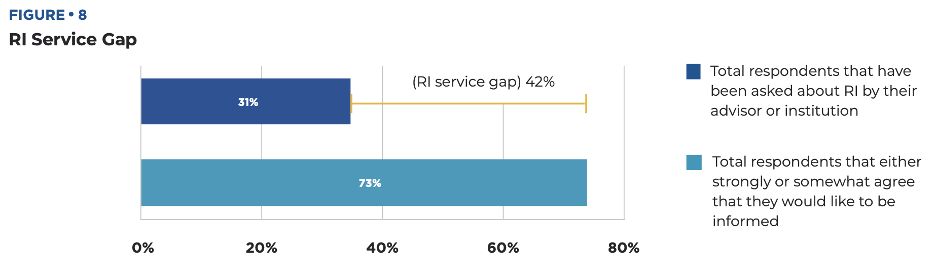
Over the past decade, interest in environmental, social and governance (ESG) has soared – with responsible investments (RI) accounting for more than 62% of all professionally-managed assets in Canada, according to the Responsible Investment Association (RIA) of Canada¹. Yet, many advisors are hesitant to bring up ESG with their clients. An RIA-led investor opinion survey found that 77% of investors want their advisors to talk to them about responsible investing, yet only 27% reported having had those discussions with their financial professionals².

If ESG is becoming a bigger part of the investing conversation overall, why aren’t more advisors bringing sustainability up to their clients? The problem is that ESG is still largely misunderstood, with many in the investment industry struggling to see beyond the E. 

Emissions are only one piece of the puzzle

To many, ESG is thematic, often seen exclusively through the lens of climate change. Journalists and experts have criticized ESG for having unclear goals, inconsistent measurement and too many objectives to be meaningful. One story goes so far as to say that ESG should be distilled into one simple measure: emissions.

While defaulting to the environment and even emissions is understandable – emissions are the most easily quantifiable ESG factor – that’s an extremely narrow view. If emissions were the only consideration, portfolios would be heavily weighted toward clean tech, alternative energy, and other climate-focused concerns. This also assumes investors only care about the environment, but social and governance issues, such as gender balance in the boardroom or fair labour practices, are also top of mind for many Canadians. 

Unlock value with ESG

ESG has long evolved from being a vehicle solely used to align investments with investor values. It’s now far more holistic. A large focus in ESG is on reducing risk and identifying emerging opportunities, which is one of the central reasons institutional investors have integrated it into their investment processes. 

Boston Consulting Group (BCG) notes that ESG appeals to sophisticated investors because it blends financial accounting requirements with non-financial performance metrics, which can not only help the planet and the greater good, but also help investors achieve their financial goals. 

Does ESG hurt returns?

Some investors may be concerned about whether ESG metrics hurt returns amid heightened market volatility, but the data doesn’t justify those fears. According to RIA, the MSCI Canada ESG Leaders Index has outperformed the MSCI Canada Index over the long term. 

We believe this is because ESG, which is a lens under which all companies can be viewed, enhances the investment process by providing an additional filter to screen out bad actors, assess risks and identify opportunities. ESG integration does not need to be considered an investment style in and of itself. 

Investors increasingly recognize that governments and regulators will continue to impose stricter rules, particularly around harmonizing climate-related disclosures. As those regulations come into focus, companies that haven’t taken issues like climate change seriously risk exposing themselves to stiff penalties and potential lawsuits that can cut into their bottom line. 

Companies take note: ESG continues growth in Canada

Canadian companies are taking this seriously. According to a 2021 report by Montreal-based ESG consulting firm Millani, more than 70% of companies on the S&P/TSX Composite Index now have dedicated ESG reporting, up from 36% in 2016 – including some energy companies. 

The increased interest shouldn’t come as a surprise. According to an Ipsos survey conducted between August 27 and 30, 2021, two-thirds of Canadians consider ESG factors important when deciding on investments³. The desire for RI is even more pronounced among up-and-coming investors, with 71% of people aged 18 to 34 taking ESG factors into account. 

If companies are going to succeed – both from a revenue and share price increase perspective – they will likely need to prove to their customers that they care about ESG issues. 

More education and discussion needed

If these misconceptions are going to change, more education is needed. A study by the Ontario Securities Commission found that a third of investors say access to ESG information helps them make better investment decisions. Many investors are still unfamiliar with ESG, so advisors who can educate have an opportunity to improve their value to their clients.

Perhaps a good place to start is to underscore that there is more to ESG than climate change. 

As values shift around environmental and social issues, it will open new industries like electric vehicles, new markets such as carbon credits and create opportunities for overdue themes to thrive, such as welcoming more women into leadership roles.

For advisors who want to continue to deliver value to their clients, it is important to think beyond the “E.” As BGC notes, the innovations and investments being made by companies looking to improve in all three ESG categories could inject trillions into the global economy by 2050. By applying an ESG lens, investors will be in a better position to identify these companies and participate in potential investment returns. 

It’s time for the investment industry to look at the wider implications and potential of ESG to identify opportunities for how it can help manage risk. Not every investor will share the same values, so it’s up to the advisor to bring up ESG with their clients and determine where they are on the ESG spectrum. As an advisor, you don’t have to pick sides, you just need to focus on the big picture.

Notes:
[1] As of December 21, 2019
[2] As of September 2021
[3] As of November 2021


Contributor Disclaimer
The viewpoints expressed by the Author represent their assessment at the time of publication. Those views are subject to change without notice at any time without any kind of notice. The information provided herein does not constitute a solicitation of an offer to buy, or an offer to sell securities nor should the information be relied upon as investment advice. This communication is intended for informational purposes only.

BMO Global Asset Management is a brand name under which BMO Asset Management Inc. and BMO Investments Inc. operate.

®/™Registered trademarks/trademark of Bank of Montreal, used under licence.

RIA Disclaimer
The views and opinions expressed in this article are solely those of the authors and do not necessarily reflect the view or position of the Responsible Investment Association (RIA). The RIA does not endorse, recommend, or guarantee any of the claims made by the authors. This article is intended as general information and not investment advice. We recommend consulting with a qualified advisor or investment professional prior to making any investment or investment-related decision.
The Role of Shareholder Engagement in Executive Compensation

Executive compensation is one of the most visible aspects of a publicly listed company’s corporate governance program and needs to be competitive to attract and retain executives. From a shareholder perspective, best practice is to align with financial performance and how well an executive delivers on the company’s strategic objectives.

Performance metrics have typically focused on financial or operational objectives and shareholder returns. However, as companies continue to place more emphasis on Environmental, Social and Governance (ESG) strategies, metrics tied to ESG performance or goals are increasingly becoming an additional element in executive pay. This creates an additional layer of evaluation for shareholders in deciding how to vote on Management Say on Pay (MSOP) proposals. 

ESG Accountability

Including ESG performance metrics into executive compensation planning is a relatively new development, although it is more common in larger companies versus smaller peers. In 2020, 57% of S&P 500 companies included ESG metrics in executive compensation plans, compared to 10% of Russell 3000 firms (excluding S&P 500 companies); as of the 2022 proxy season, 75% of TSX60 companies have incorporated ESG metrics into executive compensation or have noted an intention to do so within the year. These findings may not be surprising given larger companies tend to be further along in their ESG journey.  

Varying Applications

Many companies incorporate ESG performance measures into short-term incentive plans (STIP); in 2022 thus far, 68% of the TSX60 companies that incorporate ESG metrics in incentives do so only in the STIP, 27% include ESG metrics into both the STIP and the long-term incentive plan (LTIP), and 2% include ESG metrics only in the LTIP. Many of these companies use a scorecard approach, where various ESG metrics are grouped with other corporate objectives, typically without a specified weight. Others employ standalone weighted ESG goals, and some use ESG performance as a modifier to increase or decrease the entire payout.      

ESG metrics can be forward-looking, such as emissions reduction targets, or lagging indicators, such as health and safety performance or customer satisfaction scores. There are numerous ways companies can structure executive compensation goals. Investors would expect a company’s objectives to be relevant and significant to the business. Human capital and social issues comprised the majority of corporate ESG objectives, although 2022 saw an increase in the number of environmental and climate-related metrics added across sectors among large Canadian companies. 

Investor Considerations

With so much variation and limited historical precedent, below are some considerations for investors when engaging with a board around executive compensation:

  1. The board should be able to explain the rationale for choosing certain ESG metrics and goals, and how they align with the company’s business and financial significance.
  2. The board and compensation committee should be able to discuss why the ESG measures selected are incorporated into the specific compensation components, such as the STIP and/or LTIP.  Backward-looking operational metrics are typically considered short-term measures and likely better suited for the STIP, whereas forward-looking targets are reflective of the long-term vision, and more suitable for the LTIP. Too many ESG metrics could indicate a lack of focus and come at the expense of other important business goals, while an emphasis on operations based ESG objectives only may be insufficient to incentivize the progress needed to address ESG objectives.    
  3. The board should be able to articulate its governance oversight process to monitor the selected ESG metrics

The ESG measures and goals chosen should be supported by data that is accessible and transparent to stakeholders. Many companies include human capital objectives, such as diversity and inclusion (D&I) and employee engagement and culture. However, D&I disclosures are still an area for improvement for many companies, and corporate culture remains intangible. Having clear measures helps shareholders understand how ESG performance is aligned with executive compensation.  

Inclusion of ESG metrics in executive compensation is a relatively new area and is nuanced and contextual to each company. Investor expectations and evaluation frameworks should continue to reinforce best practice principles such as pay-for-performance and transparency. 


RIA Disclaimer
The views and opinions expressed in this article are solely those of the authors and do not necessarily reflect the view or position of the Responsible Investment Association (RIA). The RIA does not endorse, recommend, or guarantee any of the claims made by the authors. This article is intended as general information and not investment advice. We recommend consulting with a qualified advisor or investment professional prior to making any investment or investment-related decision.
Are Railroads the Most Environmentally Friendly Solution in Freight Transportation?

According to the United States Environmental Protection Agency (EPA), the largest sources of greenhouse gas emissions in the United States are from burning fossil fuels for electricity, heat, and transportation. The Transportation sector generates the largest share of greenhouse gases (GHG) at 27% of the total emissions from the economy, followed by Electric Power (25%), Industry (24%), Commercial and Residential (13%) and Agriculture (11%). 

The Transportation sector includes the movement of people and goods by cars, trucks, trains, ships, airplanes, and other vehicles. Zooming down into freight transportation specifically, medium-and-heavy trucks accounted for 26% of the total sector GHG emissions, while railroads accounted for just 2%. The GHG emissions mostly emanate from the combustion of fossil fuels for propulsion, and diesel is the most widely used fuel for freight transportation. 

As an active fundamental asset manager we have remained a significant investor in the railroad sector for many years. We see two key ESG considerations when analyzing the railroad sector. Firstly, for a given amount of freight, railroads are a relatively low GHG emission method of transportation.  Secondly, the industry has many initiatives to reduce its GHG emissions profile. We think that favourable and improving environment footprints supports the performance of the industry over time. We also continue to support the many ongoing de-carbonization efforts of the freight industry through active engagement, and we see the potential for attractive risk-reward opportunities by providing capital for those de-carbonization initiatives. 

Railroads are the Most Fuel-Efficient Way to Move Freight Over Land

On broad-based measures, the Association of American Railroads (AAR) estimates that freight railroads are 3-4 times more fuel efficient than trucks, on average. The trade group further estimates that moving freight by train instead of truck reduces greenhouse gas emissions by up to 75%. 

A more extensive study was carried out by the Department of Transportation (DoT) in 1991 by running simulations to compare rail and truck between the same origin-destination locations. Although the study is dated, both rail and truck technologies have improved since, and as such we believe that the broad findings remain relevant to this day. The DoT study found that rail achieved from 1.4 to 9 times higher fuel efficiencies (ton-miles per gallon) than competing truckload service. Rails compete most directly with the highway in moving shipping containers. In this category, rail was 2.51 to 3.43 times more energy efficient than comparable truck moves. The study also found that the fuel efficiency advantage of rail over truck increases as distances increase. 

Rails have vastly improved their operations since the publication of the DoT study, which have led to meaningful improvements in fuel efficiency. First, the industry has pivoted to a precision railroading operating model, which involves running longer trains at scheduled times. This means trains spend less time idling, and fewer assets are required to move the same amount of freight. Second, rails have invested heavily in creating network capacity by adding more sidings and double-tracking key corridors. These investments have improved dwell times and have led to an overall improvement in fuel efficiency. Third, locomotive engines have become more fuel efficient and technologies such as distributed power have further amplified these gains. Finally, adoption of ancillary technologies such as automated inspection portals, inspection cars, and others, continue to enhance the fluidity of railroad networks and unlock additional fuel efficiency gains. 

Renewable Fuel Blends to Unlock the Next Leg of GHG Reduction

Canadian National Railroad was one of the early adopters of the precision scheduling railroading model and has been an industry leader since in terms of environmental leadership. On the back of these initiatives, the company has been able to reduce its GHG intensity by 43% in the 1993-2020 timeframe. Other railroads have been following a similar script and we expect the industry to converge to similar level of GHG intensity in the upcoming years.

Source: Canadian National Rail

We continue to see a long runway for further improvement. Based on our engagement with some of the major railroads, we expect the industry to be able to deliver 1-2% incremental improvement in GHG emissions intensity per year, on average for the next decade. We expect renewal of the locomotive fleet to be the biggest driver of the reduction, complemented by ongoing improvements in technology. 

Cleaner fuels, however, are expected to be the more meaningful driver and our conversations suggest that this initiative could reduce GHG emissions by another 3-4% per year, on average. The easiest opportunity remains in using sustainable renewable fuel blends in existing fleets to immediately realize these improvements.

Future Technologies Could Alter the Relative GHG Dynamics

Outside of incremental gains from opportunities discussed above, there is push underway to explore radically different propulsion technologies that could meaningfully alter the emission intensity of freight transportation in the future. These technologies are being developed and tested both on the trucking side and on the railroad side. 

Electrification of the North American freight network by building high-voltage catenary lines, integrating these to the power grid, and powering them with renewable power would be the most environmentally friendly solution. However, we estimate that the cost of electrifying the entire 140,000 mile U.S. freight network and replacement of the fleet of 24,000 fleet of locomotives could reach $1 trillion, which is likely prohibitive.

As such, we expect other propulsion technologies to remain the primary focus. The railroads are currently exploring battery electric, hydrogen fuel cell, and natural gas-powered locomotive designs. There is active testing of each potential solution by different North American railroads, however there remain several challenges to them that have to be overcome before they can become viable for widespread adoption. We will be following the testing of these potential solutions and their evolution closely as there could be attractive investment opportunities to facilitate their adoption. The opportunities could come from direct investments in the railroads themselves, but also in companies such as Ballard Power Systems that is developing hydrogen fuel cells for rail propulsion, or Wabtec that has designed battery powered locomotives. There could be attractive investment opportunities in the adoption of some of these solutions for lowering GHG emissions from rail freight. 

Investor proxy voting and engagement with companies and policy makers are also having an impact on the adoption of these potential solutions. As a large investor in the freight industry, our engagement and proxy voting efforts support ongoing de-carbonization of the industry.

It is worth noting that these technologies are also being developed and tested in trucking applications. The development of these technologies for trucking could perhaps even progress at a faster pace than for railroading given the larger total addressable market in trucking (bigger pie). Given these dynamics, we would expect the sizeable GHG efficiency advantage that railroads currently enjoy over trucking to perhaps narrow over the next decade. However, despite these gains, we don’t see the gap fully closing and expect railroads to continue to be a more environmentally friendly means to move freight for the foreseeable future. 


RIA Disclaimer
The views and opinions expressed in this article are solely those of the authors and do not necessarily reflect the view or position of the Responsible Investment Association (RIA). The RIA does not endorse, recommend, or guarantee any of the claims made by the authors. This article is intended as general information and not investment advice. We recommend consulting with a qualified advisor or investment professional prior to making any investment or investment-related decision.

Knowing What You Own: Fundamental Analysis and the Use of Proprietary ESG Ratings

Low correlation among third-party ESG ratings providers can be an important signal for investors. Relying heavily on such ratings could lead to very different portfolio outcomes, and differing opinions from third-party ESG ratings agencies can create confusion for clients or investors. This issue supports the case for not relying solely on ratings agencies and speaks to the importance of knowing what you own.

To know what you own, it is first necessary to develop an understanding of a company’s ESG characteristics through one’s own fundamental analysis. This is where proprietary ESG ratings can come into play and provide benefits for stakeholders. Many analysts may find a deeper understanding and analysis of all elements of “ESG” — environmental performance, social factors, and corporate governance practices — better enables informed opinions and engagement. For example, social factors such as diversity, equity and inclusion (DEI), labor/hiring practices, community involvement and reputational issues can be complex and difficult to capture in scores, yet they inform the overall analysis of a company’s attractiveness as an investment and lend themselves to close knowledge of a company and the industry in which it operates.

Expressing this analysis in proprietary ESG ratings, then, provides an internally consistent metric that is both quantitative and qualitative to help measure and analyze a company’s sustainability risks and opportunities. Investors doing this work themselves may see several benefits, including information advantages, risk-reward value and impact potential through benchmarking.

1. The Information Advantage of Proprietary ESG Ratings

Analyzing the ESG characteristics of companies involves using both quantitative and qualitative measures of what is most material and relevant to each company’s industry. In some cases, industrywide data is typically available, such as carbon emissions levels in the utilities sector or employee safety data in the industrials sector; in other cases, however, the analyst must derive primary company research from direct analysis. 

Published research and public disclosures factor into the formation of ESG ratings, but so too should face-to-face meetings and engagements with companies and industry-specific experience. This proprietary work helps determine which specific environmental, social and governance issues are relevant for each company (Exhibit 1). Direct conversations, in a dynamic and symbiotic dialogue with company leadership often over several years, can add perspectives that create an information advantage — one a fundamental analyst with deep knowledge of the company will also have an advantage in using. This information advantage is particularly important in the case of widely owned stocks that present complex sustainability stories, such as large tech platforms Amazon.com, Apple and Google.

Exhibit 1: ClearBridge ESG Materiality Framework™ Sample

Source: ClearBridge Investments

2. Proprietary Ratings Capture Risk-Reward Information, but Are Not Synonymous with It

ESG analysis, expressed in a rating, should be a critical part of the normal due diligence performed in fundamental analysis, which we do as part of our process to help find quality companies with sound fundamentals. At the same time, ESG ratings may highlight ESG-specific factors to be better compared and understood.

Although ESG ratings factor into investment recommendations, ratings by themselves are not recommendations to buy or sell a stock. Nevertheless, we have found they contribute to performance. In recent studies of performance and fundamental characteristics of ClearBridge’s ESG-rated stocks published with the UN-supported Principles for Responsible Investment (PRI), we found that higher ESG-rated stocks: 

  • Outperformed the market more frequently than lower ESG-rated stocks. 
  • Generated higher risk-adjusted returns (as measured by their Sharpe ratios) than lower ESG-rated stocks, with AAA and AA stocks generating higher risk-adjusted returns than the S&P 500 Equal-Weight Index. 
  • Generated higher alpha than lower ESG-rated stocks after accounting for common factor exposures including market beta, size, value, momentum and quality.

These studies show how a proprietary ESG ratings system developed by fundamental investors appears to contribute to performance and have an added benefit beyond that which could be explained by common quantitative factors and fundamental financial metrics. 

3. Benchmarking for Impact

Proprietary ESG ratings are a tool to communicate to portfolio managers our confidence in or expectations for progress on ESG issues. In addition to informing the investment decisions of portfolio managers, these also guide how we use client capital to seek to make an impact in the companies where we invest. 

In sectors where proprietary research has identified an industry leader in sustainable practices, labor and workplace policies or other ESG factors, we will often use that company as a benchmark for quantitative and/or qualitative comparison. We also share best practices during company engagements, recognizing companies may benefit from ideas we offer and feedback we provide on key issues. Examples include feedback on DEI disclosure to help contribute to managements’ understanding of their employee talent pool; recommendations on executive compensation pay practices; and support for decarbonization strategies being employed sooner rather than later. 

Third-party ESG ratings can be a valuable input, of course, and there are many innovators in responsible investing helping improve the quality of data and deepen the ESG knowledge base. But insofar as ESG ratings can benefit from fundamental analysis, which offers information advantages, captures risk/reward information and underpins engagement, developing them primarily from one’s own fundamental analysis makes a lot of sense.


RIA Disclaimer
The views and opinions expressed in this article are solely those of the authors and do not necessarily reflect the view or position of the Responsible Investment Association (RIA). The RIA does not endorse, recommend, or guarantee any of the claims made by the authors. This article is intended as general information and not investment advice. We recommend consulting with a qualified advisor or investment professional prior to making any investment or investment-related decision.