Lithium: A Circular Economy Perspective for ESG Investment and Stewardship

The race to achieve net-zero emissions presents a challenge and opportunity for the circular economy, which applies regenerative design thinking to economics and aims for sustainability.

To reach net-zero greenhouse gas (GHG) emissions by 2050, big shifts are underway. While alleviating climate change is paramount, transitioning to a low- or no-carbon economy may include activities with other potentially negative impacts if not adequately managed.

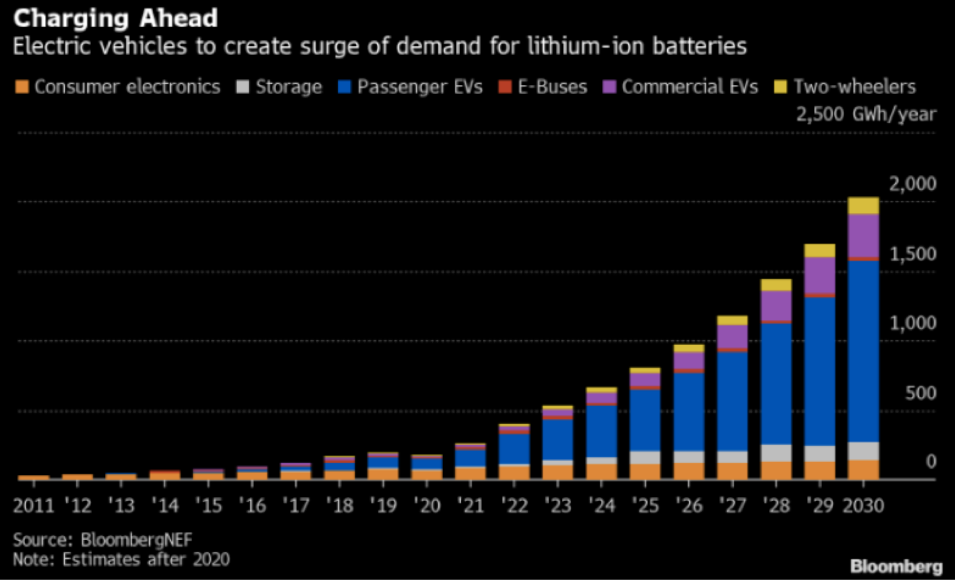
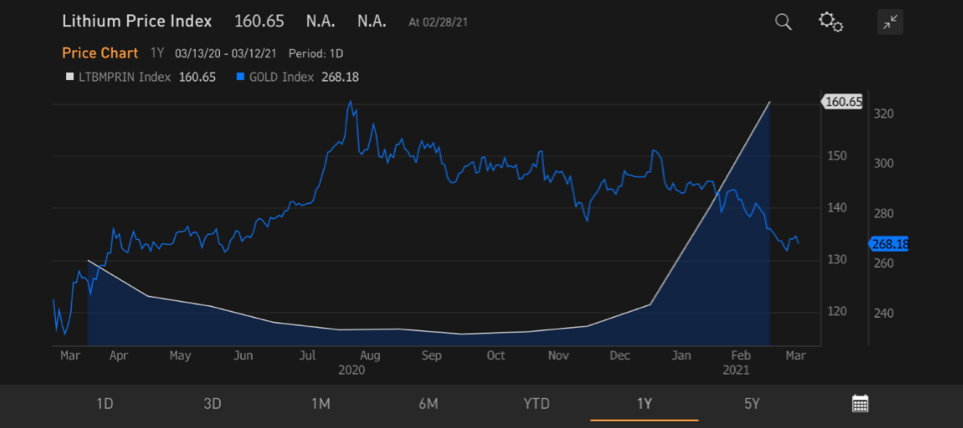
For example, with transportation accounting for 15% in global GHG emissions at the end of 2019, adopting battery-powered electric vehicles (EVs) will help achieve climate objectives. EV sales increased by 54% year-over-year in 2020 despite the COVID-19 pandemic, and demand for lithium-ion batteries is expected to grow 1030% by 2030, as per Bloomberg estimates. This isn’t surprising given existing and upcoming regulations across different regions, such as China’s 13th Five- Year Plan and the emissions reduction schemes of California and the European Union.

Source: Bloomberg Finance LP, as of March 13, 2021
However, investors in battery manufacturers and car makers, as well as direct investors in renewable projects, should consider the environmental and social impacts of lithium to ensure companies in their value chain address these challenges sufficiently.

Lithium production, water consumption and contamination

One car battery requires 6,000 gallons of water. The South American triangle which covers parts of Argentina, Bolivia and Chile holds more than half of the world’s lithium supply. South America is also one of the Earth’s drier places. In Chile’s Salar de Atacama, mining activities consume 65% of the region’s water, compromising the water requirements of farmers and other activities.[1] This could cause community opposition and companies can lose their operating license.

Lithium extraction also uses harmful chemicals. According to the International Chemical Secretariat, lithium mining produces 17 chemicals, including brominated flame retardants [2]; these are cited on the list of hazardous chemicals, raising the possibility of restricting their usage. These chemicals harm aquatic life and water quality, affecting communities and their water supplies as they cause air and soil pollution.

The emission intensities of nitrogen oxide (NOx) and sulfur oxide (SOx) of the specialty chemicals company Albemarle, for example, are significantly higher than other specialty chemical companies in the MSCI ACWI index.[2] Companies can incur liabilities if they don’t manage contamination risk.

In addition, if not properly recycled, rechargeable batteries create environmental damage. Once in the landfill, these substances contaminate groundwater, soil and air.

Recycling opportunities

With strong tailwinds in battery demand and contamination risks, recycling offers an opportunity. Reports indicate the market for battery recycling will reach $137 million by 2027 in North America. Most of the current recycling occurs in the consumer sector; however, given the electrification trends in numerous sectors, this growth number can be higher.

GHG emissions of EVs

From mining and transportation to battery manufacturing, shipping and car manufacturing, EVs have their own carbon footprint. Many companies are working with their suppliers to reduce Scope 3* emissions by adopting renewable energy in their operations. Scope 3 emissions constitute over 90% of the GHG inventory of an automotive equipment manufacturer. However, progress on Scope 3 emissions remains preliminary.

A circular economy approach

Shareholders, direct investors and creditors of companies involved in the EV supply chain can help adopt a circular economy approach to sustainability by taking into account these considerations:

Public market investors (shareholders and creditors):

  • Establish best practices in lithium supply chains through ESG analysis of operating companies.
  • Encourage research and development to spur innovations in reusing, recycling and disposal.
  • Adopt best practices in product stewardship programs and plans to phase out hazardous chemicals.
  • Encourage target setting for reducing harmful emissions. Key metrics to track can include GHG, NOx, Sox emissions and other effluents.
  • Understand the political and governance risks of the regions battery minerals are sourced from.
  • Integrate companies’ ESG performance into investment analysis and financial models (through a discount rate for ESG laggards to account for potential higher operational costs or litigation costs caused by negative environmental and community impacts).
  • Engage with companies to better understand their practices, targets, performance metrics, plans about minimizing environmental and social impacts, and research and development plans about sustainable technologies.

Direct/real asset investors:

  • Integrate ESG factors into project planning and development – e.g. initial impact assessments as well as free and prior informed consent.
  • Conduct regular environmental and social impact assessments, including effects on biodiversity and community resources.
  • Establish operational best practices and performance reporting on sector-relevant ESG issues, such as waste management, air emissions, health and safety practices and performance, ESG accountabilities in executive compensation, and skills diversity at board level.
  • Understand ESG risks in their supply chains.

By engaging with companies on issues and metrics that ensure a holistic view of their ESG performance, investors can help mitigate ESG bubbles created by specific themes and facilitate a just transition towards a net-zero economy.

Sources:

[1] Juan Ignacio Guzmán, Patricio Faúndez, José Joaquín Jara, Candelaria Retamal (2021), Role of Lithium mining on the water stress of the Salar De Atacama Basin.

[2] MSCI ESG Ratings report for Albemarle Corporation as of March, 2021

* Scope 1: Company direct emissions
Scope 2: Emissions from energy purchased by the company
Scope 3: Emissions throughout supply chain and final use of product/services

RIA Disclaimer
The views and opinions expressed in this article are solely those of the authors and do not necessarily reflect the view or position of the Responsible Investment Association (RIA). The RIA does not endorse, recommend, or guarantee any of the claims made by the authors. This article is intended as general information and not investment advice. We recommend consulting with a qualified advisor or investment professional prior to making any investment or investment-related decision.

Enabling Social Investment Opportunities Outside of Affordable Housing

There are seemingly not enough social impact investment opportunities to quench investor appetite in Canada.

If we remove the opportunities to invest in green energy, and instead analyze opportunities to invest in communities, we see very little by way of investment. Considering this state of the social impact investment landscape, how can investors intent on having an impact, fund opportunities that create lasting social change while generating a fair return?

The first step is becoming aware of the opportunities that currently exist across Canada. The fact is, social purpose organizations are lagging in creating social enterprises, programs and projects that can be funded through social impact investment. However, there are several organizations that have leveraged funding from Foundations and the Government to create viable investment opportunities:

Social Impact Funds

Organizations like Windmill Microlending and Access Community Capital have leveraged private debt to create micro-loan programs targeted to communities facing barriers.

Windmill Microlending provides microloans to help skilled immigrants and refugees continue their careers in Canada. This includes supporting clients to obtain the Canadian licensing requirements to work in their field, pay for exams, relocation costs and professional association fees. These financial supports are complimented by career advisory services that help clients choose the right path to achieve their professional goals, support navigating the Canadian financial system and ongoing mentorship.

Access Community Capital focusses on supporting emerging entrepreneurs with low-interest loans. These programs target marginalized communities that may not qualify for traditional financing and are supplemented by accelerators and coaching supports.

The wrap-around programs that organizations like this coordinate to support lenders, help to maintain high repayment rates. As organizations seek to broaden their community impact and create investment opportunities, targeted loan programs and funds will become more common.

Community Bonds

Organizations like Solar Share, the Centre for Social Innovation and more recently, Sketch Working Arts, demonstrate how community bonds are a form of debt financing that can activate individual community supporters and turn them into investors.

SolarShare is Canada’s leading renewable energy co-operative, developing commercial scale solar energy installations across Ontario. By leveraging community bonds, SolarShare enables retail investors to invest in these projects through a 5 -year “Solar Bond” that earns a 5% annual interest rate. The Ontario Government purchases energy from these installations on a 20-year contract, creating a stable revenue stream for the repayment of the bonds.

The Centre for Social Innovation (CSI) is a social innovation hub, providing a coworking space and incubator for social purpose organizations. In 2010, the organization raised $2 Million through community bonds to purchase their first building, CSI Annex. In 2014, the organization raised another $4.3 Million through community bonds to buy their second building, CSI Spadina.

Through early engagement with institutional investors, when structuring the bond, organizations have ensured that their offering can appeal to the investment goals of a wide range of stakeholders.

Online Investment Platforms

While still limited by the availability of investment opportunities, SVX has created an investment platform that promises to provide a single point of access raising capital and making investments for investors seeking social/environmental impact. As the number of charities, non-profit organizations, and social entrepreneurs creating investible opportunities increases, platforms like SVX will play an important part in highlighting investible opportunities.

While there are organizations that have stepped up to the plate as trailblazers in social enterprise, there are still challenges in bringing attention to viable opportunities. Beyond the social good that is generated, there is little incentive for investors to accept the below-market rate returns that many impact investment opportunities offer. In addition, the perceived risk of investing in social purpose organizations, can be a deterrent.

Federal, provincial and municipal governments have several tools at their disposal to make social impact investment opportunities more attractive and hold a key secondary role in creating a more active impact investment environment in Canada. Much like the incentive programs that spurred innovation in the green energy industry, and has resulted in more favourable investment opportunities, the government needs to take proactive steps in encouraging investors to support innovation and financial investment in the social sector. In Canada, this could include:

The creation of Opportunity Zones and Qualified Opportunity Funds

As highlighted by the Ontario Realtor Party, Opportunity Zones create a financial incentive to invest in economically distressed communities. In the United States, it was the 2017 Tax Cuts and Job Act that served to establish the Qualified Opportunity Zones program. Through the program, communities are nominated by a State and certified by the Treasury Department as qualifying for the program. The program then allows Investors to defer a capital gain and invest those dollars into Qualified Opportunity Zone Funds.

As the program is relatively young, it is too early to tell what the true impact these funds will have on under resourced communities. However, money from this program is being used in the United States to support investments across the country, including new housing, grocery stores, medical clinics, broadband infrastructure, and the creation of local innovation districts. Opportunity Zones have the potential to ensure that the communities most in need of support are being provided with equitable investment.

Guaranteeing Community-led initiatives and projects

To help lessen the perceived risk of investing in social impact opportunities, government agencies and non-government granting agencies could support organizations by becoming guarantors. A guarantor agrees to assume the obligation of some or all the debt if the borrower defaults. This would provide a level of protection against losses for investors wishing to invest in community-led initiatives and projects that have the potential to generate revenue. For agencies that routinely provide grant funding to organizations, becoming guarantors could be used to both encourage organizations to pursue investible opportunities and motivate investors to fund opportunities.

Incentivize Foundations to Increase their Social Impact Investment Portfolio

This year, there have been increasing calls for government to increase the disbursement quota (DQ) of charitable foundations to 10%. In recognition of both the increased pressure on non-profit organizations due to COVID-19, and the average annual rate of asset appreciation seen by foundations, calls for more support are justified. However, as discussed in the report released by the Task Force for Social Finance there is also an opportunity for foundations to increase the portions of their capital in Mission Related Investments (MRI). This can translate into social impact investment and can help translate into the greater social impact that advocates for an increased DQ would like to see.

While the opportunities to invest in real community impact are limited, they do exist. With a greater willingness from investors to explore unique opportunities, more proactive involvement from governments in making the opportunities more viable, and increased activity by the social purpose sector in creating opportunities, the ecosystem can expand rapidly.

It will take all parties thinking creatively and stepping a little outside of their comfort zone to create the impact that is possible.

RIA Disclaimer
The views and opinions expressed in this article are solely those of the authors and do not necessarily reflect the view or position of the Responsible Investment Association (RIA). The RIA does not endorse, recommend, or guarantee any of the claims made by the authors. This article is intended as general information and not investment advice. We recommend consulting with a qualified advisor or investment professional prior to making any investment or investment-related decision.

How to Apply an ESG Lens to Manager Selection & Oversight

Applying an environmental, social and governance (ESG) lens to an investment can turn up many things. It could, for example, reveal that a company’s approach to environmental sustainability is effective, or perhaps there are embedded risks that could challenge its business model. That’s why it’s worth asking the question, what would happen if you turned that same lens on an investment manager’s own approach to ESG?

Determining the extent of an investment manager’s commitment to ESG is increasingly important as it transforms from aspirations, to policies and ultimately systematic implementation. Today, an important proportion of investment managers have stated ESG commitments and are committed to raising the bar. Bloomberg estimates that based on a 15% growth rate (half the pace of the past five years), ESG managed assets in 2025 could represent more than a third of the projected US$140.5 trillion in total financial assets.

To start with, an analysis of an investment manager’s ESG approach may reflect how deeply the manager believes in meeting ESG targets, or implementing its ESG policy. Certainly, so-called ESG fundamentalists (investment managers that have thoroughly embedded sustainably as the only path towards financial security and wellbeing) are likely to follow a robust approach to including ESG factors in their analysis. Moreover, their ESG objectives would likely be supported by a clearly defined governance model. They may also enjoy strong backing of executive leaders with board-level accountability.

What should we look for to determine just how ESG-engaged an investment manager is? A track record of regular and ongoing ESG analysis of portfolios, as well as dedicated ESG resources, internal and external collaboration, formalized training programs and more.

It should also be evident that the values of the investment manager as a whole support ESG integration, which helps provide an enabling culture. Such a culture could further empower managers by encouraging them to integrate ESG considerations into all aspects of their investment decisions. And such staunch support can foster greater awareness and deliberation, and may lead to creation of portfolios with a greater degree of ESG integration.

However, even when supported at the corporate level, approaches to investing under an ESG umbrella can become blurred. For example, an increasing number of managers (public and private) are moving to broaden their offerings of lower carbon or decarbonized portfolios. For others, investments in areas like the energy sector may be viewed differently, depending on who is looking through the ESG lens.

This is because on one side, there are those who believe energy companies can contribute to the transition to a lower-carbon economy, given the scale of the industry and technology employed in it. For instance, development of carbon capture technology and the use of natural gas as a cleaner transition fuel as renewables are built out.

So on one side of the ESG equation, you could have managers who pursue carbon reduction or exclusion, while others take a nuanced view. From an investor’s point of view then, it’s important to understand why and how a manager factors in a multitude of intrinsically linked ESG considerations.

Assessing a manager’s philosophy around active stewardship can also be revealing. Indeed, exercising effective stewardship among the companies represented in a portfolio on behalf of investors, not only shines a light on investment culture, it also reveals the degree of ESG awareness that the manager has. A proactive approach to active stewardship may ultimately foster greater long-term resilience in a portfolio, benefitting both the investment firm and investor.

Ongoing Monitoring and Communications

ESG integration is a journey. Assessments thus necessitate ongoing monitoring of an investment manager’s actions towards systematically integrating ESG factors into its investment strategy.

This can include quantitative analysis of the portfolio. As well, third parties could be engaged to measure each portfolio’s ESG characteristics. This includes tracking how fund characteristics change, both over time and versus peers, to identify areas in which a fund appears to be departing from its stated ESG promise.

Transparency around how a manager reports on its ESG investment outcomes is also key to understanding both the company’s (as a whole) and individual manager’s approach. Determining if an investment firm has signed on to the United Nations-supported Principles of Responsible Investing (PRI) is a good place to start. Doing so requires a firm to clearly report their progress annually. In turn, the UN PRI will deliver another level of transparency by auditing and measuring their progress.

Finally, ask whether a company is contributing towards sustainable investment practices by sharing best practices with the broader investment community by taking part in various public task forces and participating in sustainable-oriented investing initiatives. Engaging more broadly on policy and regulatory issues on various systemic issues can move the dial, creating meaningful change and benefiting a multitude of stakeholders.

Investment manager checklist

In-depth analysis drives ongoing engagement activities

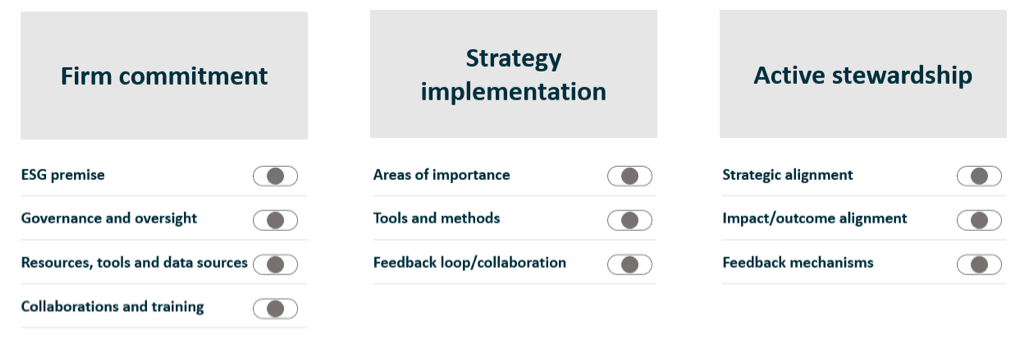
Investment manager checklist – assessing managers on their firm commitment to ESG, their strategy implementation and active stewardship.
Sun Life Global Investments, as a fund of fund manager, is in a unique position to observe and assess ESG practices and ESG evolution among managers. The ESG journey continues to unfold at an increasingly accelerated pace and collaborations are highly likely to become the new norm.

Contributor Disclaimer
Views expressed are those of the author and views expressed regarding a particular company, security, industry or market sector should not be considered an indication of trading intent of any mutual funds managed by SLGI Asset Management Inc. These views are not to be considered as investment advice nor should they be considered a recommendation to buy or sell securities. This article is provided for information purposes only and is not intended to provide specific individual financial, investment, tax or legal advice. Information contained in this article has been compiled from sources believed to be reliable, but no representation or warranty, express or implied, is made with respect to its timeliness or accuracy.
Sun Life Global Investments is a trade name of SLGI Asset Management Inc., Sun Life Assurance Company of Canada and Sun Life Financial Trust Inc.
© SLGI Asset Management Inc., and their licensors, 2021. SLGI Asset Management Inc. is a member of the Sun Life group of companies. All rights reserved.
RIA Disclaimer
The views and opinions expressed in this article are solely those of the authors and do not necessarily reflect the view or position of the Responsible Investment Association (RIA). The RIA does not endorse, recommend, or guarantee any of the claims made by the authors. This article is intended as general information and not investment advice. We recommend consulting with a qualified advisor or investment professional prior to making any investment or investment-related decision.

Need and Opportunity: What COVID-19 Revealed About Social Infrastructure

The global pandemic highlighted that many communities around the world lack the necessary facilities—things like accessible health care facilities and affordable housing—to combat threats like COVID-19 effectively.

Vibrant health care and education facilities, social housing, and buildings for civic services are often the bedrock of healthy and resilient communities. These social-purpose structures can contribute to economic growth and social cohesion, while providing essential services. Unfortunately, such facilities are underfunded in many countries. Better social infrastructure is needed to prepare for future global emergencies.

Public funding shortfall

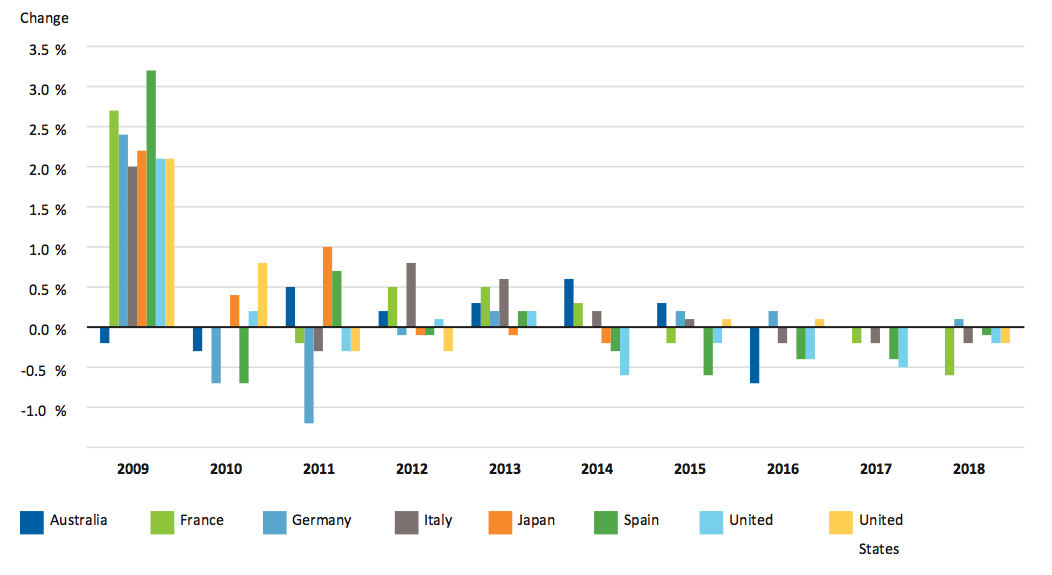
Public investments in social infrastructure dropped sharply after the 2008-2009 Global Financial Crisis, when austerity policies stifled capital flows, as seen in Exhibit 1.

Austerity’s Global Impact on Public Investments in Social Sectors

Exhibit 1: Social expenditure as percent of GDP in OECD countries, year-over-year change (USD)* (2009–2018)

Sources: Franklin Templeton, OECD, Macrobond. As of November 2020.
*Note: Australia did not report numbers 2017–2018; Japan did not report numbers 2016–2018.

A 2018 report from the High-Level Task Force on Investing in Social Infrastructure in Europe found the annual investment gap in this space is estimated to be at least €142 billion (US$167.7 billion).

Demographic changes such as aging populations also present a headwind for social infrastructure. In Europe, the share of people aged 65+ is projected to increase from 18.9% in 2015 to 29% in 2060. In Japan, where 28% of the population was 65+ in 2019, there are significant shortfalls in social infrastructure investments. The Asian Development Bank estimated in 2016 that Japan needs to invest ¥10.3 trillion–13.5 trillion to meet demand through 2030 for social infrastructure construction, rehabilitation, replacement and operations.

As countries move past COVID-19, the lack of government investment in social infrastructure is likely to worsen. Debt-to-gross domestic product (GDP) ratios for governments across the world are enormous. The International Monetary Fund reports gross government debt in “wealthy countries” will rise by US$6 trillion to US$66 trillion at the end of 2020 (from 105% of GDP to 122%). In developing economies, the World Bank estimated debt hit a record US$55 trillion in 2018.

Need for private capital

Public spending shortfalls plus a magnified need post-pandemic are creating opportunities for private capital investments into social infrastructure. Fortunately, institutional investor interest in impact-focused investment in real estate was growing prior to COVID-19. Most impact investors expect to maintain or boost their commitments to impact investing this year, according to a survey by the Global Impact Investing Network (GIIN). Also, a 2020 Preqin survey showed 61% of investors expected impact investing to become more integral in the next three years. With US$8 trillion in assets managed by private capital firms as of September 2019, there’s ample opportunity for private investors to play a leading role in the wake of COVID-19.

Do well by doing good

Social infrastructure is an important, institutional-scale opportunity for private investors to align portfolios with societal benefits and achieve competitive financial performance. In our experience, social infrastructure investments in real estate typically offer predictable returns and tend to be less exposed to market and systemic risks.

These investments may also be less correlated to broader market indexes and other commercial real estate investments. The lower correlation is driven by security of income. Services provided by social infrastructure tenants are often essential, making them less exposed to market volatility. Therefore, they’re less dependent on day-to-day economic activities in the immediate vicinity.

This can underpin rental income certainty in times of distress. For example, immediately after the pandemic started, real estate valuers placed an uncertainty clause on all valuations. This was eventually lifted for real estate sectors with steady income, such as social infrastructure, while more traditional commercial sectors retained these caveats due to higher uncertainty.

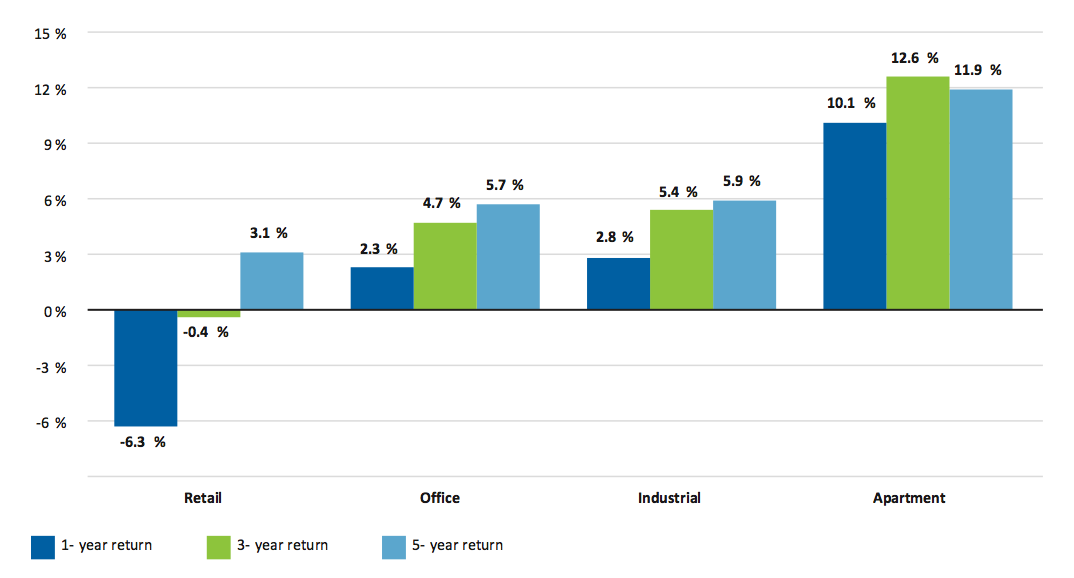
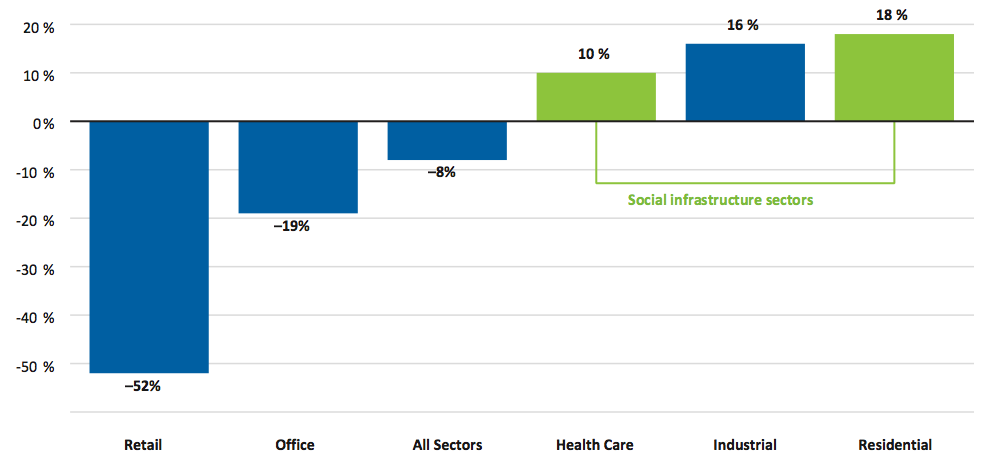
In the U.S., investor demand fell significantly for brick-and-mortar retail (see Exhibit 2). On the contrary, essential assets like health care facilities and education did relatively well. For example, by the end of 2020 in Europe, our strategy saw a near 100% rent collection from tenants in our social infrastructure properties.

COVID-19 Headwinds Weighed on U.S. Retail Real Estate Performance in 2020

Exhibit 2: National Council of Real Estate Investment Fiduciaries (NCREIF) Index annualized total returns by sector (USD)

Sources: Franklin Templeton, NCREIF, Macrobond. Indexes are unmanaged, and one cannot invest directly in an index. They do not reflect any fees, expenses or sales charges. Past performance is not an indicator or guarantee of future performance.
The GIIN’s most recent annual survey of impact investors reports the average internal gross rate of return on realized impact investments in real assets (not only real estate) is 13% in developed markets and 8% in emerging markets for market rate investors.

The same survey found that asset allocations to real assets increased 21% between 2015 and 2019. Also, there are data about the resilience of social infrastructure versus commercial real estate assets. Again, focusing on Europe, if we consider real estate investment trusts’ (REITs)** share prices during the very volatile market period of January – July 2020 as a proxy, we can see in Exhibit 3 that social infrastructure sectors increased, while mainstream commercial sectors dropped as much as 50%.

Social Infrastructure Investments Showed Resiliency Against Pandemic Headwinds

Exhibit 3: European REITs: A proxy for social infrastructure performance (January 1 – July 30, 2020)

Source: BNP Research. Past performance is not an indicator or guarantee of future performance.

A bright future

Investing in social infrastructure with a focus on impact can yield not only market rate returns, it can also create financial resiliency that improves financial results. Fluctuations in other sectors during the pandemic will likely increase institutional investor interest in income-producing real estate whose tenants’ ability to pay rent is less correlated to economic activity. Depending on the severity of COVID-19’s economic fallout, there may be increased sale and leaseback opportunities, as cash-strapped municipalities look to raise funds by selling properties on their balance sheets.

The pandemic emphasized the importance of resilient social infrastructure as well as sustainable communities; it also created more demand for impact-focused capital. The need for better and sufficiently funded social infrastructure is a global phenomenon that now has worldwide attention.

** REITs are companies that own or finance income-producing real estate across a range of property sectors. These real estate companies must meet a number of requirements to qualify as REITs. Most REITs trade on major stock exchanges and offer a number of potential benefits to investors.
RIA Disclaimer
The views and opinions expressed in this article are solely those of the authors and do not necessarily reflect the view or position of the Responsible Investment Association (RIA). The RIA does not endorse, recommend, or guarantee any of the claims made by the authors. This article is intended as general information and not investment advice. We recommend consulting with a qualified advisor or investment professional prior to making any investment or investment-related decision.

Advancing Indigenous Inclusion and Reconciliation Across Capital Markets

The discovery of unmarked graves at former residential schools across Canada has once again brought to light the horrific legacies of colonialism and residential schools in Canada. It is lamentable that it has taken the discovery of thousands of stolen children to galvanize national attention to a history of disappearance and loss so well known to First Nations, Inuit and Métis communities. But here we are, 25 years after the last residential school closed, and 6 years after the Truth and Reconciliation Commission published its final report and Calls to Action.

Our teams at SHARE and the National Aboriginal Trust Officers Association (NATOA), alongside many others across Turtle Island, have expressed our grief and solidarity with the Indigenous communities and families of the lost children. But, more than our grief, we know that reconciliation requires action – action from all levels and sectors of society, including, and perhaps especially from those of us who work in the world of responsible investment.

NATOA and SHARE came together in 2016 and formed the Reconciliation and Responsible Investment Initiative (RRII) as a place for collective investor action. RRII is a place where Indigenous and non-Indigenous investors are supported in using their voices and their capital to uphold Indigenous rights, promote positive economic outcomes for Indigenous peoples and centre Indigenous perspectives in investment decision-making.

Since its launch, RRII has conducted research on corporate Canada’s alignment with Call to Action 92, directed at business in Canada. We have developed resources for non-Indigenous investors on advancing reconciliation across their portfolios. We have also worked with Indigenous trusts to help align their investment policies with their values and aspirations in ways that build on the stewardship protocols and traditions that have sustained Indigenous communities for generations.

Building on this previous work, in 2020, we turned our attention to better understand the role that asset managers could play in advancing reconciliation. We knew that asset managers had the potential to be important allies as employers, economic actors, shareholders and, for those with Indigenous clients, stewards of Indigenous wealth. But what were asset managers already doing and where were they falling short?

What we found were both tangible examples of leadership that we hope will be replicated, along with ample opportunities for investment managers to raise the bar in advancing reconciliation in their organizations’ policies and practices.

For example, some firms are taking important steps to create employment and training opportunities for current and potential Indigenous staff. Almost half of the investment management firms surveyed had established policies to increase both the pipeline of prospective Indigenous employees as well as the supply of jobs available to Indigenous people in their firm. One noteworthy practice is the creation of scholarships and bursaries for Indigenous students. Another is the set-aside of specific spots for Indigenous graduates in internship programs.

Around half of surveyed firms reported having educational programs for management and staff on the history of Indigenous peoples. This is both a bare minimum, and critical element of the Truth and Reconciliation Commission’s Calls to Action. We hope that asset management firms across the country will prioritize education for management and staff on Indigenous rights and history.

A leading stewardship practice that was identified was one firm’s efforts to work together with its portfolio companies to support equity partnerships and other profit-sharing relationships with Indigenous communities. The same firm also noted advocating to governments to embrace the principles of the United Nations Declaration on the Rights of Indigenous Peoples (UNDRIP), including Indigenous peoples’ right to free, prior, and informed consent.

In addition to these practical examples, other opportunities to further advance reconciliation are identified in the report.

For example, we were particularly inspired by the efforts of large superannuation funds in Australia. Several have developed Reconciliation Action Plans that go beyond just talking about reconciliation and set out specific responsibilities, timelines and targets. Imagine if some of Canada’s largest public sector pension plans established their own reconciliation action plans. The positive impacts for Indigenous inclusion and growing the Indigenous economy would be significant.

Prioritizing procurement from Indigenous owned businesses is another tangible action that investment management firms can use to advance reconciliation. Leading Indigenous organizations such as the Canadian Council for Aboriginal Business, are calling on government and industry to establish procurement targets from Indigenous businesses as a powerful and practical step to support Indigenous economic development.

Finally, investment management firms are well positioned to give credibility to the inclusion of reconciliation and Indigenous rights recognition as a central aspect of good corporate governance. Incorporating explicit reference to UNDRIP in responsible investment principles and ensuring guidance related to Indigenous rights recognition in proxy voting guidelines are concrete steps that investment managers can take.

When large asset managers get behind efforts to align corporate practices with reconciliation, the results can be significant. For example, in May, 98% of shareholders voted in favour of a resolution on Indigenous inclusion and reconciliation at TMX Group Ltd. Through RRII, SHARE and NATOA will continue to build on this win as we seek to ensure reconciliation goals are included in corporate equity, diversity and inclusion practices across Canadian capital markets. We hope investment management firms will carry forward their support of these efforts with other companies in their portfolios.

In our survey of Canadian asset managers, we were heartened to hear one respondent plainly state that economic reconciliation benefits all involved, and that the investment management industry has much to gain from Indigenous teachings and the holistic approach that Indigenous values bring to the investment process.

We couldn’t agree more. The work of RRII is not inspired by charity. It is not built on the misconception of allyship as being a one-way street. The partnership between SHARE and NATOA recognizes that our future is a collective one where our successes and failures are deeply interconnected. And in that spirit of reciprocity, we will continue to work together towards change.

We hope that more individuals and organizations in the responsible investment ecosystem will join us on this journey from awareness to action.

RIA Disclaimer
The views and opinions expressed in this article are solely those of the authors and do not necessarily reflect the view or position of the Responsible Investment Association (RIA). The RIA does not endorse, recommend, or guarantee any of the claims made by the authors. This article is intended as general information and not investment advice. We recommend consulting with a qualified advisor or investment professional prior to making any investment or investment-related decision.

In Case You Missed It: 2021 RIA Virtual Conference Summary

Thank you to everyone who attended the 2021 RIA Virtual Conference, as well as our partners, sponsors, and members who helped make the conference a success! The conference took place from June 8th to June 11th, 2021, and welcomed over 1,200 virtual attendees, making it our largest conference yet.

The conference covered cutting-edge and emerging topics in ESG and sustainable finance with national and international experts. The agenda was designed to help investment professionals stay up to speed on the fast and ever-evolving issues and trends in the field.

In case you missed the conference or want to revisit some of the key takeaways, you can read our session summaries below. Each summary covers the key topics and takeaways from the main sessions of the conference.

Opening Day

  • CEO Roundtable: Leadership and Governance for a Sustainable and Inclusive Canada – Read Summary
  • Keynote Address: Mark Carney – Read Summary

Net Zero Day

  • The Net Zero Corporation: Strategies and Practices for Corporations to Align their Operations with Net Zero – Read Summary
  • The Net Zero Portfolio: Strategies and Practices for Investors to Align their Portfolios with Net Zero – Read Summary

Stewardship Day

  • The Rise of Investor Stewardship: A Global Perspective – Read Summary
  • Masterclass: Case Studies in Canadian Investor Stewardship – Read Summary

Impact Day

  • Achieving the SDGs by 2030: Leading Practices for Impact Measurement – Read Summary
  • Impact Investing in Public Markets: Assessing Intentionality and Measurability – Read Summary

Retail Advisor Day

  • ESG and Client Engagement in the Pandemic Era – Read Summary
  • Greenwashing: Addressing Retail Clients’ Concerns – Read Summary

For more information on upcoming RIA Canada events, please subscribe to our newsletter here.

Solving for Sustainability – One Opportunity at a Time

For the last decade, environmental social and governance (ESG) investing has grown swiftly. Overall, it was an impressive year for sustainable funds: in 2020, 3 out of 4 beat their Morningstar Category average, and far more (42%) ranked in the top quartile than the bottom (6%).

The COVID pandemic has shone a spotlight on the inextricable link between sustainability and high quality, growing businesses that can circumnavigate market disruption. In fact, proactively finding companies that are addressing sustainability challenges in the world is an opportunity waiting to be uncovered: it’s these enterprises that will benefit from long-term, structural growth tailwinds, and performance upside. From renewables and climate change to urbanization and supply chain management, sustainability spans a multitude of megatrend themes (some more obvious than others), and holding these investments means positioning portfolios for future growth.

Identifying the status quo disruptors

At BMO Global Asset Management, we start by defining these sustainability challenges, and we use the UN Sustainable Development Goals (SDGs) as a qualitative guide, looking for companies that actively align their solutions with these targets. It’s moving beyond how they conduct themselves and the ESG factors they consider. How do their products and services contribute to a more sustainable world? Next, we assess whether we can tie the company’s current or future revenue to this theme, and if there is an opportunity to reduce costs. For example, can a company use less water or fuel and therefore improve its environmental footprint? If one or both answers to these questions is yes, then we know – over the medium and longer term – that there is a direct ESG-linked path to increase revenue and improve operations, which translates into higher earnings per share.

Our approach is to fully recognize risks and to identify the trailblazers that are capable of disruption through rigorous analysis – the companies that harness the intellectual property, technology, skill, scale and expertise to address these sustainability challenges and create long-term value in the process. We look for businesses with strong moats, that are led by visionary management teams who are asking what the future is going to look like, and how can I position my company to benefit?

Embracing change: from renewables to affordable housing

Renewables

Consider Brookfield Renewable Partners (BEP), which is a global leader of renewable power assets that’s accelerating decarbonization worldwide, with an attractive growth profile in a sector with a long runway for expansion. Competitive cost structure, regulatory support and corporate carbon emission targets are driving investment – and innovation – into renewables. In Europe and North America alone, 45% of power today is derived from either coal or gas, and if that capacity falls by half in 10 years, that equates to $500 billion of new investment required. The company is poised to prosper as a result: currently, its annual generation of 57 terawatt-hours avoids 27 million metric tons of CO2 per year, which equates to all of London’s annual carbon dioxide emissions. Its development pipeline has similar prospects, and BEP has the size, scale, capital and operational expertise required to execute on its growth plans.

Supply chain

The greening of the supply chain is another focus. 2020 has seen sweeping changes in consumers’ purchasing and consumption patterns. Lockdowns have driven a parabolic use of e-commerce, pulling industry adoption forward by several years – products are being delivered to a higher number of destinations and at a higher frequency than ever before. With increased logistics, a growing number of companies are now looking to streamline their supply chain – from fleet efficiency and fuel costs to carbon emissions. How can corporations minimize environmental impact and boost profitability at the same time?

Descartes Systems is a company that holds the solution in its hands – providing software for global logistics and supply chain management that helps a wide range of customers from American Airlines to FedEx to CVS Pharmacy. Descartes’ software is used to optimize routes and ensure that trucks and planes have full loads resulting in reduced fuel use and number of trips. Thousands of trucks are removed from the road every year because of Descartes’ software. For example, one customer, Home Depot, cut 10% of its fleet in 2019. It’s the ideal example of a company deploying innovative technology to help others transition to greener practices, while benefiting its own bottom line.

Transportation

Another example is CN Rail, Canada’s largest railway company, with a solid track record for creating shareholder value and reducing carbon footprint. Railroads are 4-5 times more fuel efficient than trucks for moving goods across long distances: one train can replace 300 trucks on the road and can move 1 tonne of freight 220 kilometres, with one litre of fuel. While still early days, the company is also well positioned for a paradigm shift to hydrogen fuel. Once this technology is built at scale, railroads will be one of the biggest beneficiaries from this transformation.

Real Estate

Many don’t realize that real estate is also a major emitter of carbon and it’s one of the most basic and essential services as everyone needs somewhere to live; during the pandemic, many of us also now work and attend school from our homes. This makes housing a sustainable opportunity, as a sector that’s supported by structural positives such as long-term population growth, rising home prices and supply restraints. Within our portfolio, we invest in a few companies seeking to address these challenges, including Canadian Apartment REIT, one of the country’s largest multi-family property owners that provides reasonably-priced, quality rental units in high growth, expensive markets. The business has made continued energy-efficient building upgrades to minimize resource consumption and simultaneously cut its operating costs, while it continues to bolster growth through accretive acquisitions.

Tricon Residential, whose portfolio is largely U.S.-based, has significant scale in single family housing, and is dedicated to ensuring new and future developments are built to green LEED® standards. Both companies, which have a long history of value creation, have also committed to supporting residents that have been negatively impacted by the pandemic through compassionate care programs and rental payment plans.

If 2020 has taught us anything, it is that our status quo was unsustainable – whether it’s from a health, environmental or a social perspective – and that we’re capable of change, with companies and individuals alike adjusting to a new normal characterized by the unfolding pandemic. As asset managers, the task is actively engaging with businesses to understand whether solving for sustainability is truly part of their DNA, and how they’re embracing the opportunity to help create a brighter future for the world – and their investors.

Contributor Disclaimer
This communication is for information purposes. The information contained herein is not, and should not be construed as, investment, tax or legal advice to any party. Investments should be evaluated relative to the individual’s investment objectives and professional advice should be obtained with respect to any circumstance. BMO Global Asset Management is a brand name that comprises BMO Asset Management Inc., BMO Investments Inc., BMO Asset Management Corp., BMO Asset Management Limited and BMO’s specialized investment management firms.
®/™Registered trade-marks/trade-mark of Bank of Montreal, used under licence.
RIA Disclaimer
The views and opinions expressed in this article are solely those of the authors and do not necessarily reflect the view or position of the Responsible Investment Association (RIA). The RIA does not endorse, recommend, or guarantee any of the claims made by the authors. This article is intended as general information and not investment advice. We recommend consulting with a qualified advisor or investment professional prior to making any investment or investment-related decision.

Building ESG into the Alternative Protein Terrain

The growth engine of 21st century food

The alternative proteins sector currently represents around 1% of the protein market – but is predicted to eat up 60% of the total meat market share by 2040.

This growth is driven by nutritional insecurity, health and climate risks and shifting consumer demands. The environmental case for alternative proteins as a sustainable solution to soaring protein demand is compelling. Livestock accounts for 14.5% of global GHG emissions – but Beyond Meat says its burger generates 90% less emissions than its beef equivalent.

Three technologies are driving the future of proteins: plant-based replaces animal proteins with plant species, fermentation utilises microorganisms to produce plant proteins and cultured meat uses stem-cells to create lab-grown animal protein.

Source: https://www.fairr.org/sustainable-proteins/food-tech-spotlight/building-esg-into-the-alternative-protein-terrain/

Alternative proteins are being positioned as the sustainable growth engine of the 21st century food industry. According to FAIRR analysis, over $3.1 billion was invested in plant-based and cell culture in 2020.

Source: https://www.fairr.org/sustainable-proteins/food-tech-spotlight/building-esg-into-the-alternative-protein-terrain/

This positioning dovetails with growing investor interest in standardising ESG risk analysis across sectors. For alternative proteins, this standardisation is complicated by the diversity of technologies and company types in the market (start-ups, multi-national meat companies and public listed companies).

Source: https://www.fairr.org/sustainable-proteins/food-tech-spotlight/building-esg-into-the-alternative-protein-terrain/

FAIRR is building a standardised ESG framework to help investors navigate this landscape. Alternative proteins can and should play a role in mitigating environmental impacts of growing global protein demand. But with growth comes the inevitable question: what ESG challenges do alternative proteins firms face?

Source: https://www.fairr.org/sustainable-proteins/food-tech-spotlight/building-esg-into-the-alternative-protein-terrain/

Material ESG risks for alternative proteins

1. Emissions

Crop cultivation is likely to be the main driver of value chain GHG emissions for plant-based companies. For cell-based technology, emissions will be highest at processing facilities. Studies speculate industrial-scale cellular meat could have climate emissions comparable to pork or poultry production.[1, 2] Securing contracts with renewable energy providers is vital to mitigate climate risks.

2. Sourcing

A key risk for plant-based companies is monoculture farming, whereby same species are grown each year, leading to soil degradation and biodiversity loss. As companies expand they should incorporate regenerative agricultural practices. Natural winners here will use legumes and lentils as ingredients, which support carbon sequestration.

3. Circular Economy

Innovative firms have an opportunity to step up the food industry’s contribution to the circular economy. For instance, to eliminate waste, Impossible Foods is piloting a reverse osmosis system, re-using wastewater from its heme manufacturing. Oatly is leading on circular brand packaging with sustainable packaging made from renewable sugarcane materials.

4. Labour

Farm labour has material risks with safety issues connected to crop production, from exposure to toxic pesticides to extensive use of migrant labour. Structural labour issues could arise from the displacement of workers in carbon-intensive meat industries if cell-cultured meat reaches commercialisation.

5. Food Safety

Since alternative proteins use new technologies and ingredients, the risk of scandal and litigation is high: the FDA is currently facing litigation over its approval of Impossible Foods’ soy leghaemoglobin, heme. Engagement with regulators, rigorous food safety and consumer transparency are essential to allay concerns and build resilience.

6. Nutrition

Nutritional development is a core component of competitive advantage – given consumer concerns about processed plant-based products, which can be high in sodium and saturated fats. Firms should be careful of unsubstantiated health claims and constantly improve the nutritional composition of products. For instance, Beyond Meat is launching two burgers with better nutritional profiles in 2021. 

7. Governance

Traditional governance issues are material even for food disruptors like alternative protein companies. Beyond Meat has already minimised conflicts of interest.  Companies should conduct materiality assessments and adopt board-level oversight on sustainability issues.

Navigating the new food frontier

To navigate this ever-changing sector, investors must adopt an ESG lens. The early integration of ESG risks ensures investors avoid the pitfalls of conventional proteins. Key questions to prioritise are:

  • Have they disclosed Scope 1, 2 and 3 emissions and set targets to reduce them?
  • Is there visibility on types and origins of crop sources?
  • Is sustainable sourcing in supply contracts incorporated?
  • What food safety measures does the company have?  
  • Is the company responding to nutritional concerns?
  • Has it conducted a publicly available materiality assessment?

Sources:

[1] Warner, R.D. (2019). Review: Analysis of the process and drivers for cellular meat production. animal, [online] pp.1–18. Available at: https://www.cambridge.org/core/journals/animal/article/review-analysis-of-the-process-and-drivers-for-cellular-meat-production/44A1650E41518B5D42CEA5D68EC32F36

[2] Odegard, I. (2021). LCA of cultivated meat. Future projections for different scenarios. [online] CE Delft. Available at: https://www.cedelft.eu/en/publications/2610/lca-of-cultivated-meat-future-projections-for-different-scenarios.llular-meat-production/44A1650E41518B5D42CEA5D68EC32F36.

RIA Disclaimer
The views and opinions expressed in this article are solely those of the authors and do not necessarily reflect the view or position of the Responsible Investment Association (RIA). The RIA does not endorse, recommend, or guarantee any of the claims made by the authors. This article is intended as general information and not investment advice. We recommend consulting with a qualified advisor or investment professional prior to making any investment or investment-related decision.

To Maximize Your Energy Transition Exposure, Think Thematic

Asset owners have for years known and understood the risks associated with climate change – the threat it poses to companies, countries and people. And they’ve taken action. We’ve seen the signing of the UN Principles for Responsible Investing by scores of asset owners and managers and large-scale divestment from fossil fuels by individuals and institutions representing over US$14 trillion.[1]

But while signatures and divestment can help, they won’t power the future. Facing us on the road ahead is a giant economic and societal leap from old ways of producing and consuming energy to a new energy economy that is sustainable, effective and looks nothing like what’s in place today.

Dubbed the “Great Energy Transition”, this jump from old to new is happening now and it’s being driven by powerful themes that are fundamentally changing how we produce and consume energy.

Fueling this transition is a large and growing set of industries, sectors, and companies that are doing and making what’s needed to support the transformation. We believe this represents an unprecedented opportunity for asset owners to invest early on and make a meaningful contribution to a sustainable future. But getting exposure to these opportunities can be a challenge – especially if asset owners take too narrow an investment approach.

Environmental, social and governance (ESG) managers saw tremendous inflows in 2020 even amid the COVID-19 pandemic. On the surface at least, an ESG integrated approach sounds like it’s checking all the right boxes for asset owners when it comes to investing sustainably. Look under the hood, however, and some limits become evident.

A side by side comparison of sector exposure in the MSCI and MSCI ESG indices (focused primarily on companies with positive ESG behaviours) shows the two are barely distinguishable from one another (Figure 1).

Figure 1: Sector exposure – MSCI World vs MSCI World ESG

Contrast that to the sector exposure of our Mackenzie Global Environmental Equity Fund and FTSE Environmental Opportunities – where industrials and utilities are leading the way, two sectors in which companies are actually doing the work needed to transition to new forms of energy (Figure 2).

Figure 2: Sector exposure – MSCI World vs FTSE EO vs Mackenzie Global Environmental Equity Fund

Focusing only on ESG integrated strategies can limit investors’ potential to benefit from the growth that is going to come with the energy transition. On the other hand, we believe companies that make the “stuff” for the low carbon, sustainable economy represent a massive opportunity for investors, provided they start looking in the right place.

Environmental thematic strategies identify industries and companies based on themes driving climate change as well as the solutions to facilitate the leap from old to new forms of energy. Those opportunities revolve to a great extent around how we create and use energy – and they are vast.

Today, the world consumes about 14 billion tons of oil equivalent energy (160,000TWh) each year to power our $88 trillion global economy.[2] A stunning 84% of this energy comes from fossil fuels.[3] In addition, much of our current power infrastructure will exceed its operating lifespan and need to be replaced, at a time when global electricity demand has been growing at 2.8% a year.[4]

Many of the solutions to this problem are right in front of us. Since 2012, solar and wind power have been gaining market share. And, although solar is about two to three per cent and wind about five to six per cent of current global generation, the cost of building new plants is half that of building new gas or coal generating plants.[5] Last year alone, 90% of new electricity generating investment went to renewables.[6]

But it’s still not enough. Back in 2009, the International Energy Agency (IEA) predicted the world would need $37 trillion in investment by the year 2030 to stabilize greenhouse gas emissions at sustainable levels and to avert the worst of climate change.[7] According to the OECD and the Mackenzie Greenchip team’s own analysis, $2.5 trillion in annual investment is required to deliver on its climate change goals. In each of the past four years, however, investment has only been about $800 billion leaving a $1.7 trillion gap.[8]

To understand where the Great Energy Transition is already having a profound impact, you need only look at how some major sectors are changing and the investment that will be needed in the coming years:

  • Transportation: Cars and buses increasingly will be powered by electricity.
  • Construction: LED lights are replacing incandescent and fluorescent bulbs while gas and oil furnaces are being replaced with electrified heat pumps optimized with computerized building energy management software systems.
  • Manufacturing: Specialized engineering firms are redesigning factories, replacing old blowers, stampers, conveyor belts with energy efficient ones driven by variable speed motors, power management semiconductors and computer systems.
  • Agriculture: New precision technologies will change how we fertilize and irrigate agriculture.

It’s also worth noting that, while thematic strategies offer exposure to some big names like Siemens, Hitachi or Johnson Controls, the vast majority of holdings are companies that are probably unfamiliar to most people. Instead, thematic investors can tap into an opportunity that includes manufacturers of power infrastructure and companies that produce and sell the equipment needed to make the economy more resilient for the future. While they aren’t big brand names, these companies have vitally needed products and services.

Given the spectrum of opportunities, we believe asset owners can’t get enough exposure to this transition through typical ESG integrated strategies alone. They must also consider allocating to investments more directly involved in the Great Energy Transition and through an environmental thematic lens. ESG should be viewed as one tool in the kit – but it likely isn’t the entire solution. A thematic approach can help investors to zero in on themes that matter.

The energy leap has created myriad new ways of thinking about and addressing climate change – and it truly is the path forward to a sustainable future.

Sources:

[1] Source: Go Fossil Free

[2] BP Statistical Review of World Energy 2020 & Our World in Data 2019

[3] BP Statistical Review of World Energy 2020 & IEA April 2020

[4] Global Energy Statistical Yearbook 2020

[5] Lazard Levelized Cost of Energy Analysis 2020

[6] Tech Crunch November 2020 & Renewable energy defies Covid-19 to hit record growth in 2020 The Guardian November 2020

[7] “World needs $48 trillion in investment to meet its energy needs to 2035.” International Energy Agency, 2014.

[8] Private Finance for Sustainable Development. Remarks by Angela Gurria, OECD, January 29, 2020.

Contributor Disclaimer
Commissions, trailing commissions, management fees and expenses all may be associated with mutual fund investments. Please read the prospectus before investing. Mutual funds are not guaranteed, their values change frequently and past performance may not be repeated.
RIA Disclaimer
The views and opinions expressed in this article are solely those of the authors and do not necessarily reflect the view or position of the Responsible Investment Association (RIA). The RIA does not endorse, recommend, or guarantee any of the claims made by the authors. This article is intended as general information and not investment advice. We recommend consulting with a qualified advisor or investment professional prior to making any investment or investment-related decision.

Why Climate Change Is a Vital Input for Building Portfolios

Climate change and efforts to curb it will have major economic outcomes, not just far into the future but even over the next five years. Yet climate change is completely ignored in most economic projections or long-term return expectations. As a result, many investors are making asset allocation decisions that are based on unrealistic future scenarios.

Since climate change is real, we believe the two scenarios to compare are: one, a transition to a low-carbon economy and; two, a no-climate-action scenario with no mitigation of damages. This comparison turns on its head the commonly held view that tackling climate change has to come at a net cost to the economy. On the contrary, it should drive significant improvements relative to no mitigation measures being taken.

As our base case, we assume an orderly “green” transition takes place, in line with the IMF’s recommendations, including subsidies for renewable energy. Without those actions, we estimate physical and other climate-related damages could lead to a global cumulative loss in economic output of nearly 25% over the next two decades1. The transition to a more sustainable world has only just started, and we see it as a historic investment opportunity.

A framework for incorporating climate change

Why is it that climate considerations are rarely included? It is challenging to do so. No one knows yet what a low-carbon world will look like and climate change projections are highly uncertain. This is due to the complexity of modelling the dynamics and myriad dependencies between climate and carbon emissions, economic variables and mitigation policies. But the difficulty involved in modelling climate change is no excuse to ignore it altogether.

At the BlackRock Investment Institute, we recently updated our capital market assumptions (CMAs)– our long-run estimates of returns across asset classes – to account for the effects of climate change. While this represents our best assessment, we acknowledge this is an uncertain endeavour and we will work to refine it as we learn more.

The framework we use contemplates the macroeconomic impact of climate change, the repricing of assets to reflect climate risks and exposures, and the effect on corporate fundamentals.

Consider each of these three channels in turn. First, macroeconomic variables will almost certainly be different in a world that is transitioning to a sustainable future. We see changes in so-called risk premia for all asset classes – the compensation investors require for holding them.

Second, the price investors are willing to pay for sustainable assets is changing. A BlackRock survey in September 2020 found 425 institutional investors planned to double their sustainable assets under management in the following five years to 37%. We see changing investor preferences spurring a climate change-led repricing due to the falling cost of capital for sustainable assets. Once this repricing phase has passed, we believe this channel will eventually no longer be a boon for “greener” assets’ expected returns.

Finally, climate change and policies will affect profitability across sectors. This will have knock-on effects for other variables such as credit default and downgrade assumptions. To arrive at corporate profitability estimates, we first assess the sensitivity of earnings to carbon pricing. We then assess the impact of transition risks and physical risks as well as opportunities.

We focus on climate because we believe a broad consensus around its impact and measurement suggests that climate change is fast becoming a key driver of asset pricing.

Investment implications

The investment implications are significant. Broadly, we see developed market equities best positioned to capture potential opportunities at the expense of high-yield and some emerging market debt. The constituents of developed market equity indexes generally have less vulnerability to transition risks and lower carbon intensity. Equities also can better capture potential upside, as bonds are capped in their capital appreciation.

It’s worth looking under the hood, as the relevant unit of investment analysis is really at the sector level. There will be winners and losers – underpinning why we believe a sectoral approach to sustainable investing is more appropriate than a regional one. Likely beneficiaries include technology and healthcare, we believe, while laggards include energy and utilities. We expect the climate effect to result in an annualized return differential of about 7% between the energy and technology sectors over the next five years2. That’s a significant difference in a world of low expected returns across asset classes.

Chart: Return assumption differentials in green transition vs. no-climate-action

For illustrative purposes only. This information is not intended as a recommendation to invest in any particular asset class or strategy or as a promise – or even estimate – of future performance. Sources: BlackRock Investment Institute, with data from Refinitiv Datastream and Bloomberg, February 2021. Notes: The chart shows the difference in U.S. dollar expected returns over the next five years from now for four sectors of the MSCI USA Index in our base case of a ‘green’ transition (policies and actions taken to mitigate climate change and damages, and to limit temperature rises to no more than 2 degrees Celsius by 2100) vs. a no-climate-action scenario. The estimated sectoral impact is based on expected differences in economic growth, corporates earnings and asset valuations across the two scenarios. Professional investors can access full details in our Portfolio perspectives and CMAs website.

Our three-channel framework – macroeconomics, pricing and fundamentals – allows us to systematically monitor key metrics as the green transition takes shape. We see this as only the beginning: we will monitor, enhance and add to our framework over time as data improves and our thinking evolves. One thing is clear: to exclude climate considerations from asset return expectations would be to ignore reality. It is a vital input for economic projections, return expectations and portfolio construction.

Sources:

[1] BlackRock Investment Institute

[2] BlackRock Investment Institute

Contributor Disclaimer
This material is intended for information purposes only, and does not constitute investment advice, a recommendation or an offer or solicitation to purchase or sell any securities to any person in any jurisdiction in which an offer, solicitation, purchase or sale would be unlawful under the securities laws of such jurisdiction. The opinions expressed are as of March 22, 2021 and are subject to change without notice. Reliance upon information in this material is at the sole discretion of the reader. Investing involves risks. Asset allocation and diversification does not guarantee investment returns and does not eliminate the risk of loss.
RIA Disclaimer
The views and opinions expressed in this article are solely those of the authors and do not necessarily reflect the view or position of the Responsible Investment Association (RIA). The RIA does not endorse, recommend, or guarantee any of the claims made by the authors. This article is intended as general information and not investment advice. We recommend consulting with a qualified advisor or investment professional prior to making any investment or investment-related decision.